

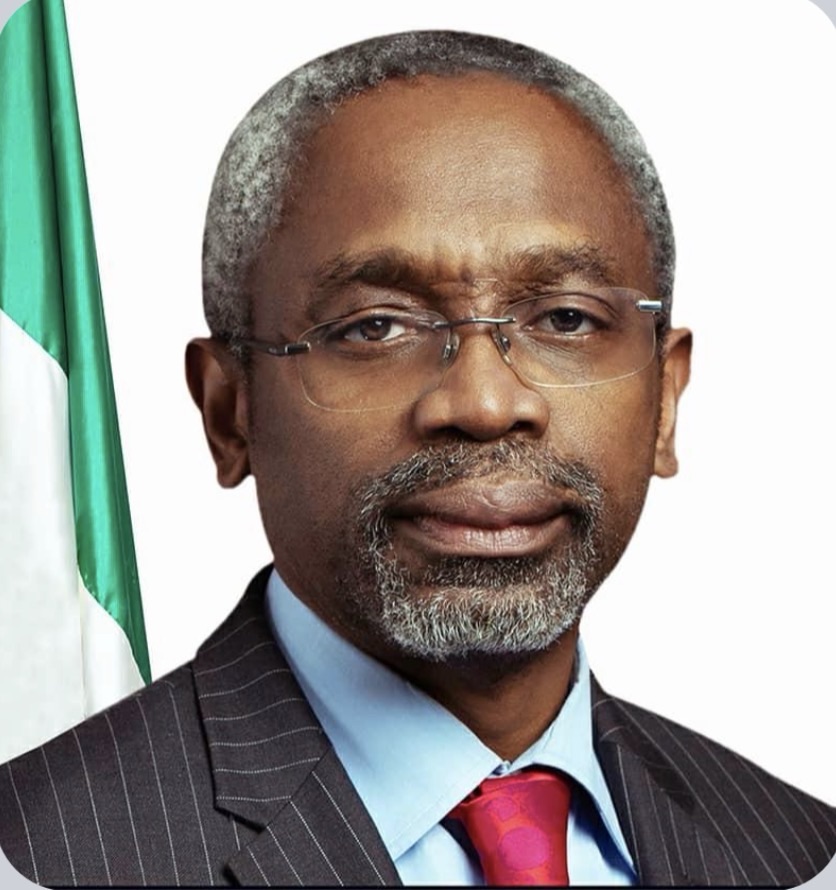
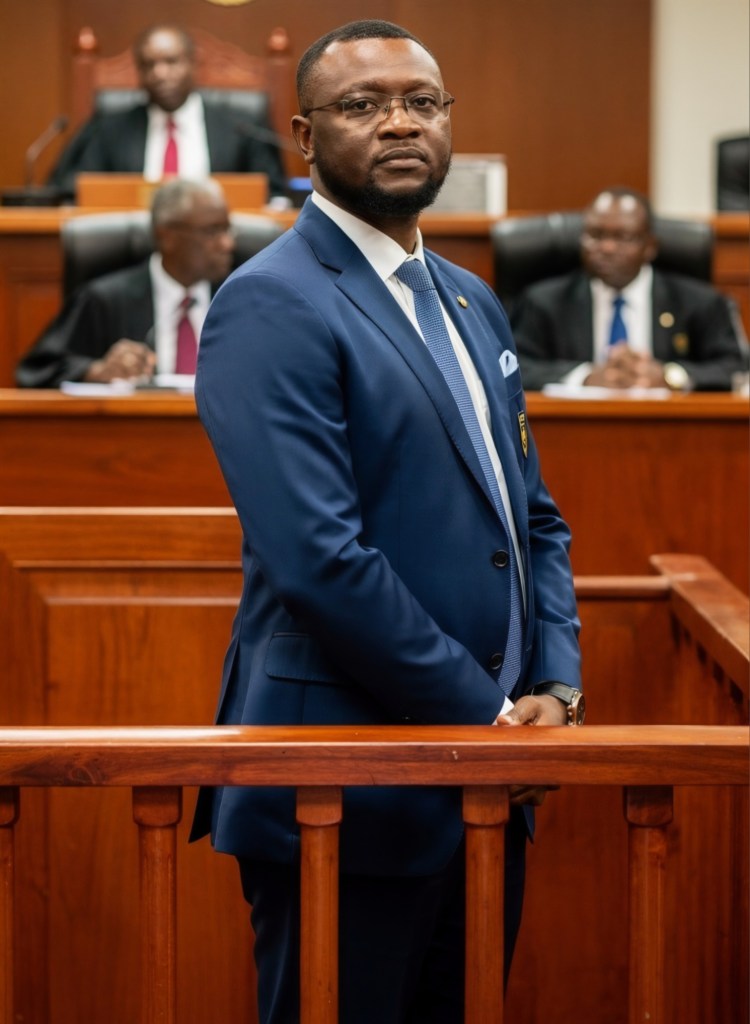
There he stands before the court of public opinion.
Not because he has been convicted of anything. Not because a competent court has found him guilty. Not because investigators have produced evidence that survives scrutiny.
He stands there because in Nigeria, accusations themselves have become a verdict.
The charge against him is not merely that he demanded money from a supposed government council. The deeper charge is that he is powerful. That he is connected. That he has survived too long in politics. That he sits too close to the centre of power.
And in modern Nigerian political discourse, power itself is increasingly treated as evidence of guilt.
The prosecution says he cannot be trusted because he once faced disciplinary proceedings in another jurisdiction decades ago. Yet even if every fact of that matter is accepted, the question before this court remains simple: what relevance does an event from more than twenty years ago have to allegations made today?
A legal system worthy of the name should not convict him because it dislikes him history. It convicts him because it can prove his present conduct.
The prosecution wants the jury to believe that his past should substitute for evidence.
It cannot.
They say allegations have followed him throughout his public life.
That may well be true.
But allegations are the common currency of politics. Every prominent Nigerian politician has carried accusations. Every president has faced them. Every governor has faced them. Every legislative leader has faced them.
If accusations alone were proof, every public office in the country would be vacant.
He is accused of involvement in controversies surrounding appointments, recovered funds, budgets, ministries and agencies. Yet years later, the list remains exactly what it was when first circulated: accusations.
No convictions.
No findings.
No judicial pronouncements.
No tested evidence.
Only accusations.
The prosecution asks the jury to treat quantity as proof.
But ten unproven allegations do not equal one proven fact.
Then comes the centrepiece of the case.
A man claims he demanded nearly half of a proposed allocation from a government council.
A serious accusation.
One that deserves investigation.
But investigations require evidence, not imagination.
The alleged conversations were not recorded.
The alleged intermediary is deceased.
No transfer of funds has been demonstrated.
No witness has emerged to confirm the conversations.
No documentary trail has been produced.
Instead, the prosecution asks the jury to accept the allegation because it sounds plausible.
That is not how justice works.
The prosecution’s problem is not merely the absence of evidence.
Its problem is the existence of an alternative explanation.
Long before these public allegations surfaced, security agencies had reportedly opened investigations into the activities surrounding the same organisation. Criminal proceedings had reportedly commenced. Questions had already been raised regarding documents, authorisations, and representations made by those promoting the entity.
In other words, there was already a dispute before the accusation against him emerged.
That fact alone destroys the narrative that the entire machinery of the state suddenly sprang into action simply because someone spoke his name.
Then there is the matter of the budget allocation.
The prosecution points triumphantly to a budget line and declares victory.
But a budget line proves only one thing: that a budget line exists.
It does not prove who inserted it.
It does not prove who approved it.
It does not prove who benefited from it.
Most importantly, it does not prove that he demanded money from anybody.
The prosecution leaps from administrative confusion to personal corruption without building the bridge in between.
The distance between those two conclusions is where evidence should be.
And evidence is precisely what remains missing.
Unable to prove the allegation directly, the prosecution retreats into political philosophy.
It speaks of elite capture.
It speaks of post-colonial states.
It speaks of systemic immunity.
It speaks of structures and theories and historical patterns.
Interesting ideas.
Important ideas.
But ideas are not evidence.
Political theory may explain how institutions behave.
It cannot prove what was said during a telephone conversation.
It cannot prove what money changed hands.
It cannot prove what occurred in a private meeting.
The prosecution ultimately arrives at a curious destination.
It says every institution that reaches a conclusion favourable to him is compromised.
The Presidency is compromised.
The Senate is compromised.
The investigators are compromised.
The civil service is compromised.
The agencies are compromised.
Any witness favourable to him is compromised.
Any report favourable to him is compromised.
Any finding favourable to him is compromised.
And because all of them are compromised, the accusation must remain credible forever.
This is not an argument.
It is a belief system.
It begins by assuming guilt and ends by proving the assumption to itself.
No evidence can ever clear him because the conclusion was reached before the trial began. The witch that flew last night may not be responsible for the dead baby.
The prosecution insists that the system protects him.
Perhaps.
Perhaps not.
But even if the system were imperfect, that fact would not automatically transform every accusation against him into truth.
A flawed justice system can fail to convict the guilty.
It can also fail to protect the innocent.
The existence of institutional weakness proves neither guilt nor innocence.
What matters is evidence.
And evidence remains stubbornly absent.
The most revealing aspect of this entire affair is not what has been proven.
It is what has not.
For all the headlines, all the speeches, all the television appearances, all the social media campaigns and all the grand theories, the prosecution still cannot answer the most basic question in any court of law:
What exactly can be proved?
Not suspected.
Not inferred.
Not theorised.
Not assumed.
Proved.
Until that question is answered, the verdict sought by the prosecution is not justice.
It is simply a demand that the accused prove his innocence.
That is not how civilised societies function and particularly that’s not how it functions in Nigeria.
The burden belongs to the accuser.
It always has.
It always must.
And until that burden is discharged with evidence rather than conjecture, the only verdict available to a fair jury is the same verdict every citizen is entitled to:

