

How Special Interventions, Contingency Funds and Service-Wide Votes Turn Nigerian Finances into Executive Playgrounds
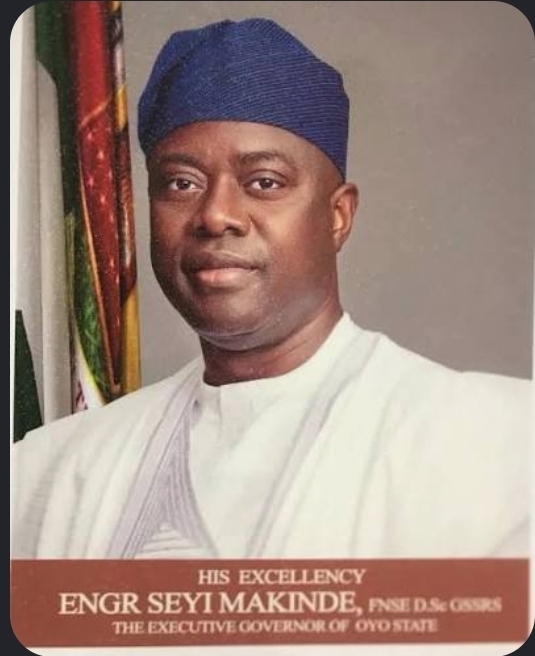
Once upon a time in the land of overflowing oil and underwhelming accountability, a state government received a tidy federal “intervention” of ₦30 billion (of a promised ₦50 billion) for reconstructing a neighbourhood blown up by an explosion. The money arrived via the Central Bank, parked itself in a dedicated commercial bank account, and proceeded to do absolutely nothing for over a year while the state spent its own funds and waited for the balance. Officials solemnly explained that such special intervention funds are capital grants that need no public announcement upon receipt and must merely “go through the budgeting process” before anyone can spend them. Conveniently, since no one has spent them, the State House of Assembly has had nothing to approve. Scrutiny? What scrutiny?
This is not an isolated comedy of errors. It is a textbook illustration of the black holes deliberately engineered into Nigeria’s public finance architecture opaque pockets that swallow money, evade legislative eyes, and render executives unaccountable. The Bodija tranche is merely one shiny pebble in a vast, dark galaxy of special interventions, contingency advances, service-wide votes, ecological funds, security “emergency” deductions, and other discretionary vehicles that allow the executive to move (or park) billions with minimal sunlight.
The Constitutional Compass That Keeps Getting Ignored
The 1999 Constitution (as amended) is not subtle on this point. Section 80 is clear: all revenues or other moneys raised or received by the Federation (except those payable into other public funds established for a specific purpose) shall form one Consolidated Revenue Fund. Crucially, “No moneys shall be withdrawn from the Consolidated Revenue Fund of the Federation except to meet expenditure that is charged upon the Fund by this Constitution or where the issue of those moneys has been authorised by an Appropriation Act, Supplementary Appropriation Act or an Act passed in pursuance of section 81 of this Constitution.”
Section 81 requires the President to lay estimates before the National Assembly and initiate the Appropriation Bill. Section 83 permits the National Assembly to establish a Contingencies Fund by law and authorises the President to make advances from it only for “an urgent and unforeseen need for expenditure for which no other provision exists.” Parallel provisions exist at the state level (sections 120–123). The design is deliberate: the legislature controls the purse; the executive may not help itself.
The Fiscal Responsibility Act 2007 reinforces this with requirements for medium-term frameworks, transparency, accountability, and prudent management. Public funds are not personal ATM cards for the executive. Yet successive administrations have treated special interventions and service-wide votes as elastic exceptions that stretch the Constitution until it snaps.
How the Black Holes Are Dug
Special presidential interventions disaster relief, security packages, infrastructure “support” often arrive with presidential approval letters and CBN releases rather than clear, line-item NASS appropriations that citizens and lawmakers can track in real time. Once received by states, they are rebranded “capital grants” that supposedly require only internal budgeting processes. No mandatory public disclosure upon receipt. No automatic referral to the State House of Assembly for specific disposition authority until (or unless) someone decides to spend. The money can sit idle indefinitely, accruing interest or simply vanishing from public consciousness.
Service-wide votes have ballooned into multi-trillion-naira reservoirs of discretionary spending, often with vague or non-existent project descriptions. Contingency and emergency provisions are invoked for everything from floods to banditry, frequently without the subsequent regularisation or detailed reporting the Constitution and Fiscal Responsibility Act contemplate. Ecological funds, outbreak response pots, and ad-hoc “intervention” packages for states follow similar patterns: approved at the centre, disbursed with fanfare or silence, and then left to the mercies of state executives who treat legislative oversight as optional.
The result is a fiscal system where large sums operate in a twilight zone technically “authorised” by some executive fiat or broad vote, yet shielded from the granular, continuous scrutiny that makes democracy meaningful. When challenged, the response is often a circular explanation: it is a special fund, therefore the normal rules of announcement, line-item transparency, and prior legislative disposition do not fully apply. Until, of course, someone spends it—and even then, the audit trail is frequently late, incomplete, or contested.
Precedent and Principle Say Otherwise
Courts have repeatedly underlined that public funds are not playthings. The Federal High Court’s ruling against the National Assembly’s own ₦110 billion vehicle-and-allowance scheme (SERAP v. National Assembly leadership) affirmed that even the legislature cannot treat appropriated sums as a blank cheque immune from procurement law, constitutional standards of accountability, and the public trust. Appropriation creates authority; it does not dissolve the duty of due process, value for money, or transparency.
Legal analyses of past unilateral executive draws such as the controversial ₦1 billion (or dollar-equivalent) security interventions without clear prior National Assembly approval have tested the limits of presidential power under sections 80–83 and found them wanting when they bypass legislative authorisation and subsequent accounting. The principle is consistent: an appropriation (or contingency advance) is not a cheque, not a warrant, and not cash until the full chain of legal conditions is met and the expenditure remains subject to oversight. Parking money in a commercial account while claiming the “budgeting process” will handle it later is not compliance; it is delayed accountability dressed up as prudence.
When the House of Representatives has had to demand consolidated reports on non-FAAC federal interventions to states, or when auditors struggle with unretired advances and late financial statements, the black holes are working exactly as designed by those who benefit from the darkness.
Closing the Holes Before the Entire System Falls In
The Oyo example is useful precisely because it is mundane. No dramatic theft allegation is required to see the structural defect. A large sum of public money can arrive, sit, and remain largely invisible to the ordinary citizen and even to the relevant legislature for extended periods under the polite fiction of “special” status and pending processes. Multiply this across dozens of interventions, service-wide envelopes, and contingency draws, and you have a system optimised for executive flexibility at the expense of democratic control.
Nigerians are not asking for the executive to be powerless in emergencies. They are asking that the constitutional design legislative control of the purse, mandatory appropriation or clear statutory authority, timely disclosure, and enforceable audit be treated as binding rather than aspirational. Special funds should trigger automatic, detailed reporting to the relevant assembly within defined timelines. Service-wide votes should carry project-level specificity or face automatic lapse. Contingency advances must be regularised promptly with full public accounts. And capital grants from the centre to states should not enjoy a free pass from state legislative appropriation simply because they arrived with a presidential letterhead.
Until these black holes are plugged, public finance will continue to resemble a cosmic joke: vast sums disappear into the void, executives remain unaccountable, and the people are left staring at the event horizon, wondering where their money went. The Constitution already provided the map. It is long past time the operators of the system stopped treating it as optional reading.
 Centre for Nigeria Progress