

If you ever want to destroy a respected institution, you don’t need dynamite, a barbarian horde, or even a hostile takeover. You just need a dimly lit backdoor, a shred of hubris, and an ironclad belief that nobody is looking through the blinds.
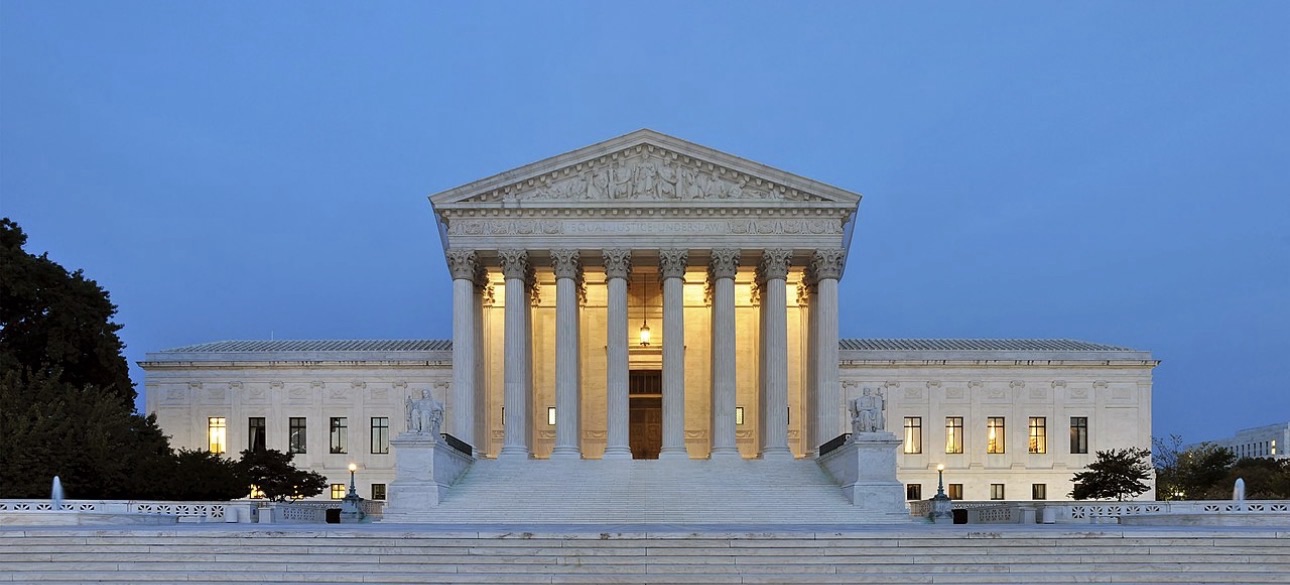
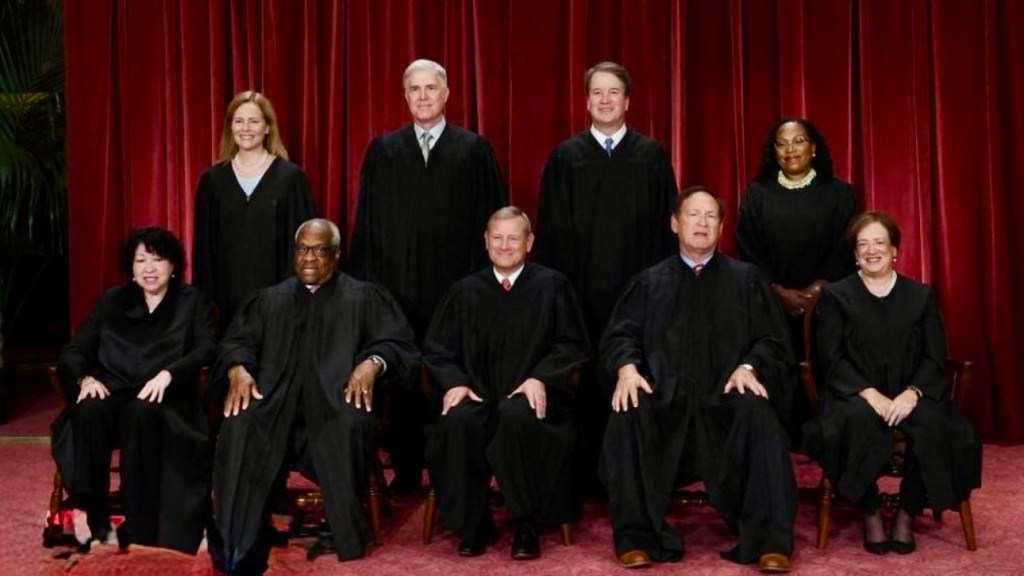
Nowhere is this self-inflicted unraveling more on display than at the Supreme Court of the United States (SCOTUS). For generations, the Court survived by wrapping itself in an almost theatrical solemnity: soaring neoclassical marble, black robes, months of meticulous briefing, oral arguments full of archaic Latin, and dense, eighty-page opinions designed to convince us that nine appointed lawyers are merely translating the sacred will of the Founders rather than indulging personal vibes.
Then came the “shadow docket.”
If the regular merits docket is a Broadway production—expensive, painstakingly rehearsed, and staged in broad daylight—the shadow docket is the theatrical equivalent of a guy in an alley selling bootleg scripts out of an oversized trench coat. It has become the judicial shortcut par excellence: a mechanism meant for mundane procedural filings that has instead metastasized into a vehicle for reshaping national policy overnight.
And in doing so, the Court is giving a masterclass in institutional seppuku.
What Is the “Shadow Docket,” Really?
Coined in 2015 by law professor Will Baude, the term technically refers to the Court’s emergency orders and summary decisions. Historically, it wasn’t sinister; it was paperwork:
- Extending filing deadlines by three days.
- Handling routine bail applications.
- Denying eleventh-hour death penalty stays where no legal error was plausibly alleged.
These orders arrive without public oral arguments, without exhaustive amicus briefs, and often without signed reasoning. They are essentially judicial Post-It notes: “Application granted. 5–4. Have a nice weekend.”
The trouble began when the emergency docket stopped handling ministerial emergencies and started handling constitutional earthquakes. Over the past decade, major questions touching voting procedures, environmental regulations, public health restrictions, and abortion access have been resolved via these late-night, unreasoned fiats.
When you strike down sweeping nationwide rules at 11:47 PM on a Thursday with a two-paragraph unsigned order, it doesn’t read like the majestic hand of Lady Justice weighing the scales. It reads like an Amazon Prime delivery of partisan policy.
The Anatomy of Institutional Suicide
Institutions do not survive because the Constitution says they should; they survive on a collective psychological hallucination known as legitimacy.
The Supreme Court commands no army, controls no treasury, and doesn’t even possess the authority to enforce its own parking tickets. Alexander Hamilton famously called the judiciary the “least dangerous branch” precisely because it possessed “neither FORCE nor WILL, but merely judgment.” When people stop respecting that judgment, the Court transforms from a revered constitutional referee into nine elderly lawyers whose memos everyone can safely ignore.
Here is how the emergency docket is systematically gutting that authority:
1. Zero Homework, Maximum Consequence
The entire intellectual bargain of the American legal system is that judges show their work. If you are going to overturn a decades-old statute or greenlight an unprecedented state law, the public demands an explanation that grapples with counterarguments and precedent.
Issuing a monumental decree with zero explanatory rationale is the legal equivalent of telling the nation, “Because we said so.” That posture might work for an exasperated parent dealing with a toddler, but it tends to curdle when applied to three hundred million citizens.
2. The Partisan Sniff Test
When substantive decisions are made in the open, even a skeptical public can trace the legal theories—originalism, purposivism, textualism—however tortured they might occasionally seem.
When those same outcomes occur via late-night emergency motions along predictable partisan lines, the intellectual pretense evaporates. If an emergency docket lets one administration enact controversial policies while freezing identical maneuvers from the opposing party, the public doesn’t conclude that the law is mysterious; they conclude that the game is rigged. The robe ceases to look like a vestment of impartial justice and begins to look suspiciously like a cheap party jersey.
3. Erasing the Lower Courts
The federal judicial system relies on a pyramid structure: district judges sift through thousands of exhibits and witness testimony; appellate courts stress-test the legal doctrines; and finally, the High Court weighs in once the issue is fully distilled.
By aggressively intervening via emergency injunctions before lower courts have even held a trial, the Supreme Court short-circuits its own hierarchy. It tells trial judges that their fact-finding is decorative, appellate panels that their deliberations are irrelevant, and litigators that the only step that truly matters is sprinting to the emergency window before midnight.
A Playbook for Self-Destruction
The tragedy of institutional decline is that it is rarely inflicted from the outside; it is hollowed out from within by leaders who prioritize short-term wins over the durability of the vessel carrying them.
Every time an institution dispenses with its own guardrails to secure a speedy ideological victory, it trades away a chunk of its reservoir of trust:
- Elections lose credibility when procedural norms are altered haphazardly.
- Universities lose respect when open inquiry gives way to ideological orthodoxy.
- Courts lose their moral force when deliberate, transparent jurisprudence is replaced by drive-thru injunctions.
The Supreme Court’s shadow docket was meant to be an attic closet for routine procedural junk. By dragging major constitutional battles into that attic, the Court has not made its rulings immune to scrutiny; it has merely turned off the lights. The problem is that when the lights finally flicker back on, the mystique is gone—and all that remains is raw power looking for a place to hide.
Reform
The backlash against the shadow docket has spurred an active debate across constitutional law scholars, Capitol Hill, and the Supreme Court itself.
The proposals fall into two categories: legislative interventions (Congress using its constitutional authority over federal jurisdiction and procedure) and internal judicial self-regulation (the Court fixing its own house).
1. Congressional & Legislative Proposals
Congress holds broad authority under Article III to regulate the federal court system and define appellate jurisdiction. Lawmakers have introduced or floated several mechanisms to curb emergency docket abuses:
Mandatory Written Explanations and Vote Transparency:
Legislative proposals—such as the Supreme Court Honesty and Disclosure of Orders and Writs (SHADOW) Act introduced in the House—would legally require the Court to provide a written legal justification on the record within a set timeframe (e.g., seven days) whenever it issues an emergency stay or injunction. Crucially, it would require every Justice to disclose their vote, eliminating the shield of anonymous, unsigned orders.
Tightening the “Irreparable Harm” Standard:
Historically, the Solicitor General or state attorneys general have claimed that merely having a government statute enjoined temporarily constitutes automatic “irreparable harm.” Legislative reforms propose statutory standards clarifying that the government must prove specific, concrete, immediate injury—rather than relying on a presumption of harm—before a lower court ruling can be halted.
Reforming Nationwide Injunctions & Forum Shopping:
A major driver of the shadow docket is single district judges issuing nationwide preliminary injunctions, which instantly catapults local disputes into urgent, national emergencies requiring Supreme Court intervention. Congress has considered bills requiring three-judge district panels or restricting single district judges from halting federal rules across the entire country, which would dramatically cut down the volume of emergency appeals reaching SCOTUS.
Re-routing Case Selection:
More aggressive structural bills (like the proposed SCCOTUS Act) suggest filtering certain preliminary requests or certiorari petitions through rotating panels of federal circuit court judges, stripping the High Court of its total, unmonitored discretion over early intervention.
2. Internal Judicial Reforms (What the Court Can Do)
The Court could neutralize most of its legitimacy crisis tomorrow simply by adjusting the Supreme Court Rules (governed under Rules 21–23):
“Show Your Work” as a Standing Rule:
The Justices could adopt an internal norm or formal rule requiring a minimum rationale for any emergency order that alters the status quo. If an order affects millions of voters, nationwide environmental standards, or federal programs, the majority would be obligated to publish at least a concise, reasoned per curiam analysis addressing why the lower court likely erred.
Scheduled Oral Arguments for High-Stakes Emergencies:
The Court has occasionally done this—for instance, hearing expedited oral arguments in 2022 on the OSHA vaccine mandates. Institutionalists argue that whenever an emergency application raises novel constitutional questions of nationwide importance, the Court should automatically schedule 48-to-72-hour expedited briefing and oral argument rather than deciding on papers behind closed doors.
Raising the Internal Threshold (Supermajority for Stays):
Legal scholars have proposed that altering the status quo on an emergency basis should require a supermajority—say, six or seven votes rather than a bare 5–4 majority. This would reserve emergency relief strictly for unmistakable legal errors rather than closely divided ideological matters.
Clarifying Precedential Effect:
Lower court judges frequently complain that they don’t know whether a two-sentence shadow docket order creates binding precedent or is merely a one-off stay. The Court could explicitly formalize that unreasoned, interlocutory emergency orders carry no binding stare decisis value for lower courts, preventing emergency rulings from quietly rewriting substantive doctrine.
The Realistic Obstacles
Separation of Powers: If Congress mandates how and when Justices write opinions, the Court could strike down those laws under Article III, asserting that internal opinion-drafting is an inherent judicial power beyond legislative reach.
Political Disincentives: As long as whichever political faction holds a Court majority benefits from rapid, friction-free nationwide interventions, the incentive to willingly relinquish the emergency shortcut remains low.

