


When a British-born Black politician is told that his loyalty belongs elsewhere, the question is no longer merely about immigration or patriotism. It is about who gets to decide who truly belongs to Britain.
There is something deeply troubling about a country in which a citizen can be born, educated, elected to Parliament and entrusted with some of the highest offices of state, yet still have his Britishness questioned because of the colour of his skin and the ancestry of his parents.
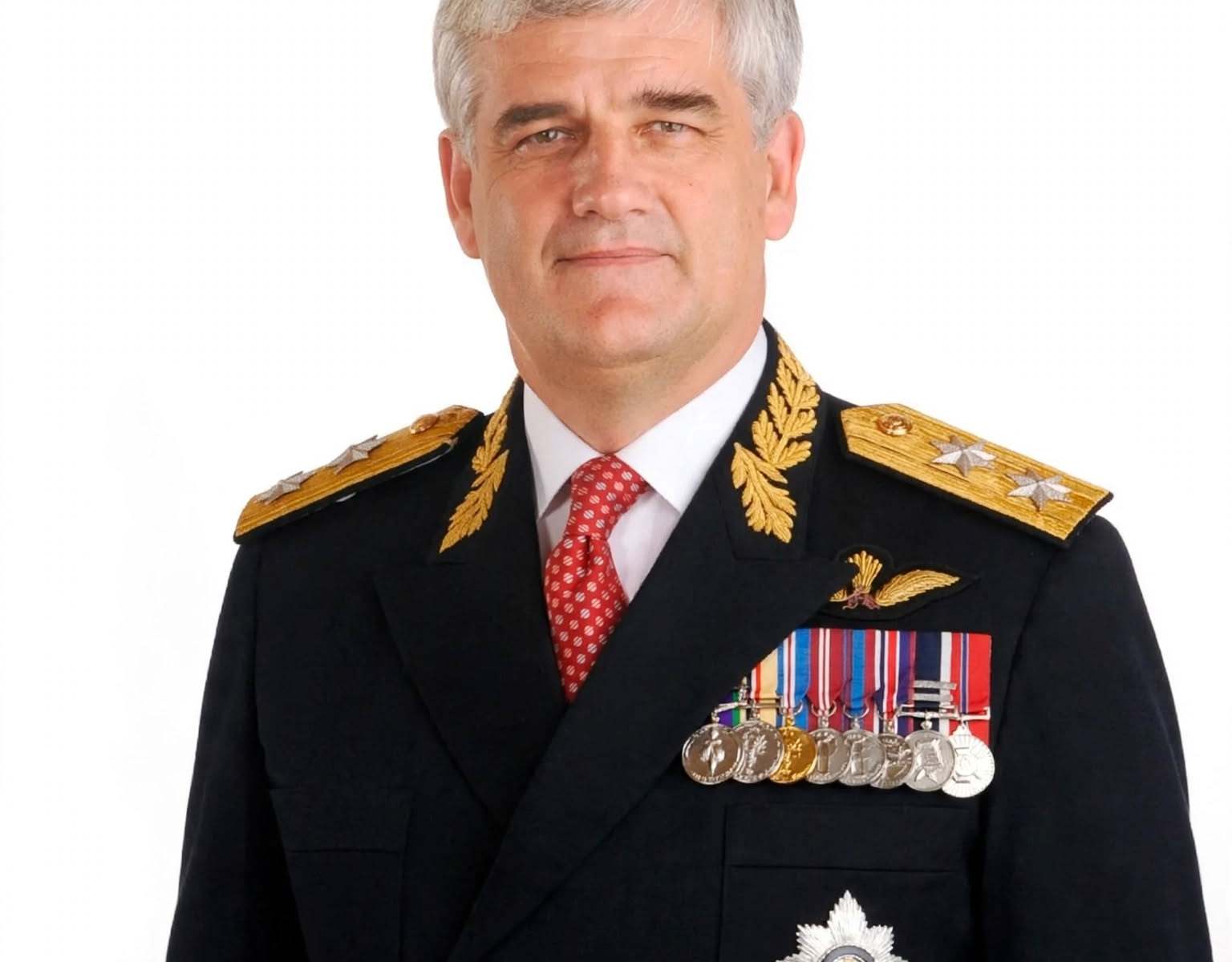
That is the uncomfortable question raised by Rear Admiral (Rtd) Dr Christopher John Parry, CBE, the former Royal Navy officer and Reform UK politician who suggested that David Lammy should return to the Caribbean, where, in Parry’s words, his loyalty supposedly lay.
Lammy was born in London to Guyanese parents. He is British by birth, has served in Parliament for decades and has occupied some of the most senior positions in British government. Yet Parry’s intervention invited the public to look past all these facts and examine the ancestry of a man whose loyalty he chose to question.
In January 2026, Parry reluctantly apologised for the remark, describing it as clumsily worded and insisting that his criticism concerned Lammy’s position on reparations and his perceived patriotism. But the controversy did not end there. Reports subsequently emerged of similar questions about the loyalties of other politicians from minority ethnic backgrounds.
The issue, therefore, deserves more than a passing argument on social media. It calls for an examination of British identity, racial double standards, military service, national honours and the dangerous political habit of treating some citizens as permanent guests in their own country.
The colour-blindness of the patriot
The most revealing question is not whether Parry agrees with Lammy on reparations. He is entitled to disagree, just as Lammy is entitled to advocate policies that Parry considers misguided. The question is why disagreement over public policy should become an invitation to question the national allegiance of a British-born politician whose parents came from the Caribbean.
Would Parry have applied the same test to Boris Johnson, the former British prime minister, who was born in New York and has Turkish ancestry through his great-grandfather, Ali Kemal?
Johnson’s American birthplace and ancestry did not prevent him from becoming Mayor of London, Foreign Secretary and Prime Minister. His political opponents could challenge his competence, judgment, policies and patriotism without suggesting that he should return to Turkey or the United States.
There is an obvious distinction between Johnson and Lammy: Johnson was born abroad and Lammy was born in Britain. Yet that distinction makes the comparison more revealing, not less. Johnson’s foreign birthplace did not disqualify him from the highest office in British politics, while Lammy’s British birthplace has not prevented a prominent political figure from suggesting that his loyalty belongs elsewhere.
The point is not that Johnson should have faced the same insult. It is that the standard of Britishness must not change according to the colour of the person being examined.
If ancestry is to become evidence of divided loyalty, where does the examination end? Must every British politician produce a family tree before being permitted to serve the public? Does a surname become evidence of foreign allegiance? Does the colour of one’s skin constitute a permanent probationary period in British citizenship?
A country cannot credibly celebrate its diversity while maintaining an unofficial hierarchy of belonging in which some citizens are presumed British until proven otherwise, while others must continually prove that they are British enough.
The irony of the naval commission and the CBE
Parry’s military career deserves recognition on its own merits. According to the Royal United Services Institute, he served in the Royal Navy for 36 years, commanded major naval units and held senior strategic appointments. His service included operations during the Falklands War, and he was appointed a Commander of the Order of the British Empire in 2004.
Those achievements should neither be erased nor used as a shield against legitimate scrutiny as Nigel Farage sought to do so by referring to Parry’s military rank in his defence.
A retired admiral is entitled to enter politics, criticise the government and campaign for tighter immigration controls. His military service does not require him to support every government policy or approve of every citizen’s political opinions.
But it raises a legitimate question about the meaning of service.
The Royal Navy is an institution of the British state, not the private property of one racial group. Its commission represents public service under the authority of the Crown. The CBE is a national honour bestowed in recognition of service and achievement. Neither is a certificate granting its holder the exclusive right to determine which British citizens deserve to belong.
What does patriotism mean when a man who has served the country for decades questions whether another British citizen truly belongs to it because of his heritage?
The question is not whether Parry’s military service was genuine. It is whether his conception of British identity is broad enough to recognise the equal citizenship of people who do not share his complexion or ancestry.
Nor does his controversial statement, by itself, establish that he has committed a criminal offence or automatically justify the withdrawal of his honour. Those are separate questions requiring proper legal grounds and due process.
But public honours are not beyond public scrutiny. An honour recognises service; it does not confer immunity from criticism.
The British state must be able to honour distinguished service while insisting that its recipients, like all other citizens, remain accountable for their public conduct.
Who owns Britain?
Britain was not built by one complexion, one ancestry or one generation.
Its history includes the expansion of an empire across continents, the exploitation of colonial subjects, the transatlantic slave trade, the struggles for emancipation and the arrival of Commonwealth citizens who helped rebuild the country after the Second World War.
The Caribbean is not some unrelated corner of the world that suddenly intruded upon British history. Britain’s relationship with the Caribbean was shaped by centuries of imperial rule, slavery, commerce and migration. The Windrush generation and their descendants are part of the story of modern Britain, not footnotes to it.
David Lammy’s Guyanese heritage is therefore not evidence that he is less British. It is part of his family history, just as other British citizens have Irish, Polish, Indian, Nigerian, Turkish or numerous other ancestral connections.
Citizenship is not a racial inheritance passed down exclusively through the descendants of people who happen to look like the person conducting the test.
And Britain cannot simultaneously draw upon the service, labour, taxes and civic participation of citizens from diverse backgrounds while treating their ancestry as grounds for suspicion.
The danger in Parry’s remarks is the implication that British citizenship may be legally equal but socially conditional. A Black citizen can hold high office, yet still be told that his proper home is somewhere else.
That is not a coherent doctrine of patriotism. It is a test of belonging that some citizens can never permanently pass.
Reform UK and the politics of selective outrage
Parry’s remarks also raise questions about Reform UK’s political culture and leadership.
In December 2025, reports emerged that he had questioned the primary loyalty of several politicians from minority ethnic backgrounds. In January 2026, he apologised for the Lammy remark after Nigel Farage called for an apology. In March, Reform suspended Parry as its candidate for the Hampshire and the Solent mayoralty following further controversial comments about a Jewish neighbourhood-watch organisation.
These developments matter because political parties do more than register the opinions of their candidates. They decide which conduct is acceptable, which candidates are promoted and which standards apply when controversy erupts.
A party that campaigns on national identity must explain what it means by national identity. Is Britishness defined by citizenship, allegiance to the law and participation in national life? Or is it a cultural and racial category in which certain citizens remain suspect regardless of their birthplace, achievements or public service?
Reform is entitled to argue for lower immigration, stronger border controls and a different approach to integration. Such positions can be debated on their merits. But immigration policy and the citizenship of people already born British are not interchangeable subjects.
A British-born politician does not become a foreigner because he supports reparations, criticises government policy or has parents from another country.
Indeed, if loyalty is to be judged by political conduct rather than ancestry, the test must apply consistently to everyone. A white politician can be wrong about Britain. A Black politician can be right. Both can be wrong, and both can be right. The colour of their skin settles none of those questions.
The recent ITV investigation into Reform’s handling of allegations of racism has intensified scrutiny of its internal standards. The party’s response to such controversies is therefore not peripheral to its claim to govern. It is part of the evidence by which that claim should be judged.
The constitutional question: equal citizenship
There is also a constitutional dimension to this debate.
Section 1 of the Equality Act 2010, concerning the public sector equality duty, requires relevant public authorities to have due regard to the need to reduce discrimination and advance equality of opportunity. Section 9 identifies race as including colour, nationality and ethnic or national origins.
These provisions do not automatically make every offensive political statement unlawful. Nor does the Equality Act impose identical legal duties on every private individual in every circumstance. Political expression is protected, and the legal assessment depends on the precise conduct and context.
Nevertheless, the law recognises a fundamental principle: race and national origin are not legitimate reasons to deny people equal treatment in circumstances covered by the legislation.
The wider constitutional ideal is equally important. British citizenship must not become a second-class status for citizens whose parents were born elsewhere.
Parry may question Lammy’s policies. He may criticise his position on reparations. He may argue that the Deputy Prime Minister’s decisions are contrary to British interests. These are legitimate subjects of political debate.
But the assertion that Lammy’s loyalty lies in the Caribbean demands an answer: what evidence justifies that conclusion, beyond his heritage and the policy disagreement that prompted the remark?
If the answer is merely ancestry, then the argument is not a serious examination of allegiance. It is an assumption about identity dressed in the language of patriotism.
What has Parry done in the colour of Britain?
The question in the title of this article is deliberately uncomfortable.
What has Parry done in the colour of Britain under his racism?
It is not an allegation that his entire military career was racist, nor is it a claim that every aspect of his public service should be dismissed. His record of service can be acknowledged without granting him a monopoly over patriotism.
The more pertinent question is whether a distinguished career serving the British state has taught him to recognise Britain as a country belonging equally to its citizens, regardless of colour or ancestry.
A uniform does not erase prejudice. A medal does not resolve a contradiction. A distinguished rank does not make an argument immune from examination.
The deeper irony is that a retired admiral who served the Crown now finds himself at the centre of a debate about whether a British-born holder of high public office should be regarded as belonging to Britain.
The answer should be straightforward. Lammy’s loyalty must be assessed by his conduct, not guessed from his ancestry. The same rule applies to Johnson, Parry and every other citizen.
If a politician betrays the public trust, investigate the conduct. If a minister advances a disastrous policy, expose its consequences. If a public official acts against the national interest, produce the evidence.
But do not substitute the colour of a person’s skin for proof.
Conclusion: Britain belongs to its citizens
The Britishness of David Lammy is not contingent upon Christopher Parry’s approval. Nor does it depend on whether Lammy supports reparations, immigration reform or any other political position.
He was born in Britain. He is a British citizen. His ancestry does not cancel those facts.
Boris Johnson’s American birthplace did not prevent him from becoming Prime Minister. Parry’s naval career did not make him the owner of British patriotism. And Lammy’s Caribbean heritage does not turn him into a foreigner.
The real test of patriotism is not how aggressively one questions the belonging of others. It is whether one can defend the country without diminishing the citizenship of one’s fellow citizens.
Britain’s strength lies not in pretending that its citizens share a single ancestry, but in insisting that their rights do not depend upon one.
A country is not made more British by telling some of its citizens to go home. It is made less British when the meaning of home depends on the colour of their skin.
And if a retired admiral wishes to lecture the nation on loyalty, he must be prepared to answer the most elementary question of all: is his vision of Britain large enough to include every British citizen?

