

There are two kinds of students in life. The first studies history in order not to repeat the mistakes of the past. The second studies history carefully, identifies where the money was hidden, and repeats the exercise with greater efficiency.
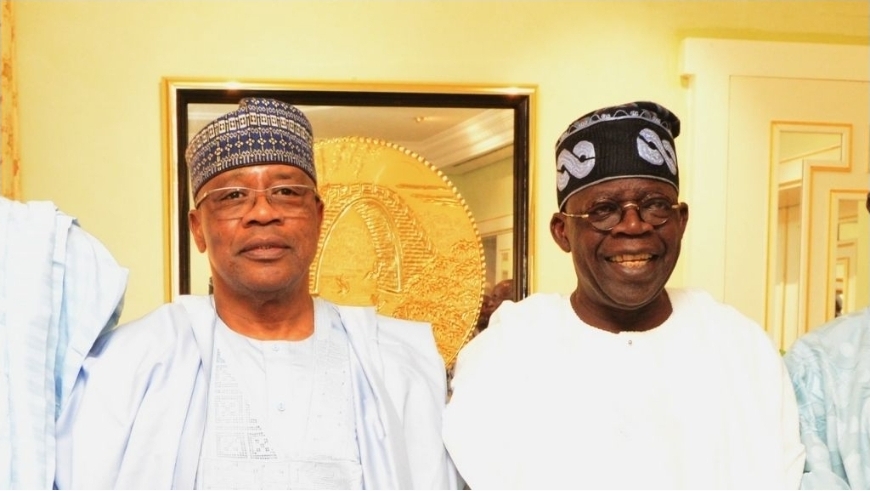
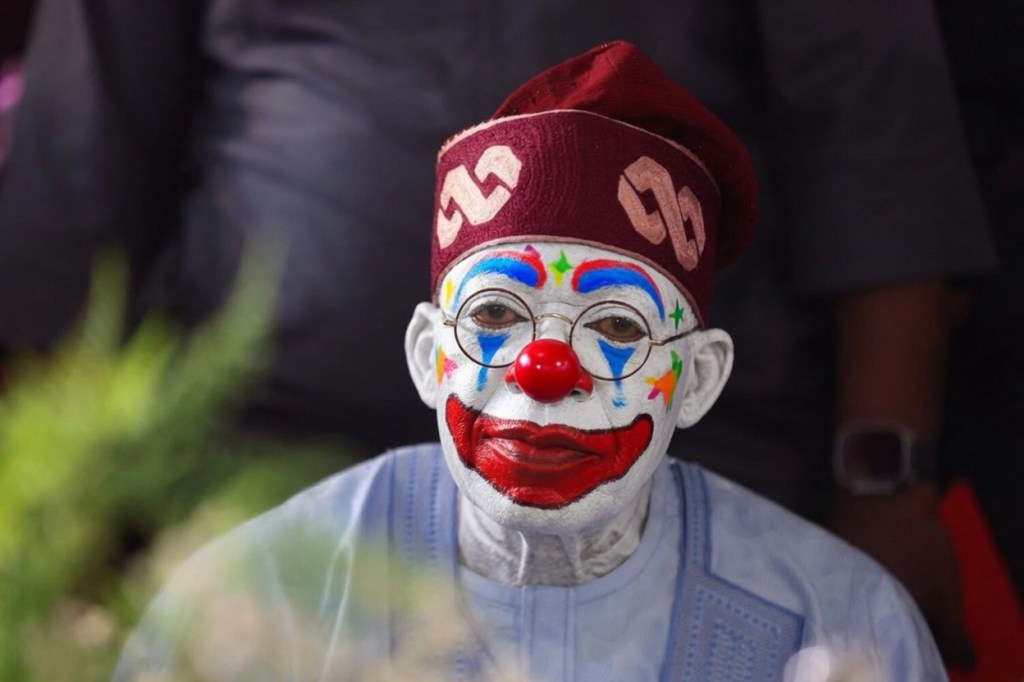
President Bola Ahmed Tinubu appears to belong to the second category.
Back in 1994, the military government of General Sani Abacha established the famous Pius Okigbo Panel to investigate the management of Nigeria’s oil revenues during the regime of General Ibrahim Babangida. The panel discovered what Nigerians had long suspected: vast amounts of oil windfall income had disappeared into opaque accounts, outside normal budgetary processes and beyond effective legislative scrutiny.
The report documented a system where extraordinary oil revenues were treated less like public funds and more like personal pocket money available to whoever occupied Aso Rock.
Most students would read such a report and conclude that transparency, accountability, and legislative oversight are essential safeguards.
But every now and then a particularly creative student emerges.
President Tinubu appears to have studied the report carefully and arrived at a different conclusion.
The first major act of his administration was the removal of petroleum subsidies. Economists applauded. International financial institutions applauded. Editorial boards applauded. The government assured Nigerians that the painful sacrifice would create enormous fiscal savings that would be invested in infrastructure, education, healthcare, and social development.
Indeed, the subsidy removal generated a financial windfall of historic proportions.
The interesting question is not how much money was saved.
The interesting question is: where exactly did the money go?
This is where the ghost of Pius Okigbo begins to smile knowingly.
Across the country, Nigerians have witnessed a flood of announcements involving enormous projects, gigantic infrastructure contracts, intervention funds, and borrowing programmes whose details often emerge only after the money has been committed.
The sums involved are staggering.
The procurement procedures are frequently opaque.
Legislative scrutiny often appears to be an afterthought.
The National Assembly increasingly resembles a spectator at a football match who discovers the final score from the newspapers the following morning.
Loans are announced.
Funds are allocated.
Contracts are awarded.
Then everybody begins asking questions afterwards.
This was precisely the governance culture that the Okigbo Panel criticised decades ago.
The irony is almost poetic.
The panel was intended as a warning.
Future generations appear to have treated it as a training manual.
To be fair, there is one significant difference.
Under Babangida, the issue was excess crude revenues.
Under Tinubu, the issue is subsidy savings.
Different source.
Same temptation.
The Nigerian state has always struggled with windfalls. Whether it is oil booms, excess crude earnings, debt relief gains, privatisation proceeds, or subsidy savings, extraordinary revenues have a remarkable ability to escape ordinary accountability mechanisms.
It is almost as if the Constitution applies only to regular money.
The moment money becomes abundant, everybody suddenly develops selective amnesia regarding due process.
Perhaps future historians will eventually settle the matter.
One can easily imagine a future government establishing yet another investigative panel after the Tinubu administration leaves office.
The panel members will gather in a conference room.
Researchers will begin collecting documents.
Thousands of pages will be reviewed.
Witnesses will be summoned.
Several months and several billion naira later, one exhausted researcher will discover a dusty copy of the original Pius Okigbo Panel Report.
At that point, he will reportedly stand up and announce:
“Gentlemen, we can save a lot of time here.”
The committee will then proceed to photocopy the report.
Every occurrence of “Babangida” will be replaced with “Tinubu.”
Every reference to “oil windfall” will be replaced with “subsidy savings.”
The title page will be amended.
And Nigeria will proudly receive:
PIUS OKIGBO PANEL REPORT 2: THE REMASTERED EDITION.
The tragedy, of course, is that satire works only because it contains a grain of truth.
A democratic government is not measured merely by its ability to generate revenue. It is measured by its willingness to submit that revenue to transparent procedures, competitive procurement, legislative oversight, and public accountability.
Otherwise, every generation simply discovers new ways of doing what previous generations were criticised for doing.
And every investigative panel becomes less a warning from history and more a user manual for the next administration.
As George Santayana famously observed, those who cannot remember the past are condemned to repeat it.
Nigeria’s political class has improved on the formula.
They remember the past perfectly.
That is precisely the problem.

