


One of the most persistent slogans of Britain’s political far right is the claim that “the people did not vote for mass immigration.” It is a phrase repeated endlessly in television studios, social media posts, and political rallies. It sounds persuasive. It sounds democratic. It is also fundamentally wrong.
A few weeks ago, Switzerland held a referendum on immigration. Swiss voters were asked whether the country’s population growth should be artificially capped by restricting immigration. The proposal was rejected.
Switzerland is able to make such decisions because it operates a political system that allows citizens to vote directly on major policy questions. Referendums are a routine feature of Swiss democracy. The people themselves are often the legislature.
The United Kingdom is different.
Britain operates a parliamentary democracy. The British people do not vote directly on most individual government policies. They elect Members of Parliament who then make decisions on their behalf. Parliamentary sovereignty is the cornerstone of the British constitutional system. Once elected, Parliament governs and legislates.
The Brexit referendum was therefore an extraordinary constitutional event. It was a rare occasion when the electorate was asked directly to decide a specific policy question. The decision was whether the United Kingdom should remain in or leave the European Union. The people voted to leave.
After that vote, the constitutional responsibility for implementing Brexit returned to Parliament and the government.
This is where many of today’s anti-immigration campaigners become selective in their understanding of democracy.
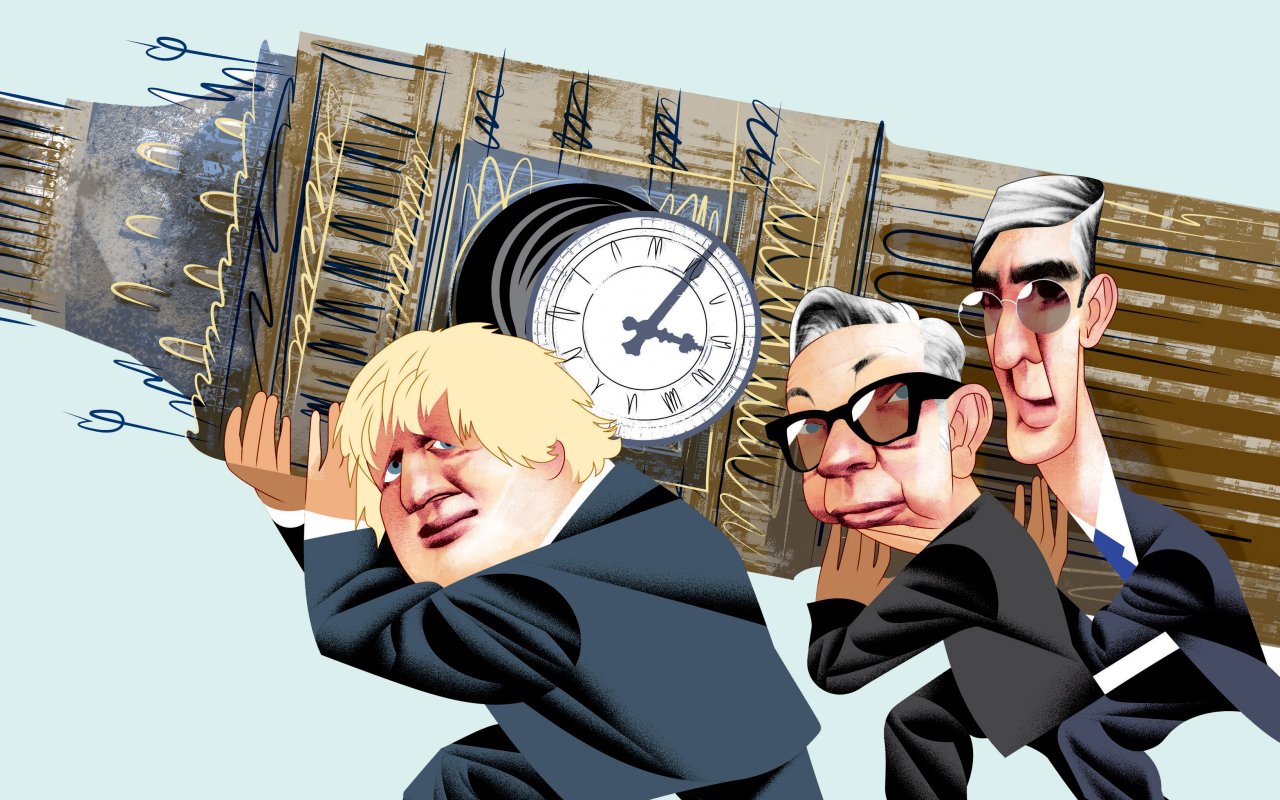
When Boris Johnson sought election in 2019, he did so on a clear platform. He promised to “Get Brexit Done” and repeatedly presented a vision of “Global Britain.” The Conservative Party won a landslide majority in Parliament. Johnson was given one of the largest electoral mandates in modern British history.
His government then pursued exactly what it had promised. Leaving the European Union meant ending freedom of movement from Europe. British businesses, universities, hospitals, care homes, and industries still needed workers. Economic growth still required labour. Demographic realities still existed.
The solution adopted by the government was straightforward: replace European migration with global migration.
The result was entirely predictable. Immigration remained high and, in some years, reached record levels. This was not an accident. It was not a conspiracy. It was government policy implemented by a government elected with a large parliamentary majority.
What many Brexit campaigners failed to appreciate was that modern economies require people. Labour shortages do not disappear because of slogans. Hospitals need nurses. Construction firms need workers. Universities need students. Businesses need skilled employees. An economy cannot simply wish away demographic and labour market realities.
Boris Johnson appears to have believed that many Brexit voters objected primarily to European immigration and would accept increased migration from elsewhere if it helped sustain economic growth. However, some of the architects and most enthusiastic supporters of Brexit had a different concern altogether.
For them, the issue was never simply immigration. It was often the origin and appearance of the immigrants themselves.
The irony is impossible to ignore.
The same voters who demanded Brexit frequently complain about the economic consequences that followed. Labour shortages emerged. Economic growth slowed. Trade became more difficult. Public finances came under pressure. Living standards stagnated.
Many effectively voted to weaken the economic arrangements that had supported prosperity and then expressed outrage when the consequences arrived.
The old saying about cutting off one’s nose to spite one’s face comes to mind.
More importantly, however, the constitutional argument remains decisive.
In a parliamentary democracy, the people do not vote on most individual policies. They vote for representatives. Those representatives form governments. Those governments make policy choices.
Parliament approved the post-Brexit immigration framework. Parliament approved the legislation. Parliament supported the governments that implemented it. The electorate repeatedly elected those governments.
Therefore, when politicians with little or no parliamentary representation declare that “the people did not vote for mass immigration,” they are making a claim that misunderstands, or deliberately misrepresents, how British democracy works.
The people voted for Brexit.
The people voted for the government that promised Global Britain.
The people voted for the Parliament that enacted the resulting immigration policies.
In a parliamentary democracy, that is precisely how democratic consent operates.
Those unhappy with the outcome are entitled to oppose the policy. They are entitled to campaign for change. They are entitled to argue for lower immigration.
What they are not entitled to do is pretend that Parliament somehow acted without democratic authority.
The people may not have voted directly for every immigration policy. But through the representatives they elected, they most certainly voted for the governments that delivered them.
That is not a failure of democracy.
That is democracy working exactly as Britain’s constitution intended.

