

Is the Nigerian Media Sabotaging Nigerian Democracy?
A democracy does not always die at the barrel of a gun. Sometimes, it dies beneath television studio lights, while journalists entrusted with holding power accountable sit silently as politicians explain why nobody can hold them accountable.
Nigeria’s democracy faces familiar threats: electoral manipulation, political impunity, institutional weakness and the abuse of public office. But there is another danger we discuss less frequently: a media culture that gives powerful politicians the microphone without insisting that they answer the questions that matter.
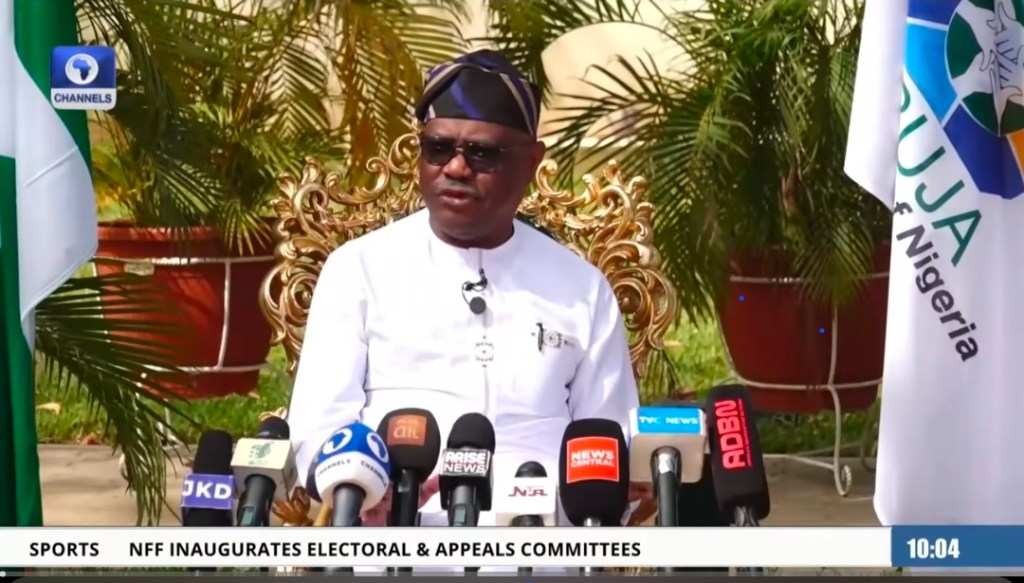
The spectacle surrounding Nyesom Wike’s media chats raises precisely this concern. When journalists assemble before a powerful politician, listen to his declarations and leave without adequately interrogating his claims, we must ask an uncomfortable question: is Nigerian journalism holding power accountable, or helping power manufacture its own legitimacy?
The issue is not whether Wike should be interviewed. He should. As Minister of the Federal Capital Territory and an influential political actor, his policies, pronouncements and political activities are legitimate subjects of public scrutiny.
The issue is what happens when the interview begins.
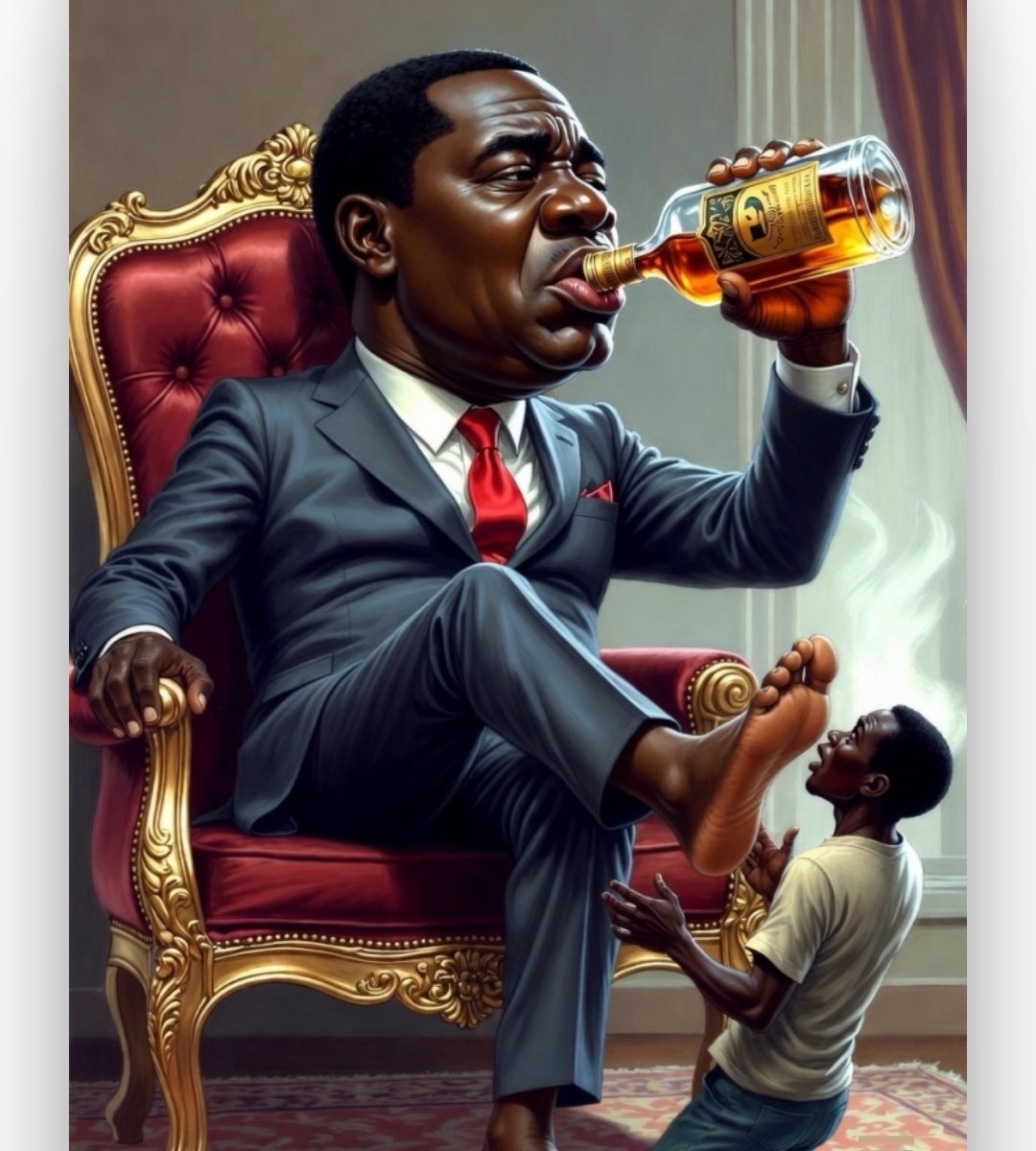
The politician occupies the throne
Consider the curious spectacle of Wike’s media chats. The politician sits at an elevated table, with journalists arranged around him. The setting can resemble a royal audience: the powerful man speaks, while those entrusted with questioning him appear reluctant to disturb the proceedings.
Wike speaks. They listen.
Wike boasts. They nod.
Wike makes extraordinary political declarations. The public waits to discover whether anyone will demand evidence.
He discusses what he has accomplished, what he intends to do, whom he supports, whom he opposes and what nobody can stop him from doing. Yet the central obligation of journalism, interrogation, too often appears to take a back seat to the spectacle of access.
At what point did journalism become an exercise in watching politicians speak?
An interview is not a courtesy call. It is not a political rally with better lighting. Nor is it an opportunity for a politician to rehearse his talking points before a national audience.
It is an accountability exercise.
The journalist represents the public’s right to know. The politician represents an interest that must be examined, not automatically accepted. Their roles are different, and confusing them is dangerous.
A politician deserves civility, but not reverence. Public office confers responsibility, not immunity from difficult questions.
On the BBC, CNN, Al Jazeera and other serious news platforms, the most consequential interviews are not necessarily those in which the interviewer shouts the loudest. They are those in which preparation, evidence and persistence prevent the interviewee from escaping scrutiny.
Nigeria needs more of that journalism.
The politician may occupy the head of the table. He should not occupy the head of the argument merely because he is politically powerful.
Who pays for the performance?
There is another legitimate question: who finances these media engagements?
Questions have been raised in political circles, including by voices associated with Atiku Abubakar, about the financing of Wike’s media chats. Suspicions have also circulated concerning possible payments to media organisations or participating journalists.
These allegations should not be treated as established facts without supporting evidence. Political accusation is not proof, and responsible journalism must apply the same evidential standards to its own profession that it applies to politicians.
Nevertheless, the questions deserve clear answers.
Who pays for the venue, production, logistics and broadcasting? Are public funds involved? Do participating broadcasters receive payments? Are individual journalists compensated? If sponsorship exists, is it disclosed? What safeguards protect editorial independence?
There is nothing inherently improper about financing a media event or paying for legitimate production services. The concern arises when financial arrangements create undisclosed conflicts of interest, compromise editorial independence or turn purportedly independent journalism into political promotion.
Nigerians should not have to guess whether they are watching journalism, sponsored political communication or something in between.
A journalist who exchanges independence for political favour risks mortgaging more than a professional reputation. He risks the public’s right to reliable information.
The danger is not simply that money might influence what a journalist says. It is that financial incentives and access to powerful people might determine which questions are never asked.
Nobody needs to issue an instruction to remain silent if the conditions surrounding the interview have already made silence the most convenient option.
Why is Wike so accessible while the president faces limited scrutiny?
The contrast with President Bola Ahmed Tinubu deserves attention.
As president, Tinubu makes decisions affecting taxation, public spending, fuel prices, foreign exchange, security, education, healthcare and the livelihoods of millions of Nigerians. These decisions demand sustained public scrutiny.
Yet opportunities for prolonged, genuinely probing and unscripted questioning of the president by Nigerian journalists have been limited.
Meanwhile, Wike, who is not the president, has enjoyed repeated opportunities to broadcast his political views to a national audience.
There is nothing inherently wrong with that. Wike’s responsibilities in Abuja, his political influence and his role in Rivers State all warrant scrutiny.
But why does the Nigerian public so often receive political declarations without equally persistent demands for supporting evidence?
Why does access to power appear to be treated as a privilege bestowed upon journalists rather than an opportunity to hold officeholders accountable?
If the president avoids difficult interviews, the press should report that avoidance and continue demanding answers. If a minister grants interviews, the press should use the opportunity to examine his record.
The objective is not to embarrass politicians. It is to inform citizens.
The Nigerian press must stop behaving as though access to powerful people is itself an achievement. Access is merely the beginning of the journalist’s work.
Political advertising disguised as journalism?
Some Nigerians suspect that repeated media appearances by influential political figures may help cultivate the impression that an APC victory in 2027 is inevitable, regardless of public dissatisfaction.
That suspicion is not proof of a coordinated political operation. Such a conclusion would require evidence of deliberate planning and execution.
But the underlying concern is worth examining.
Political communication shapes public expectations. Repeated declarations of political dominance can encourage the belief that an election has already been decided before voters have cast their ballots.
A politician who portrays himself as indispensable or capable of determining electoral outcomes may be expressing confidence, boasting or attempting to intimidate his opponents. The journalist’s responsibility is to establish which, if any, of these explanations the evidence supports.
If a politician claims to determine election outcomes, what exactly does he mean? Is he describing political influence, party organisation and voter mobilisation, or suggesting something more troubling?
What evidence supports the claim? How does it relate to electoral independence and the constitutional right of citizens to choose their representatives?
These are not hostile questions. They are essential democratic questions.
Section 14(2)(a) of the Constitution of the Federal Republic of Nigeria 1999 provides that sovereignty belongs to the people of Nigeria, from whom government derives its authority. Section 14(2)(c) further provides that the participation of the people in their government shall be ensured in accordance with the Constitution.
The principle is clear: political power derives from the people. It is not the private property of a governor, minister, party chairman or political godfather.
Elections are contests, not coronations.
When politicians suggest otherwise, journalists should challenge the narrative rather than provide the loudspeakers through which it spreads.
The constitutional duty of the press
The Nigerian press has a recognised constitutional role in democratic accountability.
Section 22 of the 1999 Constitution provides that the press, radio, television and other agencies of the mass media shall at all times be free to uphold the fundamental objectives contained in Chapter II and uphold the responsibility and accountability of the government to the people.
Section 39 protects freedom of expression, including the freedom to hold opinions and to receive and impart ideas and information without interference, subject to the law.
Section 22 is part of Chapter II, whose provisions are generally non-justiciable under section 6(6)(c), subject to the constitutional framework and applicable legislation. It should not be misrepresented as an unrestricted, independently enforceable cause of action against every journalist or media organisation that fails to perform adequately.
Its constitutional significance, however, is substantial.
The Constitution recognises that the media has a responsibility to hold government accountable. That responsibility cannot be discharged merely by placing a microphone before a politician.
The real work begins when the politician says something that requires verification.
A press that is legally free but professionally intimidated may possess liberty in theory while surrendering its democratic purpose in practice.
Freedom of the press means little to citizens if the press is unwilling to exercise its freedom when the powerful are speaking.
What a proper interview should look like
Imagine a different Wike media chat.
Wike announces that he has completed a major project. A journalist asks for the contract sum, the procurement details, the completion certificate and evidence of expenditure.
Wike claims political influence over an election. A journalist asks what he means by influence and whether his statement is consistent with the independence of the electoral process.
Wike threatens a political opponent or journalist. The interviewer asks what legal authority justifies the threat and whether it amounts to intimidation.
Wike makes a claim about the political future of Rivers State. The journalist asks whether the claim reflects the wishes of the electorate or merely the preferences of a powerful political actor.
If the answers are evasive, the journalist returns to the question. If the politician refuses to answer, the audience is told that the question remains unanswered.
That is journalism.
It does not require rudeness, theatrical confrontation or a competition to see who can shout loudest. The strongest interviewer is often the calmest person in the room: the one who has read the documents, checked the figures, understood the law and refuses to allow an unsupported assertion to pass as established fact.
A politician may dominate the room physically. The journalist must retain control of the questions intellectually.
And these standards must apply consistently. Tinubu, Wike, opposition politicians, governors, ministers and political godfathers must all face the same test.
A journalist who interrogates political opponents while excusing preferred politicians is not independent. He is simply another participant in the political contest.
How journalism can surrender its independence
The danger is not necessarily a grand conspiracy. Sometimes it is the gradual normalisation of professional compromise.
A journalist wants an exclusive interview. A broadcaster wants a headline-making appearance. A politician wants to reach millions of viewers without having to answer every inconvenient question.
Each party has an incentive. The public, however, has a different interest: accurate information and meaningful accountability.
When access becomes more valuable than independence, the journalist may begin to avoid questions that could jeopardise future invitations. The broadcaster may prioritise spectacle over scrutiny. The politician receives publicity while the public receives assertions dressed in the appearance of accountability.
No government official needs to seize a newsroom if the newsroom has already decided that certain questions are too inconvenient to ask.
This is why the issue matters beyond any single politician or television programme.
A compromised interview may generate ratings, headlines and political attention. But democracy is not measured by television ratings.
It is measured by whether citizens receive reliable information, whether power is subject to scrutiny, whether political competition remains meaningful and whether public officials can be held accountable.
A media culture that repeatedly treats powerful politicians as untouchable helps weaken the institutions on which its own freedom depends.
The consequences may arrive gradually, but the lesson is familiar: institutions rarely become ineffective overnight. Sometimes they are weakened by the small compromises everyone has learned to regard as normal.
What should change?
The answer is not to ban politicians from holding media engagements. Nor is it to assume that every journalist who participates has been compromised.
The remedy is professional independence, transparency and public accountability.
Media organisations should disclose relevant sponsorship arrangements and establish clear rules governing payments, conflicts of interest and editorial independence. Interviews should be properly researched, significant claims verified and unanswered questions pursued. Sponsored political content should not be presented in a manner that misleads audiences into believing it is independent journalism.
Professional bodies should encourage meaningful peer scrutiny. The question should not simply be whether a journalist secured an interview with a powerful politician, but whether that interview served the public interest.
Citizens also have a responsibility to demand more than dramatic soundbites and political boasts. They should ask whether claims have been verified, whether evidence has been produced and whether the questions that matter have actually been answered.
Above all, journalists must understand that political access is not a substitute for public trust.
A journalist’s reputation should depend not on how frequently he appears beside powerful people, but on whether he can be trusted to question them.
Three tests for Nigerian journalism
The debate over Wike’s media chats raises three tests by which Nigerians can judge the health of their press.
First, the independence test: Can journalists question powerful politicians without fear of losing access, financial benefits or professional opportunities?
Second, the transparency test: Can the public establish who finances political media engagements and whether any relevant sponsorship or conflict of interest exists?
Third, the accountability test: Do interviews establish facts, test claims and expose evasions, or merely provide politicians with another platform to repeat their preferred narratives?
These tests should apply to every political party and every public officeholder. They should apply when the politician is popular and when he is unpopular, when he is a friend of the interviewer and when he is not.
A press that fails these tests risks becoming an accessory to the very abuses it was created to expose.
Democracy needs journalists, not courtiers
Nigeria does not need journalists who are perpetually hostile to politicians. It needs journalists who are independent of them.
It does not need interviewers who treat every politician as an enemy. It needs interviewers who understand that every public officeholder is accountable to the people.
It does not need television studios transformed into arenas for manufactured confrontation. It needs serious questioning, documentary evidence, factual accuracy and the intellectual courage to distinguish assertion from truth.
The journalist’s duty is not to make power comfortable. It is to make power accountable.
History is full of people who helped weaken institutions while believing that their own importance would protect them from the consequences. They eventually discovered that political patrons are not permanent, power changes hands and the institutions damaged today may be needed tomorrow.
The Nigerian press should take that lesson seriously. Its independence is not a favour granted by politicians. It is essential to the public’s ability to scrutinise those who govern.
The microphone is not the journalist’s trophy. It is the people’s instrument.
When the press becomes the servant of power, the people risk becoming its prisoners.
And if Nigerian journalism continues to substitute political spectacle for public accountability, future generations may discover that democracy was not weakened only by soldiers marching through the streets or politicians manipulating ballot papers.
It was also weakened in television studios, beneath bright lights and before expensive cameras, whenever those entrusted with asking questions chose silence over scrutiny.
The final question is not whether Wike has the right to speak. He does. It is whether Nigerian journalists will insist on their right, and their duty, to question him.
A democracy cannot survive on microphones alone. It needs people prepared to ask what power would rather leave unanswered.

