

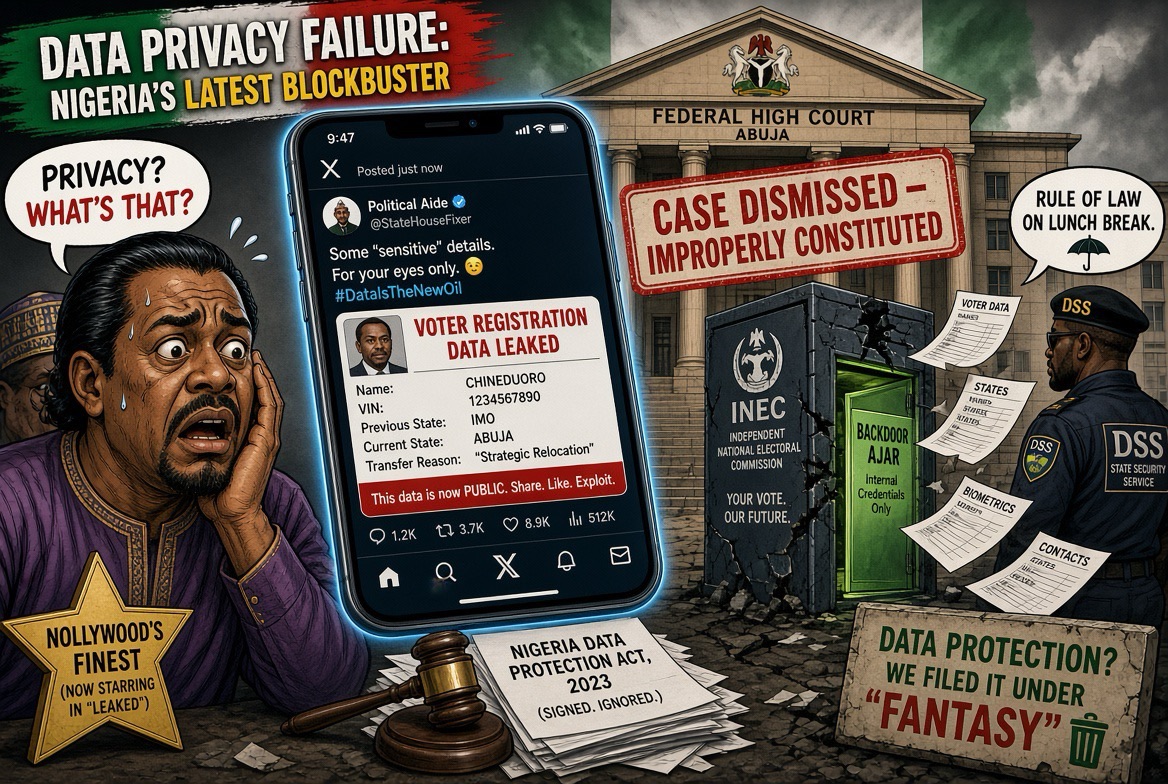
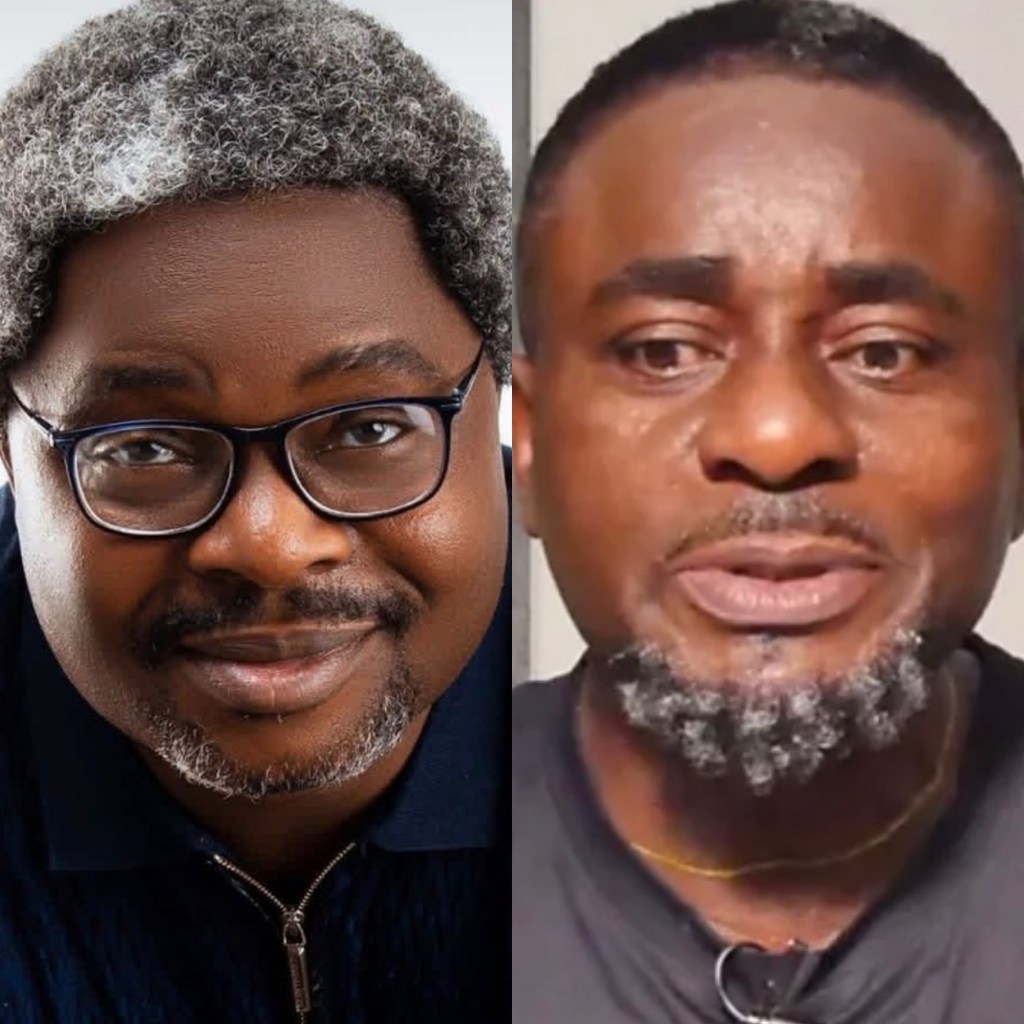
In the grand theatre of Nigerian public life, where every scandal eventually finds its way into a press release, a tweet, and then a court that politely declines to be bothered, the saga of Emeka Ike’s voter details has reached its predictable third act. The curtain has fallen. The audience is still waiting for justice. The actors have already left for the after-party.
Recall the plot, if you can bear it. In May 2026, Nollywood actor-turned-aspirant Emeka Ike was locked in a bitter contest for the Nigerian Democratic Congress (NDC) ticket for the AMAC/Bwari Federal Constituency seat. He lost the primary. His supporters, unimpressed by the outcome, staged a protest at the INEC AMAC office, alleging irregularities. That disruption proved useful.
An unnamed electoral officer inside INEC, working the holy precincts of the continuous voter registration system, pulled Ike’s records. The screenshots revealed a recent transfer of registration from Imo State to Abuja — timed close enough to the primary season to raise eyebrows. Those images were then handed to Lere Olayinka, the ever-enthusiastic Senior Special Assistant on Public Communications and New Media to FCT Minister Nyesom Wike.
Olayinka did what political aides in this climate are paid to do. He posted the details on X with the digital equivalent of a smirk, framing Ike as a carpetbagger who had only just moved his PVC to the capital and was already angling for a seat. The message was clear: eligibility question, anyone? It was a classic Nigerian political hit — official data, obtained through internal access rather than any dramatic external hack, deployed as ammunition to undermine an opponent after a primary loss and score points amid the chaos.
INEC and the DSS sprang into action with the speed of a government agency that has suddenly realised the optics are bad. The electoral officer was apprehended. Interrogations were held. Statements were issued assuring the public that there had been no external breach, only the more familiar Nigerian problem of internal oversharing. One almost expected a circular reminding staff not to treat the voter database like a WhatsApp status.
Then came the civil case. Emeka Ike, perhaps labouring under the quaint belief that personal data still belongs to the person, filed a ₦10 billion fundamental rights suit against INEC and Lere Olayinka. He cited privacy, data protection, and the general principle that a citizen’s registration details should not become political ammunition simply because someone with access decided they should. On 28 October 2026, the Federal High Court in Abuja dismissed the suit. The case was improperly constituted. There was insufficient proof of a privacy violation. Technical knockout. Next.
And so we arrive at the present. The electoral officer who facilitated the leak has been questioned and, it appears, returned to the bureaucratic ether. No criminal charges of any consequence have materialised. The civil claim has evaporated under the weight of procedural objections. Lere Olayinka continues his public duties. INEC continues its public duties. The personal data of a Nigerian citizen remains publicly displayed evidence that the system can be casually breached from the inside for political advantage, with no lasting consequence for anyone except the citizen whose details were treated as campaign material.
This is the part where the rule of law is supposed to clear its throat and restore order. Instead, it has settled for a polite silence. The undisputed fact of unauthorised disclosure sits there, unresolved, like an awkward relative at a family meeting whom everyone has decided to ignore until the next scandal provides cover.
Nigeria is poorer for it, of course. Not in the fiscal sense that keeps the Ministry of Finance busy, but in the quieter currency of public trust. When the institutions charged with protecting personal data can neither prevent its leakage nor punish those involved in a manner the public can see, the message is clear: data protection is a slogan for conferences and donor reports. In practice, it yields to political convenience and procedural technicalities.
One could almost admire the efficiency. Investigate just enough to look serious. Allow the civil case to collapse on form rather than substance. Declare the matter closed by simply moving on. The public is left short-changed, the principle of privacy left looking rather foolish, and the next citizen whose records become useful political content is left with a clear warning: do not expect the system to protect you when it matters.
Emeka Ike sought enforcement of his fundamental rights and received a lesson in how those rights are processed. The rest of us received a reminder that in this particular production, the script rarely ends with accountability. The data was leaked for advantage. The officer was questioned. The suit was dismissed. And Nigeria, once again, is left poorer for the experience while the rule of law stands in the wings, looking slightly embarrassed and hoping no one asks for an encore.

