

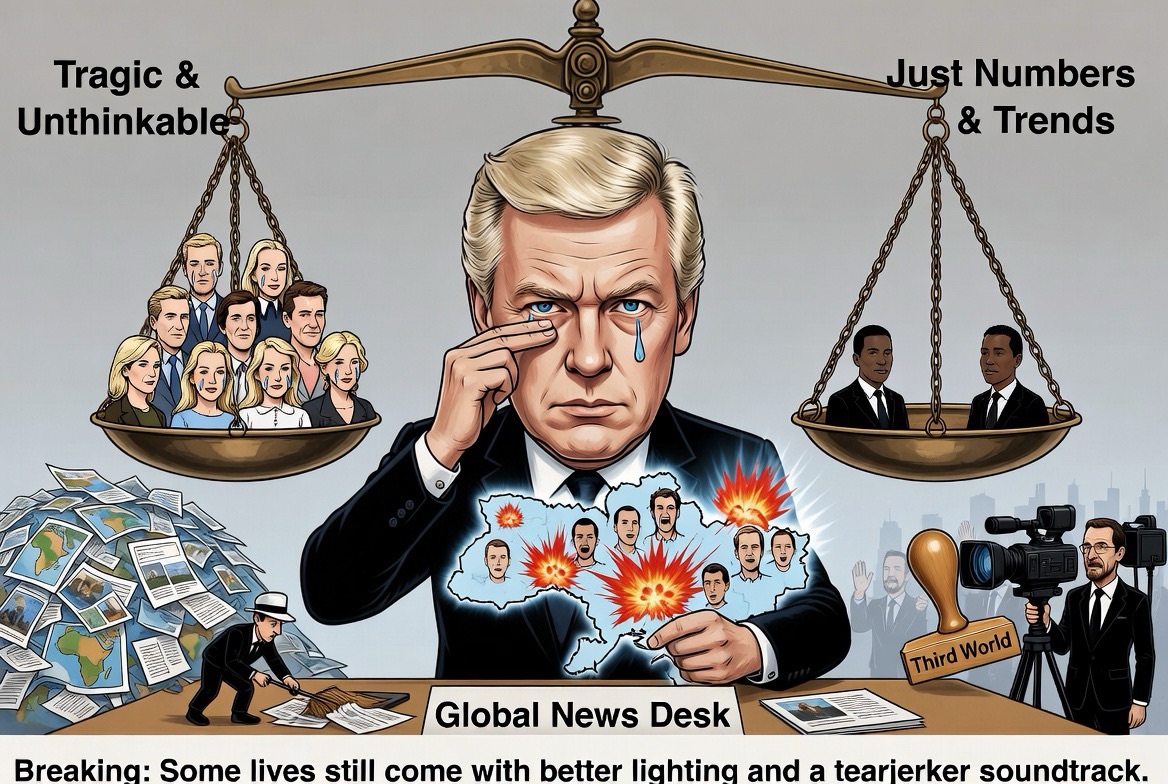
Four years into Russia’s invasion of Ukraine, the Western media still has not recovered from the shock of discovering that white Europeans can also die in large numbers. The early coverage remains a masterclass in accidental honesty. Ukraine’s then Deputy Chief Prosecutor, David Sakvarelidze, told the BBC it was “very emotional” because he was seeing “European people with blue eyes and blonde hair being killed.” No one interrupted him. No one asked the obvious follow-up. The silence was the story.
ITV’s Lucy Watson helpfully translated the subtext for the rest of us: “This is not a developing, third-world nation; this is Europe!” The unthinkable, you see, is only unthinkable when it happens to the right people. When it happens elsewhere, it is merely Tuesday.
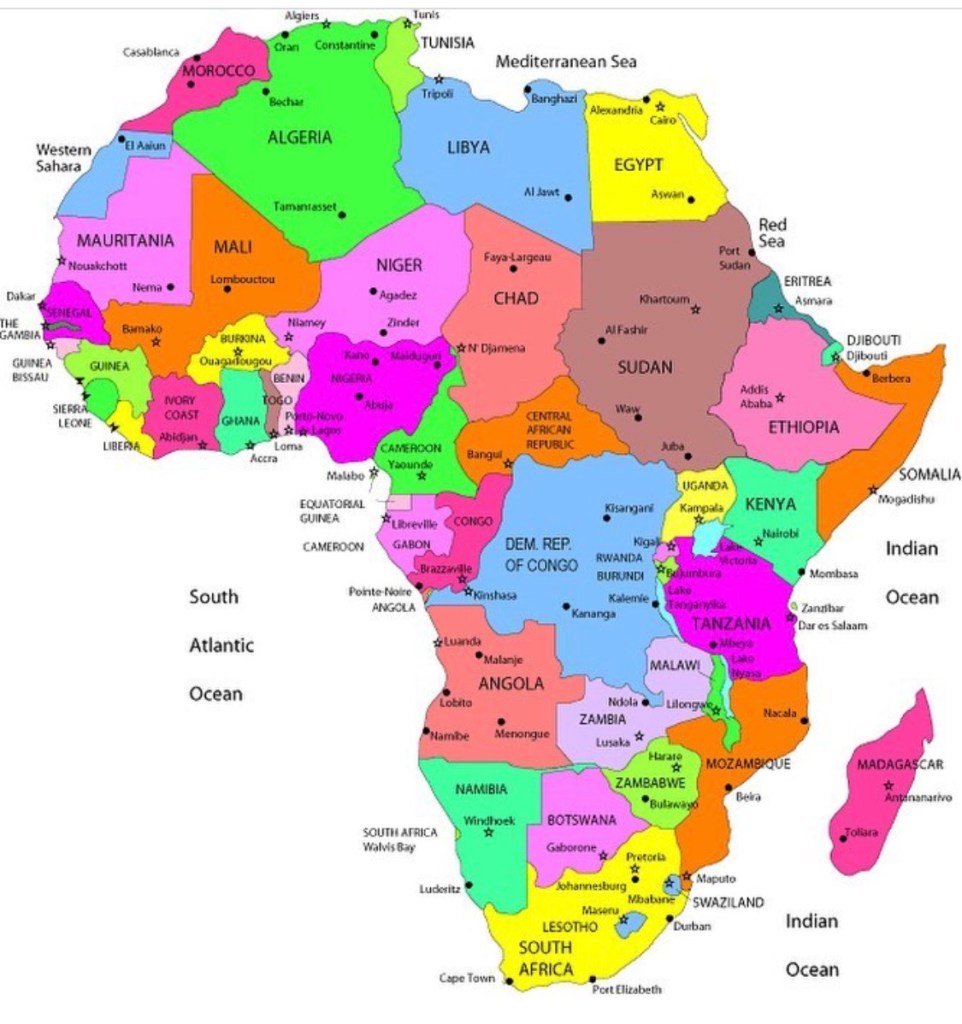
That framing has aged about as well as a bottle of warm champagne left in the sun. The war grinds on. African men are still being recruited—or simply duped—into fighting on the Russian side with promises of jobs, money and citizenship that somehow evaporate once the plane lands. Ukrainian officials have identified more than a thousand Africans in Russian ranks. Kenyan intelligence has flagged similar numbers of its own citizens. The same media outlets that once gasped at the “unthinkable” in Europe have treated the African body count as background noise, the kind of unfortunate detail one mentions after the main news if there is time.
The pattern is familiar. African conflicts are reported as issues, numbers and trends. Ethiopian war, Mozambican insurgency, successive coups across the Sahel—these are problems to be managed, not people to be mourned. The language remains clinical. The dead remain abstract. Only when the victims look like the people who write the scripts does the coverage suddenly discover adjectives like “heartbreaking,” “unthinkable” and “historic.”
Yet the continent those same outlets keep writing off refuses to stay in its assigned role. By 2050, Nigeria alone is projected to approach 360–400 million people, placing it among the world’s three most populous countries. Africa will account for a quarter of humanity. That demographic fact alone should force a rethink, but the old narrative is stubborn. It prefers the familiar frames of poverty, conflict, corruption, disease and poor leadership—the five horsemen of African coverage that have dominated stories for decades.
The data keep spoiling the script. Africa is home to roughly 122,500 dollar millionaires, several hundred centi-millionaires and around two dozen billionaires. South Africa leads the pack; Egypt, Morocco, Nigeria and Kenya follow. The continent recorded the world’s fastest growth in ultra-high-net-worth individuals in recent years. Rwanda, Ethiopia, Guinea, Uganda and others continue to post growth rates that would make many Western finance ministers weep with envy—7 per cent and above while the global average limps along.
The tech story is equally inconvenient. African startups raised billions in equity and debt in 2025, with Egypt and Nigeria leading the charge in early 2026. Fintech, cleantech and logistics keep attracting capital even as global venture markets remain cautious. Kenya still punches above its weight in peer-to-peer crypto activity. The payments and banking market remains one of the most dynamic on the planet.
Press freedom rankings offer another awkward comparison. Several African countries—South Africa, Namibia, Ghana, Cabo Verde, Seychelles—still outrank the United States on the latest Reporters Without Borders index. The United States, under renewed political pressure on the press, has slid further. The “broken continent” somehow manages higher scores than the self-appointed global standard-bearer of free speech.
None of this fits the preferred story. A continent of 1.4 billion people, with a median age that makes Europe look like a retirement home, with growing consumer markets, critical minerals, and an entrepreneurial class that builds in the gaps left by dysfunctional states, is simply too complicated for the single story. So the single story persists. War in Europe is civilisation under threat. War in Africa is statistics.
The hypocrisy was never subtle. It was merely easier to ignore when the cameras stayed pointed at the usual places. The Ukraine coverage ripped the mask off for a moment. Four years later, the mask is back on, slightly adjusted, and the same outlets are once again surprised that Africans exist outside of charity appeals and coup headlines.
The world is changing whether the newsrooms notice or not. Demography, capital and technology are already rewriting the script. The only question left is how long some people will keep insisting that blue eyes and blonde hair remain the exclusive markers of a life that matters.

