

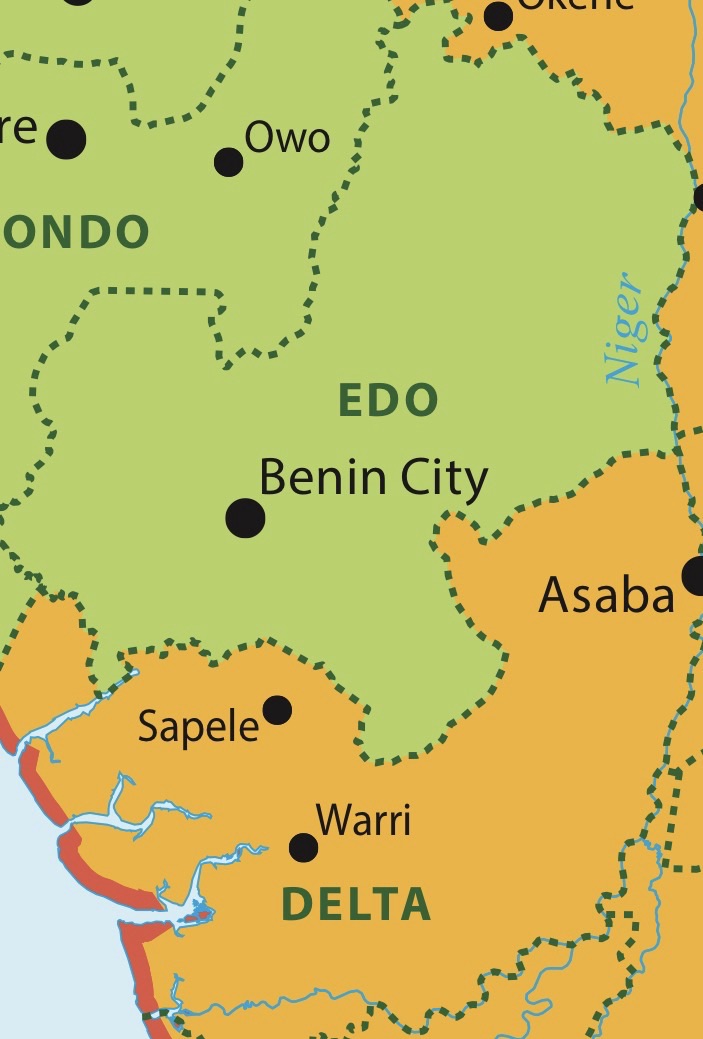
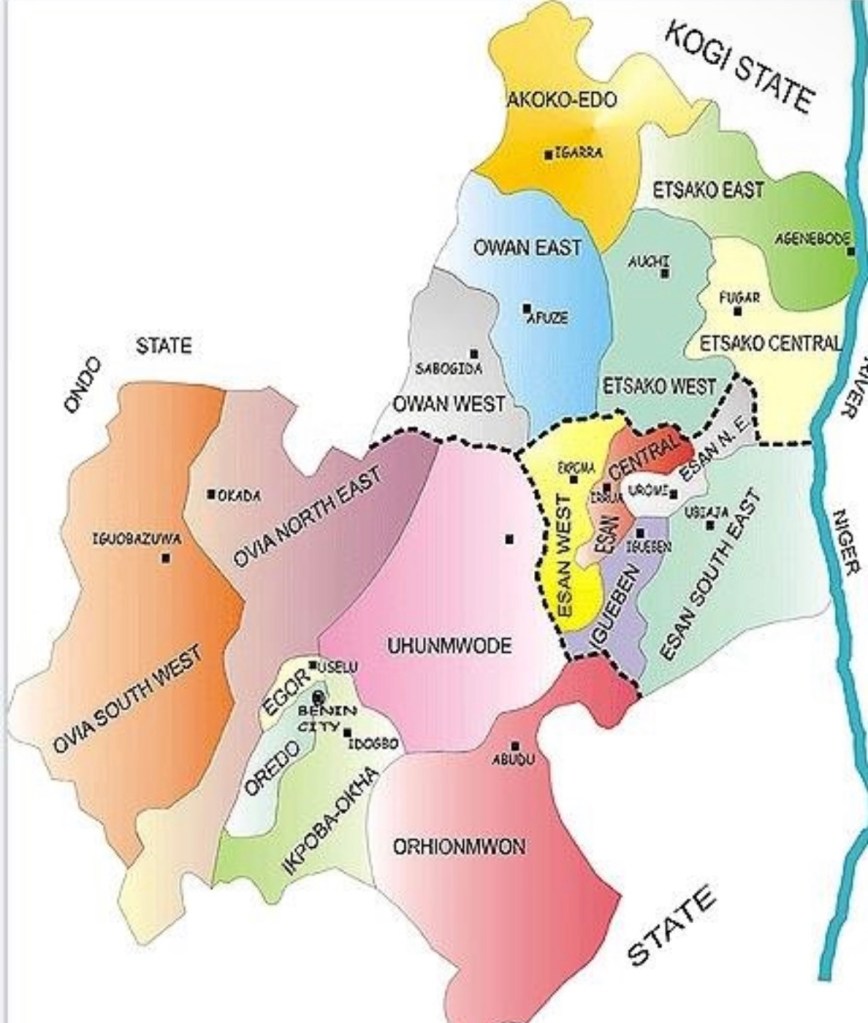
Executive Summary: Edo State Local Government Councils Audited Financial Report (FY 2024)
- Revenue Profile: The 18 Local Government Councils generated a total revenue of ₦82.30 billion. Statutory allocations from the Federation Account accounted for ₦79.39 billion (approx. 96.5%), while Internally Generated Revenue (Independent Revenue) brought in only ₦2.92 billion (approx. 3.5%), falling 56% short of budgeted targets.
- Expenditure Breakdown: Total expenditure stood at approximately ₦80.73 billion, distributed as:
- Transfers to SUBEB & Statutory Deductions: ₦49.13 billion (approx. 60.8%) exceeding its initial budget by 46% to cover basic primary education and related board obligations.
- Salaries and Wages: ₦11.83 billion (approx. 14.7%).
- Overhead Costs: ₦9.85 billion (approx. 12.2%).
- Capital Expenditure: ₦9.92 billion (approx. 12.3%) representing a sharp shortfall against an approved capital plan of ₦34.95 billion (only 28% budget performance).
- Audit Warnings & Governance Deficits:
- Bank Reconciliation: Out of 18 councils, only three prepared bank reconciliation statements in 2024 (a steep decline from 10 councils in 2023).
- Unretired Advances: Outstanding, unretired cash advances given to council officials totaled ₦3.63 billion.
- Trapped Liabilities: Deposit accounts held ₦7.91 billion in unremitted deductions (PAYE, union dues, retention fees), retained for up to 3–5 years without disbursement to designated beneficiaries.
The narrative above is replicated across the 774 local governments in Nigeria. The Supreme Court judgment on Local Government financial autonomy remains iced over in practice. State governors continue to treat local councils as administrative subsidiaries rather than an autonomous arm of government.
Let’s talk about Local Governments. You know the pitch: the tier of government “closest to the people” the one supposedly tasked with clearing neighborhood drains, keeping the primary healthcare dispensary stocked with more than cotton wool, and making sure the community primary school roof doesn’t become open-air skylight during the rainy season.
Look through the consolidated Auditor-General report for the 18 Local Government Councils in Edo State for the 2024 financial year, and the reality looks less like grassroots governance and more like an automated payroll desk.
In 2024, Edo State’s 18 councils took in ₦82.3 billion in revenue. A staggering ₦79.4 billion of that amount, over 96.5% arrived straight from the monthly federation account allocation committee (FAAC) ritual in Abuja. Across all 18 councils combined, Internally Generated Revenue limped in at ₦2.9 billion, or barely 3.5%. If local economic productivity were measured by a pulse, these balance sheets would trigger an emergency alarm.
Then look at where the money went:
Of the ₦80.7 billion disbursed, ₦49.1 billion (over 60%) vanished straight into mandatory statutory deductions and transfers to SUBEB (State Universal Basic Education Board) and related state-managed boards, the overshooting its approved budget by 46%. Direct council salaries and wages consumed another ₦11.8 billion (15%). Overhead administrative expenses burned through ₦9.9 billion (12%).
Together, payroll, statutory transfers, and routine council overhead swallowed over 87% of the entire financial pie.
What was left for actual brick-and-mortar development, rural feeder roads, boreholes, market infrastructure, and community health outposts?
A paltry ₦9.9 billion. That represents a dismal 28% implementation of what the councils had actually promised their constituents in their capital budget.
Sit with that arithmetic for a moment. From Oredo to Ikpoba-Okha, Egor to Esan Central, Akoko-Edo down to Ovia South-West, 18 whole local government areas, spanning hundreds of agrarian communities and sprawling urban wards, were left to carve up less than ₦10 billion in capital execution. That isn’t a grassroots development fund; that is an operational afterthought.
Worse still, the Auditor-General’s red pen highlights the sheer operational paralysis inside the secretariats:
- Three out of 18 councils: That is the total number that bothered to submit basic bank reconciliation statements in 2024. The other 15 operated accounts with cashbooks that didn’t balance with their bank statements.
- ₦3.6 billion: The sum sitting in the wind as unretired cash advances handed out to council officials.
- ₦7.9 billion: Deductions withheld from workers’ salaries for union dues, PAYE, and contractor retention fees that have been sitting unremitted in deposit accounts for up to five years.
So what does the Local Government Council actually do?
It does not engineer municipal development. It does not plan local infrastructure. It functions as a clearinghouse: an entity that catches money sent down the pipeline from Abuja, deducts primary school wage burdens, pays administrative allowances and council chairmen’s security logistics, and hands the residual dust to the public as “governance.”
This is why nobody expects a council secretariat to solve a structural problem. When a gully swallows an access road or a rural clinic collapses, residents don’t petition their councilor; they bypass the council entirely and appeal to the Governor or Abuja. Everyone knows the local government lacks the capacity, the discipline, and the fiscal margin to act.
We need to drop the polite pretense. This is not an autonomous tier of government. It’s an ATM window with a coat of arms. And until the structure stops serving as an institutional payout counter, grassroots development in Nigeria will remain a decorative slogan rather than a functioning reality.
 Centre for Nigeria Progress