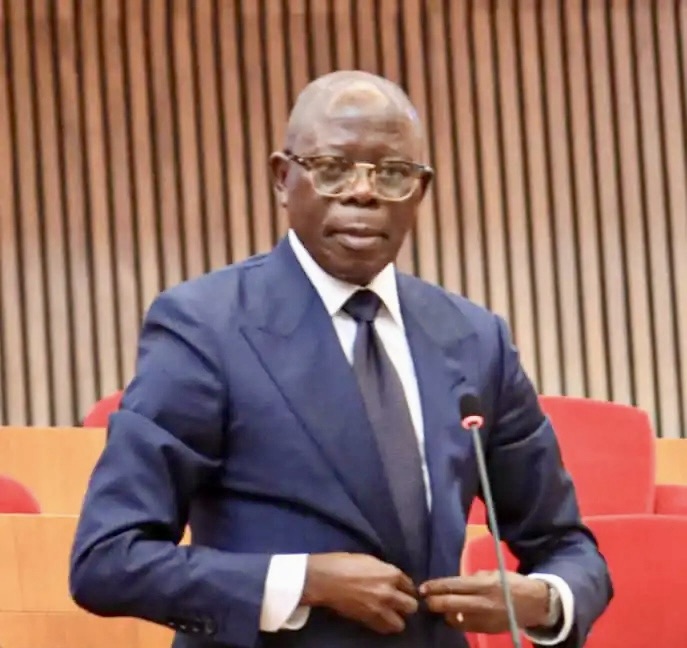
Adams Oshiomhole is that rare Nigerian political specimen who managed to climb from factory floor to labour presidency, state house, party chairmanship and the red chamber without the inconvenience of a published higher educational attainment. Self-taught, they say. One imagines him in some dimly lit corner of history, devouring political manuals by candlelight while the rest of his compatriots were busy collecting certificates that later proved about as useful as a raincoat in the Sahara.
He is confident. He is outspoken. And he is usually assisted by journalists who appear to have prepared for the encounter the same way a man prepares for a surprise visit from his in-laws: poorly, and with visible dread.
In the latest instalment of this long-running production, the former Comrade turned Distinguished Senator sat opposite a host Olawale Oluwade of Symfoni Podcast on Naija Unfiltered and proceeded to conduct a masterclass in rhetorical flexibility. One almost felt sorry for the Olawale Oluwade. Almost. Oshiomhole would have made an excellent barrister, had he ever troubled himself with formal training, because he possesses the unique ability to hold brief for both the prosecution and the defence in the same breath, often in the same sentence, and always with the same unshakeable conviction.
He went wide when it suited him and narrow when the terrain became uncomfortable. He challenged Peter Obi’s narrative of his own tenure with the ferocity of a man defending ancestral land, while carefully preserving the carefully state curated mythology of his own years in Edo state. The man was eating his cake, having it, and somehow managing to sell the crumbs as policy brilliance.
When confronted about his alleged misdeeds against a former trusted follower known as Ehiozuwa J. Agbonayinma, the Senator simply side-stepped the question with the breezy claim that “nobody knows EJ.” Without missing a beat, he pivoted to discuss an entirely different person, Rotimi Amaechi, the host had not even asked about. The transition was so seamless it almost looked rehearsed. Existence denied, topic changed, accountability postponed. Classic Oshiomhole.
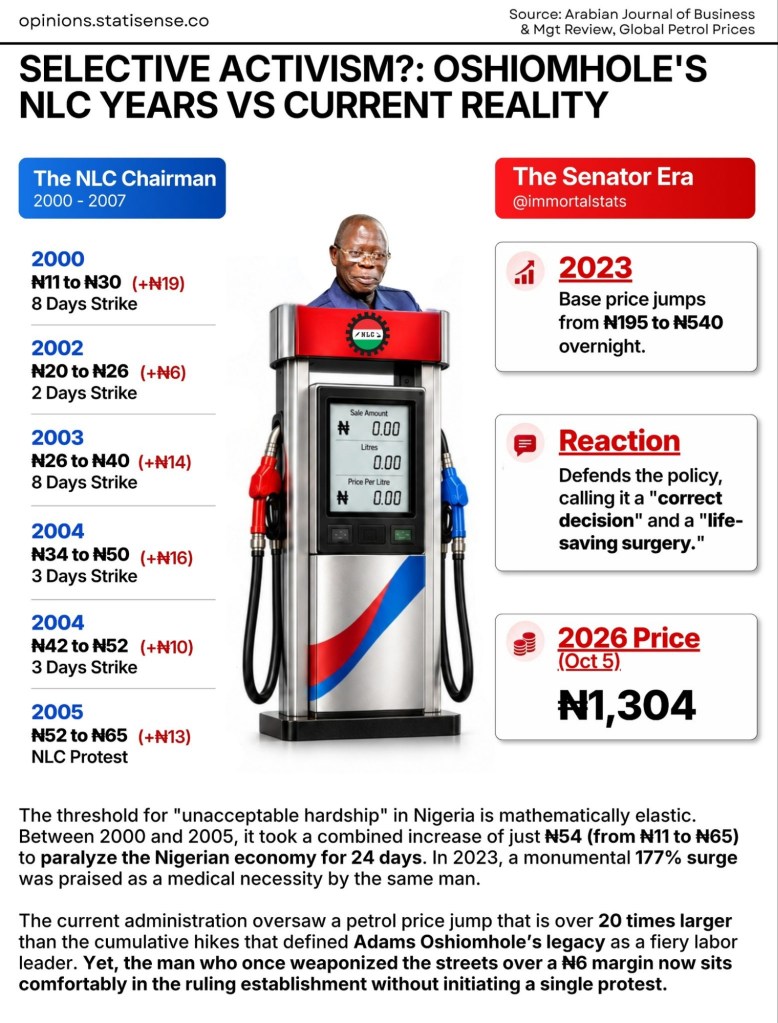
Consider the subsidy question. When his opponents were in power, Oshiomhole the labour leader could be found on the streets, megaphone in hand, leading the charge against any attempt to touch the sacred cow of fuel subsidy. The people must not suffer, he thundered. Now that his own team is in power and the same cow has been slaughtered, the suffering is suddenly a necessary sacrifice on the altar of economic realism. Context, you see. Always context. Yesterday’s unbearable hardship is today’s bitter medicine. The patient is the same; only the doctor has changed.
He demanded records when Obi’s past praise was quoted back at him “Show me the record!” yet offered no similar archival humility when burnishing his own. Private jets, savings claims, free education debates, road projects: every inconvenient fact was either denied, redefined, or drowned in a flood of eloquent digression. Olawale Oluwade, like so many before him, lacked the preparatory ruthlessness of a Tim Russert on Meet the Press. There were no laminated quotes waiting on the table, no trapdoors of past statements carefully laid. Oshiomhole therefore redefined the framework of the conversation at will, turning interrogation into performance and accountability into theatre.
This is not new. It is the Oshiomhole method perfected over decades. The labour firebrand who once fought governments now finds philosophical comfort in the hard decisions of the government he supports. The man who once insisted that to be rural is not to be inferior now navigates the rarefied air of the Senate with the ease of someone who has always belonged. The self-taught orator continues to outmanoeuvre university-trained interviewers like Olawale Oluwade, who attended University of Benin, who arrived with questions but leave with a free tutorial in political judo.
Nigerians have watched this movie before. We know the script. The confident smile. The rapid-fire delivery. The sudden narrowing of scope when the wide view becomes dangerous. The insistence that past positions were products of circumstance while current ones are products of principle. And always, always, the journalist who should have come better prepared.
One day, perhaps, an interviewer will arrive with the full archive, the timestamps, the previous thunderings about hardship and the later justifications for the same. Until then, Adams Oshiomhole will continue to do what he does best: speak eloquently from both sides of his mouth, leave his interlocutors looking underprepared, and walk away having once again eaten his cake while convincing a good portion of the audience that the plate was empty all along.
In the grand Nigerian tradition of political performance, he remains unmatched. A self-taught master of the double brief. And the journalists, God help them, keep showing up without their notes.