

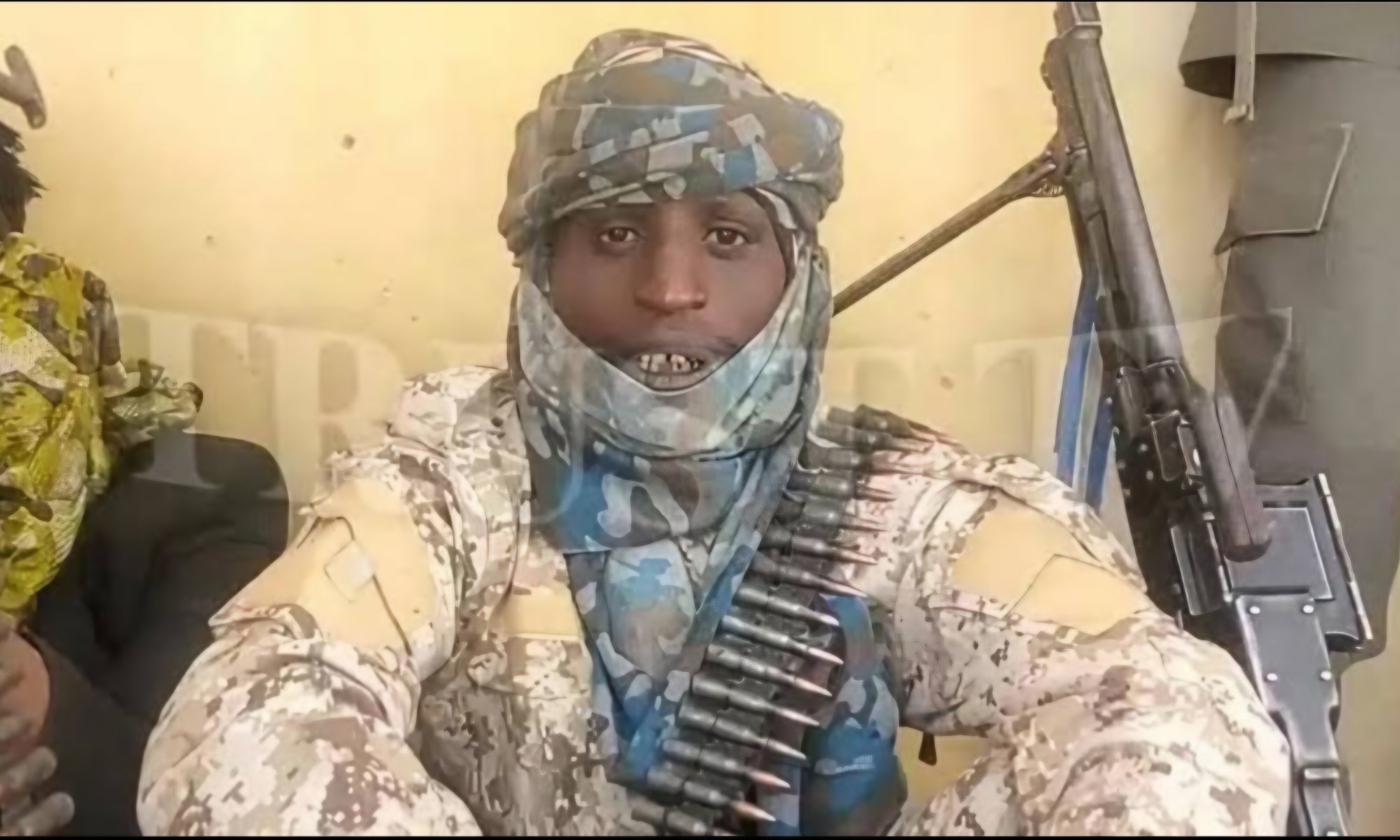
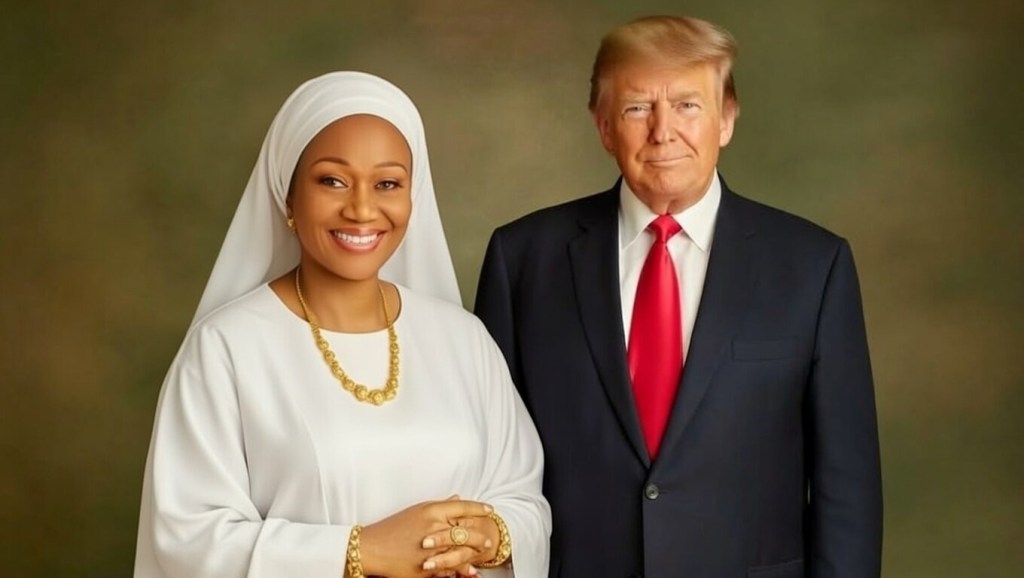
There is a particular flavour of American piety that arrives only when the cameras do. This week the United States House of Representatives, in a vote as narrow as its moral imagination, resolved to strip Nigeria of the entirety of its federal assistance not fifty per cent, mind you, an amendment considered too merciful, but the full hundred until Abuja demonstrates “measurable progress” in protecting Christian communities. Congressman Greg Steube, the amendment’s sponsor, informed the chamber that Nigeria’s government is “corrupt” and has “failed to address” a “horrific wave of violence.” One pauses, briefly, to admire the confidence of a Congress diagnosing corruption abroad while its own national debt approaches forty trillion dollars and its ethics committee remains, by tradition, mostly ornamental.
Let it be said plainly: Christians are dying in Nigeria’s Middle Belt and northeast, in numbers that shame a government which has spent a quarter-century treating internal security as a procurement racket rather than a constitutional duty. That much is not in serious dispute, whatever Abuja’s spokesmen protest on television. But sincerity and self-interest are not mutually exclusive states, and it takes a special sort of credulity to receive Donald Trump’s sudden solicitude for Black Christians in the Sahel as anything other than what it plainly is a foreign policy improvised from a domestic culture war, deployed by an administration whose relationship with racial minorities at home has rarely troubled itself with tenderness. One does not have to admire the theatre to acknowledge the arson.
THE CONVERT’S ZEAL
The genealogy of this policy is worth tracing, because it did not begin with the dead. It began with Senator Ted Cruz rallying evangelical constituencies, followed by a President who redesignated Nigeria a “Country of Particular Concern” under the International Religious Freedom Act a designation that, in ordinary administrative practice, follows the recommendations of the U.S. Commission on International Religious Freedom and a State Department report that had, at the point of redesignation, not yet been published. Process, in this instance, followed conviction rather than the other way round. Mr Trump then took to Truth Social to call Nigeria “a disgrace,” threatened to send troops “guns-a-blazing,” and by the following spring had a congressional subcommittee producing a report timed less to Nigerian realities than to the American evangelical calendar.
None of this makes the underlying atrocities fictional. It merely means the remedy on offer was assembled for a domestic audience first and a Nigerian one second which is precisely why it fits so awkwardly onto Nigerian ground.
“A government that treats its own Black citizens as a demographic to be managed does not, by natural transformation, become the world’s foremost custodian of Black Christian welfare.”
A COMPLEXITY TOO INCONVENIENT TO SURVIVE CONTACT WITH CONGRESS
Here Abuja, for once, has the better of the argument, even as it makes it for the worse reasons. The Nigerian government’s position that the violence sweeping the Middle Belt is not exclusively, or even primarily, a war on Christianity is not merely self-serving denial, though it is certainly that too. It happens also to be true in significant part. The Fulani-farmer conflicts that convulse Benue, Plateau and Kaduna states are compounded by desertification, colonial-era grazing routes rendered obsolete by population growth, a collapsed rural policing architecture, and criminal banditry that has learned to wear whatever ideological costume extracts the most ransom. Boko Haram and ISWAP do target churches with theological intent; they also burn mosques whose imams denounce them, and have killed more Muslims than any other demographic in absolute terms across the north.
To flatten this into a single-axis “Christian genocide” narrative is not moral clarity. It is a simplification that happens to be extremely convenient for an American administration seeking a foreign-policy cudgel it can defend to a domestic evangelical base without troubling itself over the finer taxonomy of Sahelian land conflict. The tragedy is that both the convenient American story and the self-serving Nigerian rebuttal are, independently, partly right and Nigerians of every faith, or none, continue to bury their dead while Washington and Abuja argue over whose narrative better serves their respective electorates.
A MODEST PROPOSAL FOR THE KINGDOM
But let us, for the sake of argument, grant the American premise entire. Suppose Washington is correct that this is fundamentally a war on Christians, and suppose further that a self-declared Christian nation one whose currency invokes divine trust, whose President signs executive orders flanked by evangelical clergy is entitled to intervene, unbidden, in a sovereign African state on confessional grounds, extending a hand of protection to co-religionists it has never met and whose citizenship it does not share.
If that principle holds, it cannot hold selectively. The Kingdom of Saudi Arabia, custodian of the two holiest sites in Islam, possessed of a sovereign wealth fund larger than Nigeria’s entire annual budget several times over, and no stranger to projecting religious solidarity through chequebook diplomacy across the Muslim world, would appear to have precisely the same standing Mr Trump has claimed for himself. Nigeria’s Muslim population, concentrated in a north battered by the same insurgencies, the same banditry, the same governmental indifference that afflicts the Christian Middle Belt, is no less deserving of an outside patron than its Christian counterparts particularly given that the Nigerian state, by its own conduct, has demonstrated itself incapable of protecting either community with any consistency. If Riyadh has spent decades funding mosques and madrassas from Jakarta to Dakar in the name of Islamic solidarity, a rather more urgent solidarity now presents itself rather closer to home.
One suspects, of course, that Riyadh will do nothing of the sort its foreign policy calculus runs through oil markets and Washington’s own goodwill, not through the abstract logic of confessional fraternity. Which is rather the point. Religious solidarity, weaponised as foreign policy, is a currency states spend only when the exchange rate favours them. Mr Trump has simply been more honest about the transaction than most.
THE UNCLAIMED
And what, one might ask with the requisite gallows humour, of the millions of Nigerians who belong to neither congregation nor ummah the adherents of Odinani, Ifá, and the traditional religions of the Niger Delta and the Middle Belt, along with the growing ranks of the irreligious? No foreign power has yet discovered a domestic constituency for their protection, no Truth Social post has been drafted on their behalf, and no congressional subcommittee has convened to investigate the persecution of the unconverted. They must, it seems, look after their own affairs in this world, and hope for a more attentive audience in whichever hereafter their ancestors promised them a celestial jurisdiction, at least, being one court where Washington’s writ has not yet reached.
Perhaps that is the truest indictment of the whole affair. In a country where the state has abdicated its most basic Hobbesian bargain protection in exchange for obedience Nigerians of every persuasion have been left to seek patrons wherever they can find them: in Washington, in Riyadh, in the church, in the mosque, in the shrine, in the diaspora, in God alone. That so many are now looking abroad for the protection their own government owes them is not evidence of American benevolence or Nigerian resilience. It is a verdict, delivered in the plainest terms, on the Nigerian state itself.

