


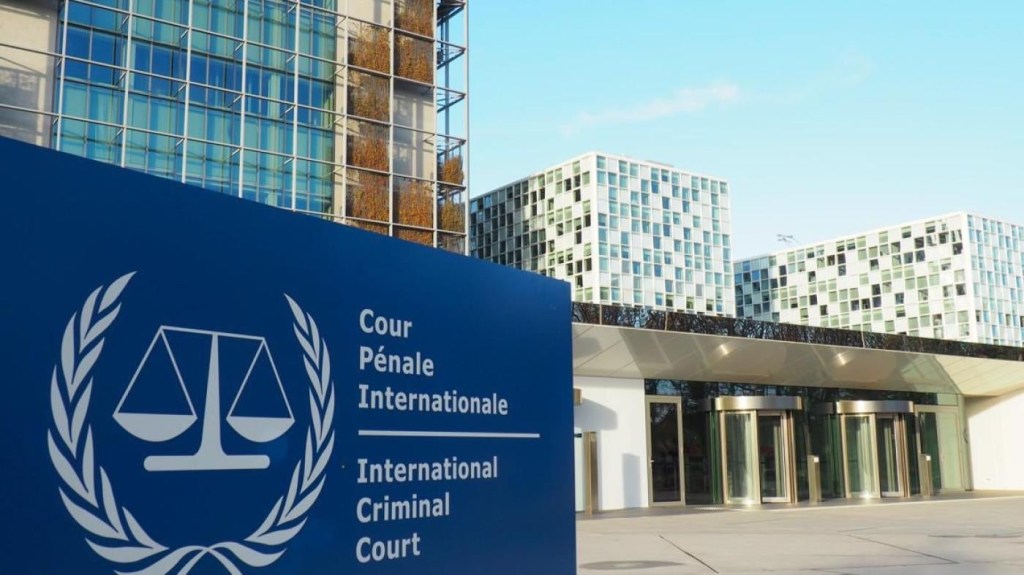
Let’s be honest: for a very long time, the International Criminal Court (ICC) operated under a rather charmingly simplistic geographic formula. If an African leader stepped out of line, the court transformed into an unrelenting, swift-sword institution of righteous vengeance. But whenever a superpower or a cozy ally of the Global North carried out “tactical interventions” in Iraq, Libya, Venezuela, or Northern Ireland, the Rome Statute mysteriously seemed to be written in invisible ink.
For decades, we were instructed to nod politely at global summits while elites proclaimed that the rule of law is universal. Except, like a discount gym membership, universality apparently comes with fine print, blackout dates, and VIP exemptions reserved exclusively for nations backed by Western firepower.
The Day The Hague Forgot the Script
For a fleeting second, it looked like the ICC might actually test whether its rulebook applied to everyone equally. Chief Prosecutor Karim Khan dared to do the unthinkable: he filed applications for arrest warrants targeting Israeli Prime Minister Benjamin Netanyahu and his former Defense Minister Yoav Gallant.
The charges weren’t mild administrative infractions, either. Khan’s office cited reasonable grounds for war crimes and crimes against humanity, detailing allegations of using starvation as a deliberate method of warfare, intentionally directing attacks against civilian populations, willful killing, and extermination in Gaza.
Predictably, the political thermostat in Western capitals shot from mild concern to thermonuclear outrage.
Heavyweights vs. The Referee: Names and Game Plans
Rather than letting the judicial process run its course, the heavyweights stepped into the ring with brass knuckles:
- The United States: The Trump administration unleashed a full-court press, imposing personal financial sanctions on Karim Khan and key ICC personnel, revoking visas, and declaring a sweeping campaign to “systematically disable” and dismantle the court entirely. US lawmakers treated the tribunal less like a international court and more like a rogue street gang that needed its lunch money confiscated.
- The United Kingdom: Back home in London, the British legal establishment suddenly developed a laser-focused urgency, with the Bar Standards Board (BSB) slapping Khan with an interim suspension from practicing law as the political pressure reached a boiling point.
- The ICC Oversight Bureau: When internal sexual misconduct allegations against Khan surfaced, allegations he vehemently denied, the Assembly of States Parties initiated a bewildering, closed-door bureaucratic dance. After a UN watchdog report and conflicting judicial panels couldn’t produce a clean exit, the Assembly simply changed the rules mid-game. In a swift New York vote from which Khan was physically barred due to US sanctions, 82 member states handed him his pink slip without even allowing him to address the floor.
Two Legal Realms: The Side-by-Side Reality
The Global South experience of international justice stands in stark contrast to that of the Global North:
For the Global South: Handcuffs arrive with breathtaking speed, accompanied by high-minded lectures on accountability and non-negotiable compliance. Suspects are expected to bow to international norms without question.
For the Global North and Its Allies: Law enforcement is treated as an inconvenient nuisance to be lobbied, sanctioned, or procedurally bent until it complies. Threats to dismantle the entire tribunal are thrown around the moment an ally faces scrutiny.
A World Without a Referee
This isn’t merely about one prosecutor’s stormy, procedural ejection from The Hague. It’s about the loudest message international institutions could possibly broadcast: law enforcement is mandatory for the weak, but strictly optional for the well-connected.
When an international court rewrites its own disciplinary procedures and caves under superpower pressure the second its crosshairs touch a Western ally, it doesn’t just discredit itself, it officially retires the pretense of international justice. And a world where sheer force dictates who is guilty isn’t just cynical; it’s a far more dangerous place for the rest of us.

