

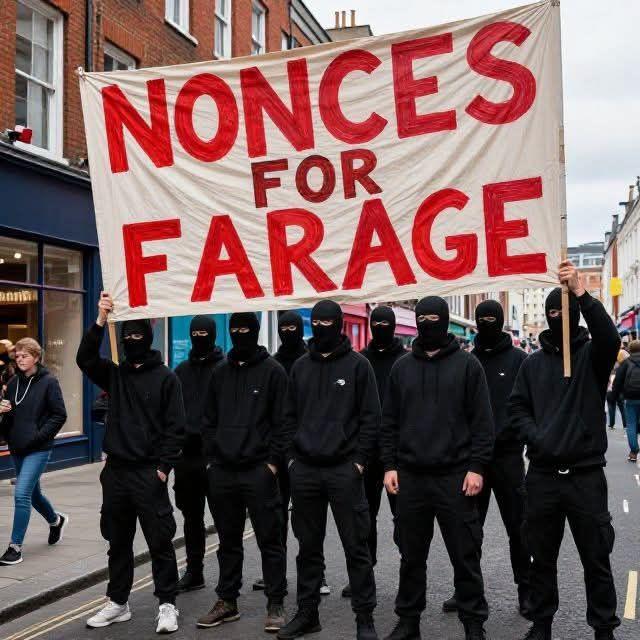
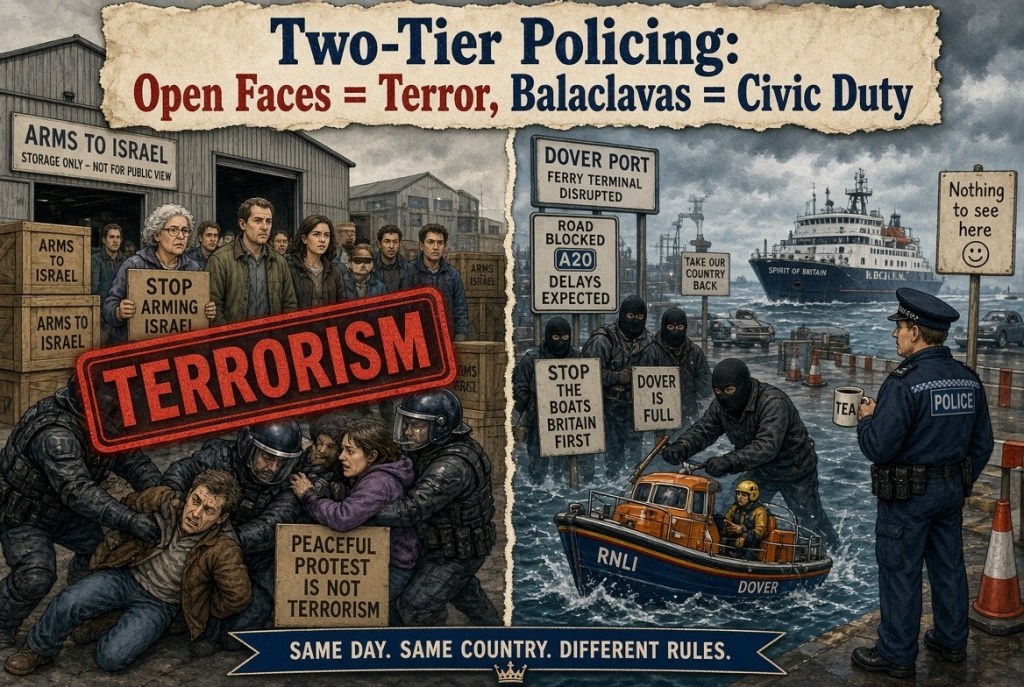
There is a peculiar genius to the British state’s sense of proportion. It can look at a group of unmasked citizens protesting the supply of weapons to a foreign army accused of flattening neighbourhoods in Gaza, and solemnly conclude that this is terrorism. Then it can watch a column of black-clad, face-covered men descend on Dover, shut down a working port, and treat the episode as little more than an unfortunate traffic inconvenience. The contrast is so stark it almost feels choreographed.
First, the Palestine Action episode. These were people who did not bother with balaclavas or the theatrical anonymity so beloved of the modern political cosplay set. They targeted warehouses and facilities linked to the supply of arms to the Israeli military. The Labour government, with the practised solemnity of a government discovering its inner authoritarian, reached for the terrorism laws. Proscription followed. Arrests followed. Jail terms followed. Even the barristers who dared to represent them found themselves in the crosshairs. The message was clear: damage property in the service of a cause the government finds inconvenient, and you will be treated as the domestic equivalent of Al-Qaeda, complete with the full legal theatre that accompanies such a designation.
No one is obliged to approve of property damage. Criminal law already exists for that. What was striking was the upgrade. Ordinary criminal damage was suddenly insufficient. The nuclear option of terrorism legislation was wheeled out, and the courts, after the usual judicial ballet, largely nodded it through. Open faces, clear intent, targeted action against the arms trade: terrorism.
Meanwhile, in Dover, a different performance unfolded. Reform UK’s more energetic cousins—call them the provisional wing, the unofficial outreach department, or simply the lads who prefer their politics with face coverings—arrived in force. Masks on. Faces concealed. Lawful commercial activity disrupted. The port, that great artery of British trade and holiday misery, was temporarily converted into a stage set for the “stop the boats” pantomime. And the police? Nowhere to be seen in any meaningful numbers. No mass arrests. No terrorism charges. No solemn Home Office statements about the sanctity of the rule of law. Just a collective national shrug and a few carefully worded regrets from politicians who know which way the electoral wind is blowing.
Encouraged by this masterclass in selective enforcement, the same energetic elements have now turned their attention to the RNLI. The charity whose volunteers risk their lives pulling people out of the Channel has become the latest punchbag. Rescue boats attacked. Volunteers abused. The logic, such as it is, appears to be that saving lives at sea is now a political act worthy of harassment, provided the lives in question do not belong to the approved demographic. One might have thought that a government so eager to brand property damage as terrorism would have something robust to say about physical interference with a search-and-rescue service. One would have been wrong.
The far right, never ones to miss an opportunity to confirm their own talking points, have seized on this with glee. “Two-tier policing!” they cry, as though they had just invented the concept rather than spent years demanding it. They are, of course, half right. There is a two-tier system. It simply does not operate in the way they claim. One tier is reserved for those who challenge the arms trade with their faces visible. The other is reserved for those who disrupt ports and harass lifeboat crews while carefully hiding theirs. The first group gets the Terrorism Act. The second gets a free afternoon and a polite request to disperse when convenient.
This is not the rule of law. It is the rule of political convenience dressed up in legal robes. A government that treats open-faced protest against weapons exports as a national security emergency while treating masked disruption of a major port as a local policing inconvenience has told us everything we need to know about its priorities. The far right did not invent the double standard. They merely noticed it, applauded it when it suited them, and then used it as free advertising for their own prejudices.
In the end, the real achievement belongs to Labour. By reaching so eagerly for terrorism laws against one set of protesters while looking the other way at another, they have managed the rare feat of validating the very narrative their opponents most wanted to sell. Two-tier policing is no longer a slogan. It is government policy, applied with admirable consistency: the open face is the greater threat, and the balaclava, it seems, is just another form of British eccentricity.

