


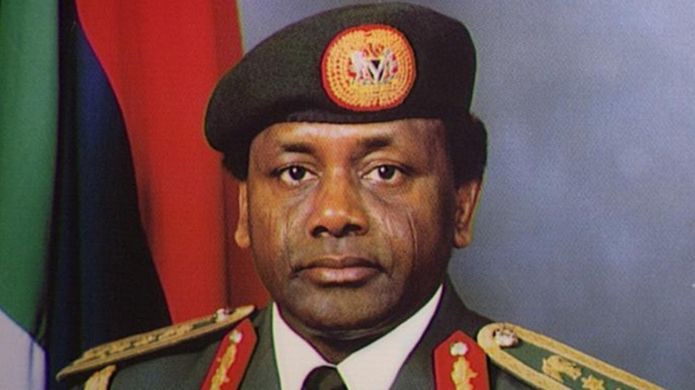
General Sani Abacha’s military regime (November 1993–June 1998) is widely documented as one of the most systematic episodes of grand corruption in modern African history. While the regime achieved some macroeconomic gains—foreign reserves rose from $494 million to $9.6 billion and external debt fell from $36 billion to $27 billion—these were overshadowed by the plunder of public funds estimated at $2–5 billion (commonly cited by Transparency International, U.S. Department of Justice, and Nigerian investigations), with some analyses reaching $6–9 billion. Nigeria’s broader post-independence corruption losses (1960–1999) are estimated at $400 billion. The looting was not opportunistic but institutionalized through false “national security” requisitions from the Central Bank of Nigeria (CBN), often executed via cash withdrawals, travelers’ cheques, or wires authorized by Abacha’s National Security Adviser, Ismaila Gwarzo. A Nigerian Special Investigation Panel later traced at least $1.491 billion and £416 million this way between 1994 and 1998. Complementary schemes included overpriced government bond purchases generating $282 million in illicit gains for shell companies linked to Abacha’s son Mohammed and associate Abubakar Atiku Bagudu, plus extortion rackets (e.g., an $180 million bribery scheme involving foreign firms and $11 million+ from a French-Nigerian contract). Funds were routed through family members, associates, and offshore shells before landing in banks in Switzerland (~19 banks holding ~$660 million by 1999), the U.S., UK, Liechtenstein, Jersey, and Luxembourg.25
This was enabled by authoritarian control: no independent legislature or judiciary, weak oversight, and a patronage network treating public coffers as extensions of personal or regime power. International complicity—lax due diligence by banks—facilitated laundering through U.S. institutions and bond deals.
Historical Context of Western Sanctions and Isolation
To understand the specific defense raised by regime insiders, note the external pressures Abacha faced. Following the 1995 execution of Ken Saro-Wiwa and eight Ogoni activists amid the Ogoni crisis, Nigeria faced severe international backlash. The Commonwealth suspended Nigeria; Western nations (U.S., UK, and others) imposed arms embargoes, travel bans on officials, and threats of broader “smart sanctions.” Oil sanctions were discussed but largely avoided due to global energy markets. These measures aimed to isolate the regime over human rights abuses, annulled elections, and democratic suppression. Pro-Abacha voices later framed this isolation as Western interference orchestrated partly by domestic opponents, creating a narrative of existential threat to national sovereignty.48
The Defense: Warehousing Funds to Circumvent Sanctions and Protect National Interests
A prominent counter-narrative—articulated most forcefully by Hamza Al-Mustapha (retd.), Abacha’s former Chief Security Officer—contends that the “warehousing” of funds abroad was not personal looting but a deliberate, patriotic strategy to shield national resources from Western sanctions and ensure economic survival. According to Al-Mustapha, sanctions (imposed by the UK, U.S., and allies) threatened to cripple imports/exports and starve the economy. In response, Abacha convened a large stakeholder meeting in Abuja (outside the Presidential Villa due to attendance size) involving traditional rulers, politicians, and businessmen from across Nigeria’s North and South. The consensus: move funds into private-sector hands abroad as a contingency, allowing continued trade and keeping the nation “afloat” if sanctions intensified. This was presented as foresight inspired by models like Libya’s under-sanctions economy, where government-backed companies imported and distributed goods affordably.48
Al-Mustapha has repeatedly emphasized:
- The funds were not deposited in Abacha’s personal name or treated as private wealth.
- Post-Abacha (after his sudden death in 1998), some beneficiaries allegedly diverted or withheld portions, leading to later “recoveries” being mislabeled as loot.
- The goal was national resilience: supporting indigenous entrepreneurs for essential imports/exports and buffering against external economic warfare.45
Family associates and some regime loyalists echo this, arguing the transfers were legitimate state reserves for “rainy days” or security, reframing offshore accounts as prudent rather than predatory. In legal proceedings, defense attorneys (including a former Nigerian Bar Association president) have claimed Abacha simply placed state money in private accounts for safekeeping, not embezzlement.14
This perspective resonates in segments of Nigerian discourse, portraying Abacha as a victim of Western-orchestrated sabotage and domestic betrayal, with the warehousing as anti-imperialist pragmatism.
Nuances, Counter-Evidence, and Critical Analysis
While the sanctions defense offers a geopolitical rationale, it faces significant scrutiny from forensic, judicial, and independent investigations:
- False pretexts documented: U.S. DOJ complaints and Nigerian probes describe the CBN withdrawals as based on fabricated “national security” letters (at least 60 documented). Funds went directly to Abacha’s residence, then to family/associates for personal laundering—not transparent private-sector trade vehicles. No public records show systematic use for sanctioned-era imports benefiting citizens.25
- Personal control and lifestyle: Accounts were in the names of Mohammed Abacha, Bagudu, and shells; proceeds funded luxury abroad while domestic infrastructure and services collapsed. Court rulings in Switzerland, the U.S., and elsewhere classified the assets as proceeds of crime, not sovereign reserves.
- Scale and timing mismatch: Transfers peaked amid repression, not purely as sanctions response. Post-1995 isolation was real, but the mechanisms (cash trucks from CBN, inflated bonds) align more with kleptocracy than contingency planning.
- Post-regime outcomes: Recoveries (~$3.6 billion by 2020–2022 from Switzerland, U.S., Jersey, etc.) were subject to forfeiture judgments rejecting the “official funds” defense. Some early repatriations involved family immunity deals (criticized for lacking accountability), but later ones included World Bank monitoring for projects like cash transfers and infrastructure.
Edge cases include: partial domestic forfeitures without full prosecutions; debates over whether any funds truly supported “national” imports (unverified in audits); and how sanctions rhetoric persists in modern politics to rehabilitate legacies. Broader implications: This defense highlights narrative polarization in Nigeria—supporters view Abacha-era actions through a sovereignty lens, while critics see it as excusing impunity. It also underscores global finance’s role: pre-FATF weaknesses enabled hiding, but recoveries advanced norms like UNCAC and StAR.
Economically and socially, the era’s plunder deepened poverty, decayed infrastructure, and entrenched distrust in institutions—effects persisting despite partial recoveries earmarked for roads, rails, and safety nets (with transparency challenges noted in civil society audits).
Legacy and Contemporary Echoes
Abacha’s corruption built on prior military patterns but scaled them industrially. The sanctions-warehousing defense remains a live talking point among loyalists, reframing kleptocracy as strategic resistance. Yet international courts, forensic trails, and the human cost (poverty amid oil wealth) overwhelmingly substantiate systemic looting. Nigeria’s experience offers enduring lessons: authoritarian secrecy + resource rents + external pressures can enable plunder, while asset recovery requires vigilance against re-narration. In today’s debates—e.g., appointments of former associates—these competing histories fuel cynicism about accountability, youth perceptions of governance, and whether “the boys” ever truly left.
This multi-angle view—facts, defenses, counters, and implications—reveals not just historical events but why Abacha-era corruption endures as a cautionary tale in Nigerian and global anti-corruption efforts.

