

There are some moments in political history that survive long after the politicians involved have left office. Not because of a great speech. Not because of a great policy. But because somebody asked a very simple question and refused to let it escape through the nearest political fire exit.
One such moment came in Britain during the turbulent 1990s.
The Conservative government was confronted with prison riots, escapes and mounting public concern about the management of the prison system. The period included the aftermath of the major Strangeways disturbances, but the particular constitutional and political controversy that later produced the famous television encounter concerned Parkhurst Prison, prison governor John Marriott and Derek Lewis, the Director General of the Prison Service.
The central issue was not merely who lost his job. It was who had the right to make which decision.
Michael Howard, then Home Secretary, was responsible politically for the Prison Service. But the structure of responsibility was supposed to recognise a distinction between political policy-making and day-to-day operational management. Ministers set the broad direction. Professional managers ran the service.
In Parliament, Howard himself defended the principle that the Home Secretary was accountable for policy while the Director General was responsible for the day-to-day operation of the Prison Service.
Then came the famous interview.
Jeremy Paxman wanted to know whether Howard had threatened to overrule Derek Lewis in relation to the handling of the Parkhurst governor. Paxman repeatedly asked:
“Did you threaten to overrule him?”
The question was famously repeated twelve times in succession, although some contemporary accounts count fourteen questions when earlier variations are included. Howard did not provide the straightforward answer Paxman sought. The exchange entered British television folklore.
The real importance of that encounter was not the television theatre.
It was the constitutional question hiding beneath it.
Who Makes Policy and Who Runs the Operation?
The logic behind separating political direction from professional operation is not complicated.
Politicians are elected to make political choices.
They decide:
- what national priorities should be;
- how much money should be allocated;
- what laws should be enacted;
- what broad security strategy should be pursued;
- whether government policy should prioritise counter-terrorism, border security or the protection of critical infrastructure;
- what political objectives the country should pursue.
Professionals are appointed because they possess specialist expertise.
A prison governor understands how to run a prison.
A police commander understands how to deploy officers.
A military commander understands intelligence, logistics, terrain, force protection, timing, tactics and the unpleasant possibility that the politician giving instructions from a podium may not know which end of a military map is north.
The distinction does not mean that professional institutions operate without democratic control.
Far from it.
It means that democratic control should normally operate through policy, law, resources, strategy and accountability rather than through politicians attempting to conduct every operation from a microphone.
That brings us neatly to Nigeria.
“I Have Directed the Security Agencies…”
Nigeria has developed a peculiar political ritual.
There is a kidnapping.
There is an attack.
There is an insurgent incident.
There is widespread public anxiety.
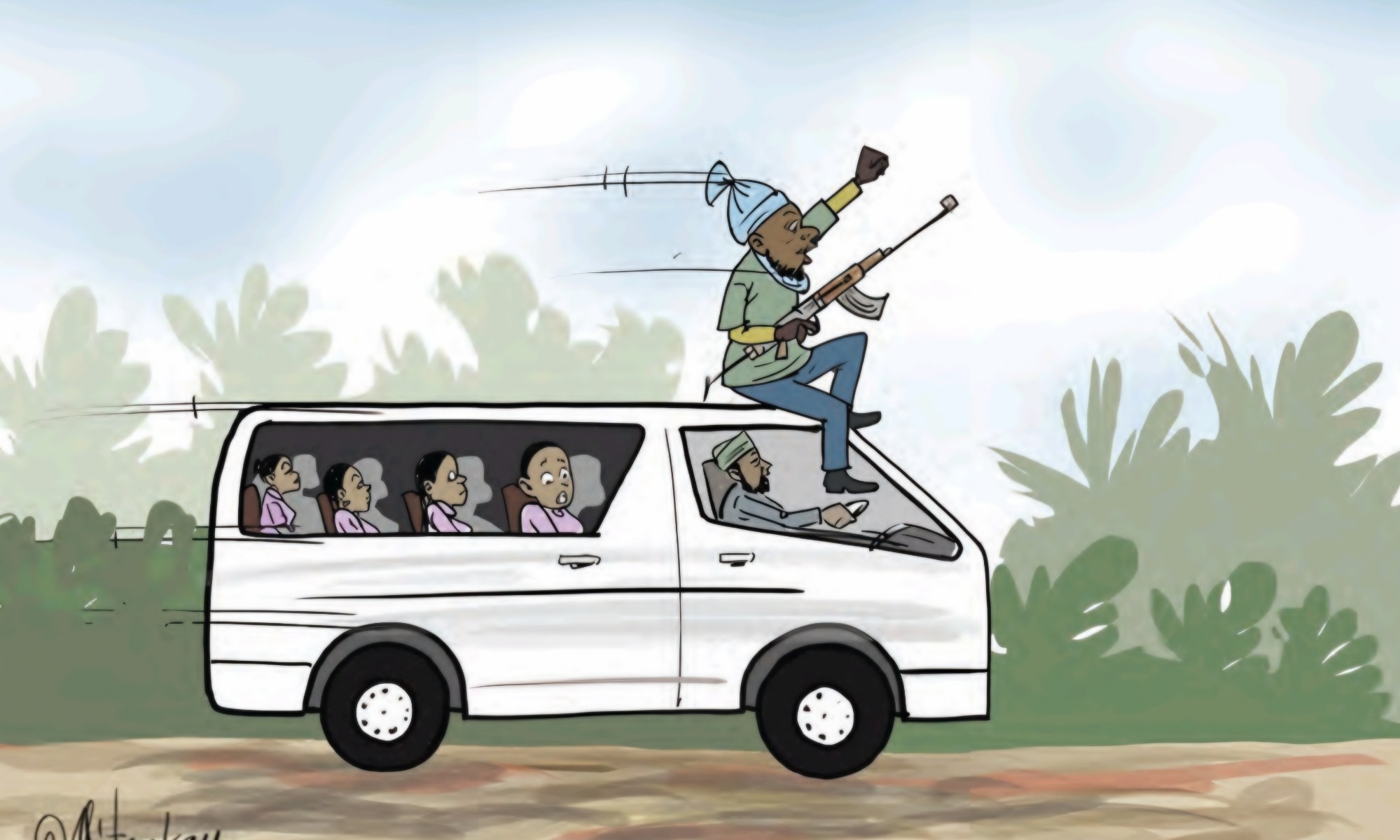
The President or a Governor appears in public and announces that he has “directed the security agencies to rescue the victims” or “ordered the security agencies to apprehend the perpetrators.”
The announcement is then repeated on television.
It is repeated on social media.
Government spokespersons repeat it again.
By the time the fourth official has announced that the security agencies have been directed to do their jobs, one begins to wonder whether the security agencies had previously been waiting in the barracks for a presidential WhatsApp message.
This raises an uncomfortable question:
Why should the rescue of kidnapped citizens require a special public political directive before security agencies perform what is already their fundamental operational responsibility?
If armed criminals abduct citizens on Monday, must the security forces wait until Tuesday afternoon for the Governor to announce:
“I have directed the security agencies to rescue them.”
What exactly were the security agencies doing before the Governor directed them?
Reading newspapers?
Waiting for the press conference?
Or perhaps they were already conducting intelligence gathering, locating the kidnappers and planning an operation, in which case the politician may simply have announced publicly that he had instructed people who were already doing their jobs.
Nigeria has turned the phrase “I have directed…” into a political emergency service.
Every crisis produces a directive.
The directive produces a press statement.
The press statement produces applause.
And somewhere in the middle of all this, one hopes somebody is actually trying to rescue the victims.
But Nigeria’s Constitution Complicates the Simple Distinction
Nigeria is not identical to Britain.
Indeed, there is an important constitutional difference which must be recognised.
Section 217 of the 1999 Constitution establishes the functions of the Armed Forces. These include defending Nigeria against external aggression, maintaining territorial integrity and securing borders, suppressing insurrection and acting in aid of civil authorities to restore order when lawfully called upon.
More significantly, Section 218 gives the President, as Commander-in-Chief, power to determine the operational use of the Armed Forces. The Constitution also permits the President, by written directions, to delegate powers relating to operational use.
This is important.
Nigeria’s constitutional structure does not create a complete and rigid wall between political authority and military operations.
The President is not merely a distant politician who can only make broad policy. The Constitution expressly gives the Commander-in-Chief power concerning the operational use of the Armed Forces.
But that does not mean the President should personally become the operational commander of every kidnapping rescue, every patrol, every raid or every military deployment.
That would be absurd.
The Constitution gives the President constitutional authority over the use of the Armed Forces. The Armed Forces Act then provides the machinery for translating civilian authority into professional command.
Under the Armed Forces Act, the Chief of Defence Staff has day-to-day command and general superintendence of the Armed Forces, subject to general direction. The Act also permits the President to delegate responsibility for day-to-day operational use to the Chief of Defence Staff or the respective Service Chiefs. The Service Chiefs retain command, direction and general superintendence of their respective services, subject to lawful directives.
The Nigerian system therefore contains a more accurate formula:
Civilian political control at the strategic and constitutional level; professional military command at the day-to-day operational level.
That is the distinction Nigeria sometimes appears to forget.
What Politicians Should Decide
There are decisions that properly belong to elected political leadership.
For example:
1. National Security Priorities
The President and the Federal Government should determine the broad national security priorities.
Should greater resources be directed towards:
- terrorism in the North-East?
- banditry and kidnapping?
- maritime insecurity?
- protection of oil infrastructure?
- border security?
- cyber threats?
- organised crime?
Those are fundamentally questions of policy and political judgment.
2. Resources and Defence Policy
Politicians decide how much public money should be committed to defence and security.
They determine the political priorities behind:
- defence budgets;
- military procurement policy;
- recruitment policy within the law;
- the establishment of new commands;
- security infrastructure;
- international military cooperation.
The soldier cannot manufacture a defence budget.
A General cannot vote an appropriation bill into existence.
Military effectiveness depends substantially upon decisions made by civilian government.
3. Whether and When to Deploy Military Power
The decision to use the Armed Forces for particular constitutionally permitted purposes is a matter of the highest political and constitutional significance.
Section 218 recognises this by giving the President power concerning the operational use of the Armed Forces.
A President may determine, for example, that a particular military operation should be authorised, expanded or concluded.
That is not the same thing as personally deciding which platoon enters which forest at 4:17 a.m.
4. National Security Strategy
Political leadership should answer the larger questions:
What is the objective?
What constitutes success?
What resources are available?
What legal and political limits apply?
What risks are acceptable?
The military should then determine, within lawful command structures:
How do we achieve it?
Those two questions are not the same.
One is political.
The other is professional.
What Should Normally Be Left to Professional Commanders
This is where the phrase “I have directed the security agencies to rescue the victims” becomes problematic.
If the directive simply means that the President has set a broad strategic priority, that is constitutionally understandable.
But if the public language suggests that a specific rescue operation only begins because a politician has publicly commanded it, then Nigeria has a problem.
Professional operational decisions include matters such as:
- intelligence collection;
- surveillance;
- identifying the location of kidnapped persons;
- assessing whether intelligence is reliable;
- selecting units for an operation;
- determining whether to negotiate, monitor or conduct a rescue;
- deciding the timing of an operation;
- choosing routes and deployment patterns;
- assessing terrain;
- coordinating military and police resources;
- protecting civilians and hostages;
- determining the appropriate tactical response;
- assessing the risk of casualties.
These decisions cannot sensibly be made by a politician standing beside a microphone.
A Governor cannot look at a map on television and decide where soldiers should position themselves.
Nor should a President publicly dictate the tactical details of a rescue mission.
Apart from the constitutional question, there is the small matter of telling the kidnappers what you intend to do.
And What About Governors?
The issue becomes even more curious when Governors make public declarations that they have “ordered” security agencies to carry out particular operations.
Nigeria’s constitutional security structure is highly centralised.
The Armed Forces are federal institutions.
The Nigeria Police Force is also constitutionally established as a federal force, although Governors play an important constitutional and political role in relation to security within their states.
A Governor certainly has political responsibilities.
A Governor may:
- formulate and implement state security policy;
- coordinate state-level responses;
- establish lawful security initiatives;
- provide funding and logistics within legal limits;
- convene security councils;
- work with the police, military and other agencies;
- request federal intervention;
- raise political pressure where a security failure is occurring.
But that is different from pretending to be the tactical commander of the Army, Police or other federal security institutions.
The constitutional architecture matters.
A Governor may be responsible to the citizens of a state for the political consequences of insecurity without personally possessing operational command over every security officer operating within that state.
That distinction is inconvenient politically.
It is also necessary.
The Politician as Television General
There is, of course, another possible explanation.
Perhaps these public directives are not really directives at all.
Perhaps they are political performances.
A kidnapping occurs.
The public is angry.
Families are desperate.
The Government needs to be seen to be doing something.
So the politician announces:
“I have ordered the security agencies to rescue the victims.”
It sounds decisive.
It sounds commanding.
It creates the image of a political leader seizing control of the situation.
The difficulty is that a functioning security institution should not require a television announcement before responding to the kidnapping of citizens.
Imagine the fire service waiting outside a burning building until the Minister for Fire Matters issued a public directive.
Imagine an ambulance refusing to move until the Governor announced that he had ordered doctors to save the patient.
We would regard such a system as dysfunctional.
Yet in security matters, Nigeria has become accustomed to political leaders announcing operational instructions as though the ordinary discharge of institutional duty required a ceremonial presidential starter pistol.
The Real Question: Why Were They Not Already Doing It?
This is perhaps the most important question.
When citizens are kidnapped, security agencies should immediately be concerned with:
- receiving and verifying information;
- gathering intelligence;
- identifying perpetrators;
- locating victims;
- assessing available response options;
- coordinating relevant agencies;
- protecting the lives of the victims.
If the President later announces that he has directed them to intensify efforts, that may be politically and constitutionally legitimate.
But the underlying operational machinery should already be moving.
A kidnapping is not a request for political permission to begin caring.
The primary responsibility of a security institution is not to wait for the cameras.
It is to respond.
That is what professional institutions are for.
Civilian Control Does Not Mean Civilian Micromanagement
Nigeria must be careful not to misunderstand the principle of civilian supremacy over the military.
Civilian control means that elected constitutional authorities determine the political objectives, legal framework and strategic use of national military power.
It does not mean that every President should become a battlefield commander.
A President should be able to say:
This is the security threat we must defeat. These are the constitutional objectives. These are the resources available. These are the limits of our policy.
The military commander should then be able to say:
Understood. This is how we intend to achieve those objectives.
And the professional command structure should then operate.
The President remains accountable.
The Government remains responsible.
The military remains subordinate to constitutional civilian authority.
But the tactical decisions are left to those trained to make them.
That is not a weakness.
It is the entire point of having professional armed forces.
From Paxman’s Question to Nigeria’s Security Theatre
Jeremy Paxman repeatedly asked Michael Howard whether he had crossed the boundary between political responsibility and operational interference.
The enduring significance of that episode is the question behind the question:
Where does legitimate political control end and operational management begin?
Nigeria needs to ask the same question, although our constitutional answer is somewhat more complex because Section 218 expressly gives the President authority to determine the operational use of the Armed Forces.
The better constitutional principle is therefore not that politicians must never involve themselves in operational questions.
They plainly can, and in certain circumstances must.
The better principle is this:
Politicians should determine the constitutional, strategic and policy objectives. Professional commanders should normally control the execution of operations within the lawful chain of command.
If citizens are kidnapped, the President should not need to discover the crisis on television before the security agencies discover their responsibilities.
If a Governor announces that he has ordered a rescue, the obvious question is not whether the announcement sounds strong.
The question is:
Why did anyone need to order them to perform their basic duty in the first place?
And if the answer is that they did not need to be ordered because they were already acting, then perhaps Nigeria should stop confusing public relations with command.
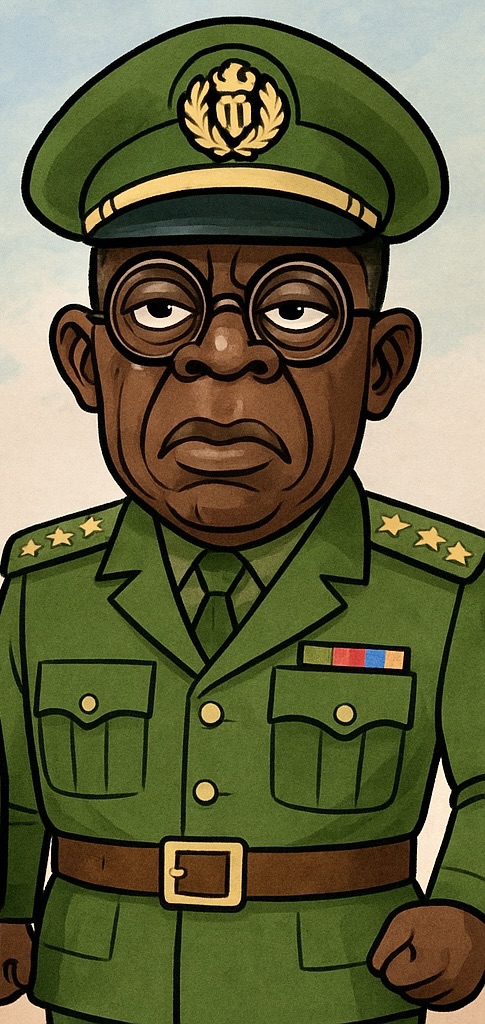
The country does not need politicians playing Generals on television.
It needs politicians who make coherent security policy, provide adequate resources, establish accountability and demand results.
And it needs professional security institutions that do not wait for the next presidential directive, gubernatorial proclamation or press release before doing what they were created, trained and funded to do.
The microphone is not a command post.
A press statement is not a rescue operation.
And somewhere between Abuja, the state government house and the next televised declaration lies a simple constitutional truth:
Leadership is not about announcing that you have told people to do their jobs. It is about building institutions that know their jobs and are capable of doing them.
That, perhaps, is the question Nigeria should keep asking.
And, with apologies to Jeremy Paxman:
Did you need to tell them to rescue the kidnapped citizens?
Did you?
Did you?
Did you?

