

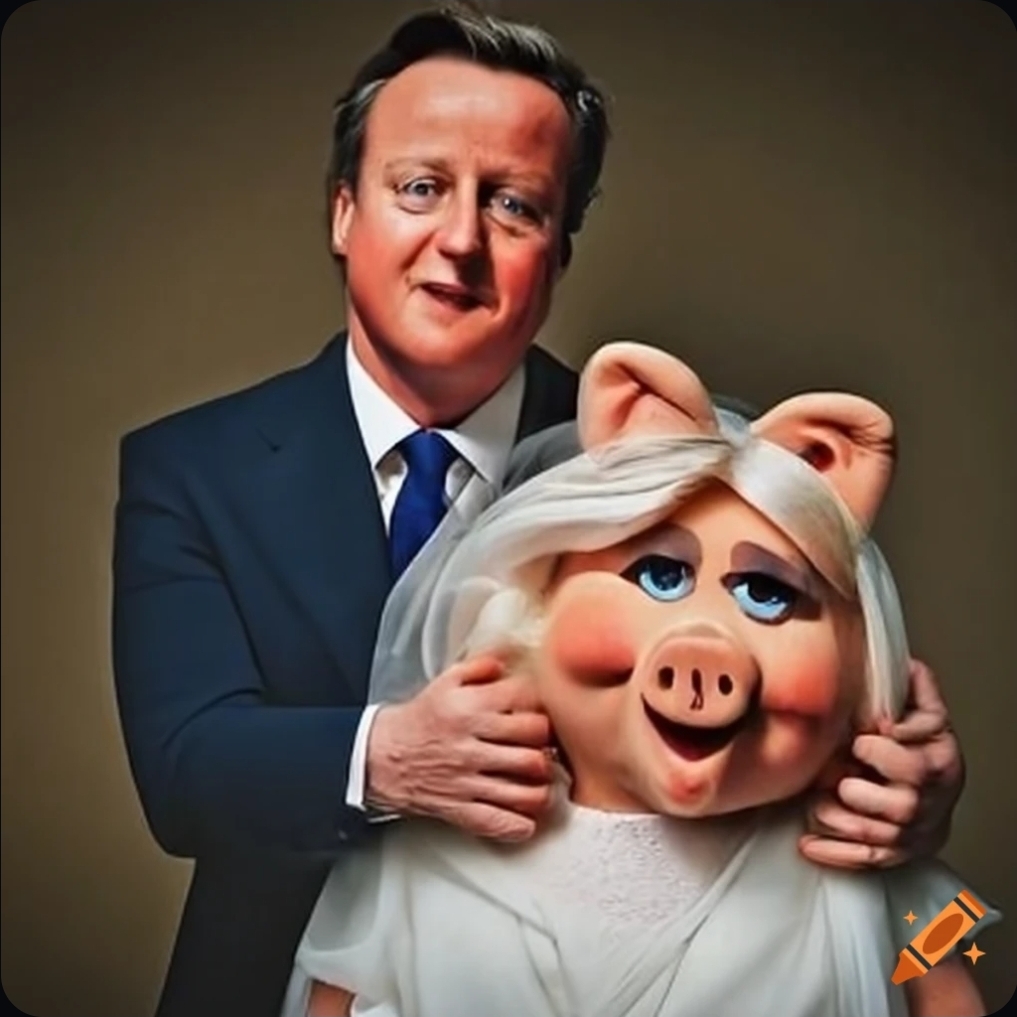
Some political leaders leave office and quietly retreat into the background. Others spend their retirement writing memoirs that nobody reads and giving speeches that nobody remembers.
Then there is David Cameron.
Like an unwanted software update that keeps reinstalling itself, Cameron periodically reappears to explain why the problems he created are either someone else’s fault or evidence that he was right all along.
It is one of the great mysteries of British public life that a man who detonated the most consequential political bomb in post-war Britain continues to be invited to lecture audiences about responsible government. If the captain of the Titanic had survived and spent the next decade giving seminars on maritime navigation, the level of public incredulity would have been roughly the same.
History may ultimately judge many British prime ministers harshly, but Cameron occupies a unique category. Most leaders inherit crises. Cameron commissioned one, signed off on it, and then walked away before the invoice arrived.
His referendum on Britain’s membership of the European Union was conceived not as an act of national necessity but as a piece of Conservative Party management. It was the political equivalent of setting fire to your living room to settle an argument about the thermostat.
When the flames spread beyond expectations, Cameron resigned, leaving the country to discover what “taking back control” actually meant in practice.
The consequences have hardly been minor. Britain has spent a decade navigating political turmoil, constitutional disputes, economic uncertainty and endless arguments over Brexit’s promises versus its reality. Yet Cameron still appears on conference stages around the world, speaking with the serene confidence of a man whose greatest achievement was not accidentally driving the bus into a ditch.
The remarkable thing is not that he gives speeches. Former politicians do that. The remarkable thing is the subject matter.
Austerity?
Economic responsibility?
Public services?
National leadership?
There is a certain audacity in the architect of austerity delivering lectures on public finances while local councils struggle to stay afloat, NHS waiting lists remain stubbornly high, and public infrastructure bears the scars of years of underinvestment.
One might have expected a degree of humility.
Instead, Britain often receives another masterclass from Professor Cameron on why everyone else misunderstood the lessons.
His defenders argue that Brexit was ultimately the choice of voters. That is true. But voters did not wake up one morning and demand a referendum. Cameron made that choice. He gambled that he could settle an internal Conservative Party dispute, win comfortably, and move on.
The political equivalent of putting the family home on red at the roulette table remains a poor decision even if someone else spins the wheel.
Yet Cameron is hardly alone in the Conservative tradition of refusing to acknowledge obvious reality. The Brexit years produced a parade of politicians who insisted that any difficulties stemmed not from Brexit itself but from insufficient enthusiasm.
If trade barriers emerged, the problem was negativity.
If businesses complained, the problem was pessimism.
If economic forecasts deteriorated, the problem was a lack of patriotism.
This logic reached its most absurd form when ministers suggested that journalists and broadcasters were somehow responsible for bad news merely by reporting it.
The theory appeared to be that Britain would become an economic superpower if only the BBC would smile more.
It was a curious argument. Football fans eventually accepted that England lost tournaments because the team was not good enough on the day. Brexit evangelists, by contrast, spent years insisting that success was guaranteed if only reality would stop being so uncooperative.
Meanwhile, the political class continued its endless game of musical chairs. Cabinet ministers manoeuvred for promotions, leadership contests multiplied, and personal ambition flourished with all the restraint of seagulls at a seaside chip shop.
The country was assured that every crisis represented an opportunity. Every setback was progress. Every contradiction was evidence of a master plan too sophisticated for ordinary citizens to comprehend.
Through it all, Cameron remained a recurring presence, floating back into public view like Banquo’s ghost with a consultancy contract.
The question is not whether David Cameron is solely responsible for Britain’s difficulties. No single politician ever is.
The more interesting question is whether any modern British prime minister has left behind such a profound gap between intention and consequence.
Tony Blair’s supporters and critics can at least agree that he changed Britain.
Margaret Thatcher’s supporters and critics can agree on the same.
Cameron wanted to manage a party.
Instead, he transformed a country.
That transformation continues to shape British politics today.
For a politician whose defining talent was presenting himself as a safe pair of hands, it is an astonishing legacy.
Not because it was planned.
Because it wasn’t.

