

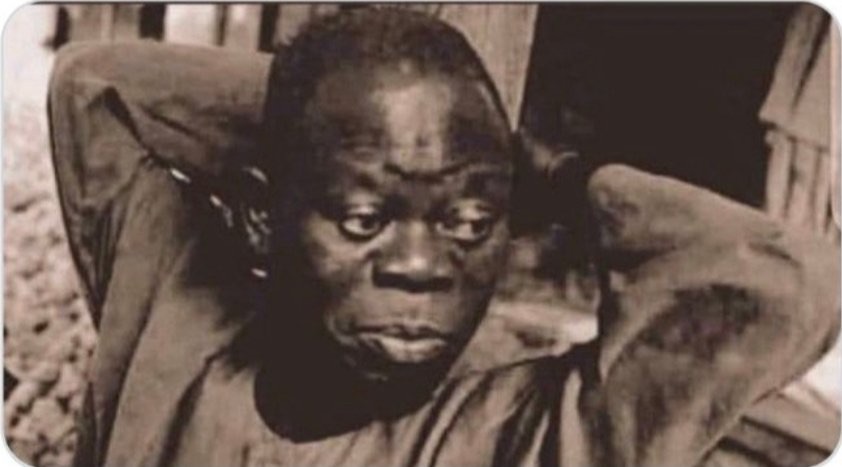

When Senator Adams Oshiomhole stepped forward to present the committee findings on the Museum of West African Art (MOWAA) to Governor Monday Okpebholo, the performance had all the theatrical hallmarks of an administrative reckoning. Yet beneath the veneer of civic concern lay something far more familiar to watchers of Edo State politics: a bad faith inquisitor bending over backwards to retroactively criminalize the vision of his sworn political rival, Godwin Obaseki.
Rather than an objective assessment of a world class cultural institution, the committee’s presentation read like an exercise in reverse engineered outrage. Where genuine institution building occurred, the inquiry searched desperately for dirt. Where visionary cultural diplomacy attracted global capital, it alleged private conspiracy. It was, in plain terms, a shameful misuse of transition machinery designed not to serve the public interest, but to settle old scores.
The Hospital Feint: Selective Nostalgia as a Political Weapon
Central to the indictment was the breathless lamentation over the demolition of the old Benin Central Hospital. Listening to the rhetoric, one would assume the facility was a pristine sanctuary of modern medicine arbitrarily flattened to make way for art.
The historical irony is staggering. For eight years as governor, Adams Oshiomhole presided over the very healthcare landscape he now romanticizes. If the ancient Central Hospital, dating back to 1903, was so indispensable to the soul of the state, why did his administration leave its structural obsolescence untouched, opting instead to pour resources into the Stella Obasanjo Hospital?
To neglect a facility during one’s own tenure, only to weaponize its eventual repurposing against a successor, is the height of political cynicism. Healthcare delivery requires modern, purpose built infrastructure, not the sentimental preservation of century old layouts ill suited to modern medicine. Transforming an underutilized site into a transformative cultural hub was a strategic urban intervention; pretending it was an assault on public health is merely convenient theater.
Legal Realities vs. Monarchy Politics
The committee’s central recommendation, to unilaterally rebrand the institution as the “Benin Royal Museum of African Arts” and hand its assets entirely to the royal palace, sidesteps both statutory governance and the delicate realities of international heritage management.
Museums, cultural institutions, and repatriated national heritage operate within defined federal legal frameworks. Public funds, structured partnerships, and statutory ownership reside with the government in trust for the entire citizenry. The transition of the project’s governance model from an initial concept to a robust, internationally credible special purpose vehicle was not an attempt to “strip royalty” of its heritage, but an operational necessity to attract non partisan global funding.
By pitting the monarchy against the previous administration’s legal structures, the current power brokers have turned traditional institutions into a political battering ram. Reducing complex public private governance to a simplistic narrative of palace dispossession may score quick local points, but it deliberately ignores how sustainable global cultural institutions actually function.
The Impending Decline: When Donors Walk Away
The real tragedy of this political vendetta will not be felt in the corridors of power, but in the cultural and economic future of Edo State.
International donors do not commit millions of euros, and philanthropic foundations do not deploy capital, on a political whim. The German government, the Leventis Foundation, and numerous global partners backed MOWAA precisely because it was structured as an independent, transparent, and professionally managed cultural institution capable of operating beyond the volatility of electoral cycles.
Now, with recommendations to dismantle its governance, subject international grants to hostile inquisitions, and convert a globally oriented arts institution into a localized political trophy, the inevitable outcome is predictable:
- Capital Flight: Sovereign donors and private charities will quietly exit. International cultural bodies do not finance entities entangled in local partisan expropriation.
- Reputational Damage: Edo State risks being labeled an unstable partner where public private agreements are torn up the moment a new administration takes office.
- Institutional Decay: Deprived of its global network, professional oversight, and diversified funding, the rebranded museum risks becoming another underfunded, stagnant state artifact.
Governing by Spite
A governor comes and goes, but the institutional credibility of a state must endure. In their haste to erase the legacy of the Obaseki administration, Oshiomhole and his allies have chosen to sabotage a generational project at the starting line.
MOWAA had the potential to place Benin City firmly at the center of the global contemporary art and heritage map. Sacrificing that potential on the altar of personal grievance is more than bad governance, it is a generational disservice to the people of Edo State. When the dust settles and the international partners have walked away, the inquisitors will be left holding the keys to an empty monument to their own spite.
Senator Adams Oshiomhole’s committee report presentation regarding the Museum of West African Art (MOWAA), as presented to Governor Monday Okpebholo.
1. Background and Deviation from the Original Plan
The Royal Museum Vision: Senator Oshiomhole explained that the project originated from the decision by His Royal Majesty, the Oba of Benin, to build a dedicated Royal Museum to safeguard repatriated artifacts.
Site Selection & Hospital Demolition: While the Oba provided palace land for the museum, the previous administration under Governor Godwin Obaseki chose instead to demolish the historic Benin Central Hospital (founded in 1903) to build the structure on hospital grounds.
2. Corporate Rebranding and Name Changes
Entity Evolution: A special purpose vehicle was originally established under the name Legacy Restoration Trust, which transitioned into the Edo Museum of West African Art (EMOWAA) and eventually dropped “Edo” to become simply MOWAA.
Intent of Rebranding: The committee stated that removing “Royal” and subsequently “Edo” appeared intended to distance the facility from both the monarchy and the state government, effectively positioning a publicly funded project as a private enterprise.
3. Financial Discrepancies and Land Acquisition Claims
State Funding: Edo State provided initial seed funding of ₦800 million to build donor confidence and later released another ₦1 billion five days before the previous governor left office, bringing total state expenditure to ₦3.8 billion.
Foreign and Local Grants: Substantial donations were documented from international entities—including over €4 million from the German government and $1.5 million from the Leventis Foundation.
$18 Million Expenditure Claim: MOWAA leadership acknowledged expending over $18 million on land acquisition, clearing, and archaeological excavation.
Committee Findings on Land & Archaeology:
Official state records showed that land acquisition fees were completely waived by the former governor within 48 hours of application, meaning no funds were paid to acquire the land.
Inspection showed no distinct archaeological artifacts were uncovered; standard foundation groundwork had been classified as archaeological excavation
4. Structural Assessment and Demolition Decision
Retaining the Structure: Although campaign pledges had considered restoring the hospital or demolishing the structure, the committee noted that the building is solid reinforced concrete.
Demolishing or attempting to remodel it would waste billions in taxpayers’ money and donor contributions, leading to the decision to keep the structure intact.
5. Key Recommendations to the State Government
Renaming: Change the official name to the Benin Royal Museum of African Arts to restore royal ownership, honor Benin heritage, and accommodate art from across Africa and beyond.
Handover to the Royal Palace: Formally hand the completed facility over to the palace of the Oba of Benin (Oba Ewuare II), who is the rightful custodian of the looted and returned Benin bronzes.
Forensic Audit & Valuation: Appoint a reputable auditing firm to conduct a comprehensive forensic investigation into all donations and financial flows, alongside property valuers to assess whether Edo taxpayers received value for money.

