


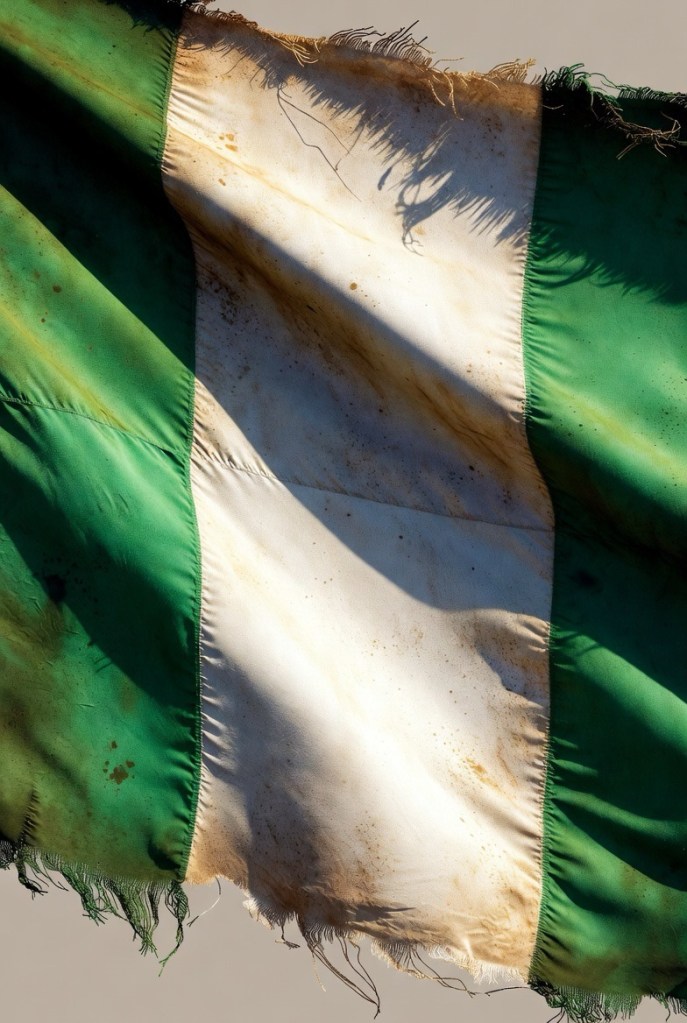
They told us the Irish Question had no answer. Nigeria has been proving the same theorem in real time, with public money, and at considerable human cost.
The Question Before the Question
The Wit That Launched a Thousand Think Pieces
There is a saying, long attributed to the fog and frustration of Anglo-Irish relations, that goes roughly as follows: anyone who claims to have an answer to the Irish Question has clearly not understood the question. The precise origin of the quip is itself disputed, a fitting irony for an observation about irresolvability. Some give it to Benjamin Disraeli, that most theatrical of Victorian prime ministers.
Others attribute it to William Gladstone, who spent the better part of his later career attempting the very thing the aphorism declares impossible. Whoever said it first, the wisdom holds: some questions are not problems awaiting solutions. They are conditions requiring navigation.
Nigeria is that condition.
If you have arrived at this article with a crisp, confident, seven-point plan for fixing Nigeria, colour-coded, footnoted, and ready for immediate implementation, you have, with the greatest respect, not yet understood Nigeria. You have understood something about Nigeria. Perhaps a great deal about one part of it, one era of it, one crisis of it. But the whole? The complete, breathing, contradicting, perpetually renegotiating entity that calls itself the Federal Republic of Nigeria? That is not a thing one fixes. It is a thing one contends with, perpetually, in good faith, with stamina and a high tolerance for paradox.
And yet here is where our Irish analogy earns its keep and then politely retires Nigeria is not Ireland. The Irish Question, whatever its complexity, was ultimately a constitutional question between two peoples on two adjacent islands, with centuries of religious and colonial sediment to excavate. The Nigerian Question is something altogether more ambitious in its dimensions: it is a question about whether a state assembled at the convenience of Victorian cartographers can become a nation assembled by the will of its people.
That is not merely a political question. It is a philosophical one. And, on most days, a theological one.
Act II — The Peculiar Genius of the Invented Nation
On the Manufacture of Countries
It is a commonplace observation made so frequently it has lost some of its sting, that Nigeria’s borders were drawn not by Nigerians but by Europeans sitting in Berlin in 1884, men who had never walked the laterite roads of Onitsha, never heard the talking drums of Egba, never sat in a Kanuri court, and had only the haziest notion of what lay between the Benue and the Cross River. The Berlin Conference of 1884 to 1885 is often invoked in African political discourse as the original sin: the moment at which geography was subordinated to European commercial appetite, and the ancestors of today’s Nigerians were locked into the same administrative box as people who, in some cases, had been their enemies for centuries and, in other cases, had never met them at all.
This is true. It is also, at this point, insufficient as analysis.
Every modern nation-state is, to a significant degree, invented. France spent centuries violently persuading Bretons, Alsatians, Occitans and Basques that they were French. The United States is a country whose founding mythology is inseparable from the dispossession of its original inhabitants and the labour of its enslaved ones. The United Kingdom that most apparently settled of constitutional arrangements is a union assembled through conquest, dynastic accident and parliamentary sleight of hand that Scotland is currently re-examining with considerable scepticism. Nigeria is not uniquely artificial. It is, however, unusually candid about its artificiality. The seams show. They have always shown. And rather than pretend otherwise, the more useful question is: given that the seams show, what kind of garment can still be made?
This is where the wheel must be invented. Not borrowed. Not imported. Not reverse-engineered from Singapore or South Korea or Rwanda, each of which is produced with great solemnity whenever someone wants to shame Nigeria at a dinner party. Invented. From Nigerian materials, for Nigerian conditions, by people who understand that governance in a country of two hundred and twenty million citizens, speaking over five hundred languages, practising multiple religions with varying degrees of fervour, spread across a geography ranging from the Sahel to the Atlantic mangrove, is not a problem that responds to any single elegant solution.
Act III — A Brief Inventory of Attempted Answers
The Graveyard of Solutions
Nigeria has not been short of answers to its question. It has been short of answers that worked. The archive of attempted fixes is extensive and, if read in the right light, faintly comic, in the way that tragedy becomes comedy when you have enough historical distance and sufficient emotional detachment from the consequences.
There was the military answer. If the politicians could not govern, the soldiers would. The soldiers arrived in 1966, bearing the standard justification of armies everywhere: that the civilians had made such a mess of things that intervention was not a coup but a rescue. What followed over the subsequent decades was not, in the main, a rescue. It was a series of increasingly baroque experiments in authoritarian management, punctuated by oil booms that were squandered with a creativity that bordered on art, and oil busts that were endured with a stoicism that bordered on sainthood. The soldiers left in 1999, returning to barracks with their reputations, their overseas accounts, and certain public assets that had somehow followed them home. They left behind a constitution, the 1999 Constitution, that was written in their shadow, bears their fingerprints, and has been generating constitutional litigation ever since.
There was the federal answer. Nigeria would be a federation, a word deployed with tremendous enthusiasm and variable rigour. The federation has been reconfigured repeatedly: four regions became twelve states became nineteen became twenty-one became thirty became thirty-six, plus a Federal Capital Territory that is constitutionally neither fish nor fowl. Each reconfiguration was sold as a solution to the previous configuration’s problems. Each new configuration created a new set of problems requiring the next reconfiguration. The states themselves range from the economically viable to the economically fictional, surviving largely on monthly allocations from Abuja that arrive with the regularity of a civil servant’s prayers and the reliability of the power supply.
There was the oil answer. Petroleum would provide. It has provided, abundantly, for a relatively small number of people, and has done something considerably more complicated for everyone else. The resource curse, that elegant academic formulation for the rather inelegant reality that finding oil tends to make poor countries worse rather than better, has operated in Nigeria with textbook fidelity. The NNPC has been reformed, restructured, rebranded, and reorganised with sufficient frequency that any student of corporate transformation could write their dissertation on its acronym alone.
There was, and continues to be, the restructuring answer. Every few years, the conversation returns to restructuring, fiscal federalism, devolution of powers, resource control, true federalism. These are not bad conversations to have. They are, in fact, essential conversations. The difficulty is that the people who most need to agree on restructuring are the people who most benefit from the current arrangement’s dysfunction, which creates a certain structural disincentive to progress. One does not readily vote to abolish the table from which one is eating.
Act IV — The Wheel
What Inventing It Requires
So: the wheel. What does it look like?
The honest answer is that no one knows precisely, and that anyone who tells you precisely is selling something. But certain things can be said with reasonable confidence about the conditions under which a wheel might be successfully invented.
First, it requires an acknowledgement that Nigeria’s complexity is not a problem to be solved but a reality to be governed. The country contains multitudes, geographical, ethnic, religious, economic, generational multitudes, and any constitutional or political arrangement that attempts to flatten those multitudes rather than accommodate them will fail, has failed, and will continue to fail, regardless of the sincerity of its architects. The Nigerian Constitution, for all its considerable length, still has not fully reckoned with this. It speaks of federalism while practising something closer to administrative decentralisation with oil money at the centre.
Second, it requires institutions that are genuinely independent of the people they are supposed to regulate. This is so obvious it is almost embarrassing to state, and yet it remains perhaps the single most persistent structural failure of the Nigerian state. The judiciary has been compromised by the same political economy it is meant to police. The Independent National Electoral Commission has proven, election after election, that the word “independent” in its name functions more as aspiration than description. The anti-corruption agencies operate with one eye on their mandates and the other on their political patrons. This is not a counsel of despair. It is a diagnosis. Diagnoses that are stated clearly enough, consistently enough, and publicly enough, eventually become pressure. Pressure, applied over sufficient time to the right points, produces change. The alternative, euphemism, collective amnesia, and the annual rediscovery that corruption is bad, has been tried and found wanting.
Third, and most uncomfortably: it requires a political class willing to lose. Not forever. Not in every election. But willing, in principle, to accept the verdict of legitimate process, to accept that governance is a rotation, not an inheritance. The godfather system, which this writer has examined at some length elsewhere, is precisely the negation of this principle. It is the privatisation of public authority. It is the conversion of democratic office into personal estate. The wheel cannot be invented while the workshop is owned by people whose interest lies in ensuring that travel remains impossible for everyone except themselves.
“One does not readily vote to abolish the table from which one is eating.”
Fourth: citizenship. Not the paper kind, the practised kind. The kind that shows up not only at elections but between them. The kind that holds local government accountable for the roads and the water and the schools, because local government is where most governance actually happens, or fails to happen, in any country. The kind that understands that the state is not a separate entity arriving from outside to do things to you, but a structure you constitute, fund, and therefore have the right and responsibility to direct. This is, admittedly, a harder ask in a country where the state has spent decades demonstrating its indifference to the citizen with remarkable consistency. Trust, once shattered, is not rebuilt by speeches. It is rebuilt by incremental evidence that the machinery works, that a complaint lodged somewhere results in something; that a tax paid somewhere funds something visible; that a law exists and applies to everyone, including the powerful, especially the powerful.
Act V — Ceterum Censeo
The Wheel, Again
The Irish Question, for all its intractability, was eventually partially, imperfectly, provisionally answered. The Good Friday Agreement of 1998 did not dissolve the question. It created a framework within which the question could be lived with, negotiated, managed, and perhaps eventually transformed. It took decades. It required leadership on both sides willing to pay political costs. It required external facilitation. It required, above all, a decision by people of sufficient influence that the costs of the status quo had become unacceptable.
Nigeria is not yet at that decision. But it is closer than it has been at various previous points in its history not because its problems are smaller but because its citizens are louder, better connected, and considerably less patient with the political theatre that has substituted for governance. The young Nigerians who took to the streets in October 2020, who organise online, who relocate to build what their country could not provide them but carry that country with them wherever they go they are not the problem. They are, if anything, the most promising evidence that the wheel can be invented.
The Nigerian Question, then, is not a question that defeats understanding. It is a question that defeats impatience. It defeats the expectation of neat resolution. It rewards, instead, the harder virtues: endurance, clarity, institutional imagination, and the refusal to mistake complexity for hopelessness.
The wheel has not been invented yet. But the road is there. It has always been there. It is called Nigeria.

