


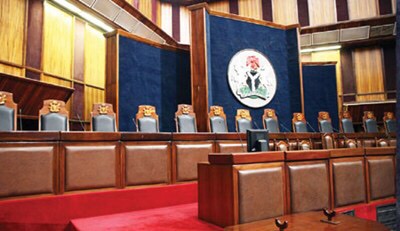
Nigeria’s judicial budget is a complex, contentious issue at the intersection of constitutional design, fiscal federalism, political power dynamics, and the practical realities of justice delivery. While the 1999 Constitution (as amended) enshrines judicial independence including financial autonomy the implementation reveals deep gaps between legal provisions and on-ground realities.
Constitutional and Legal Framework
Sections 81(3) and 162(9) of the Constitution provide for direct payment of federal judiciary funds to the National Judicial Council (NJC) from the Consolidated Revenue Fund. At the state level, Section 121(3) mandates that judiciary allocations be a first-line charge paid directly to heads of courts, insulating them from executive control.
Key milestones include:
- 2018 constitutional amendments reinforcing state-level autonomy.
- Executive Order 10 (2020) under President Buhari, which attempted stronger enforcement but was struck down by the Supreme Court in 2022 as unconstitutional.
- Ongoing pushes for direct budget submission by the judiciary to the legislature, bypassing the Executive.0
These provisions aim to prevent the Executive (and Governors) from using the purse as leverage, a common threat to judicial independence globally.
Federal Level: Statutory Transfers vs. Capital Control
The federal judiciary budget splits into two main streams:
- Statutory/recurrent transfers (via NJC): Covers salaries, pensions, and operations. For 2026, the NJC allocation is around ₦341–₦521 billion (figures vary by proposal vs. final; it rose sharply post-2024 salary review).
- Capital projects: Buildings, courts, judges’ quarters, vehicles. These fall under Executive-controlled ministries (e.g., Ministry of Justice, FCT Minister). Even approved projects often see “warranted but not cash-backed” funds paper approvals with minimal actual releases (e.g., near 0% in some 2025 reports).
The President submits the judiciary’s budget proposals to the National Assembly, limiting direct judicial input. Proposed reforms seek to change this for greater independence.
Nuances and performance: Recurrent funding is relatively protected as a first-line charge, but capital execution lags due to broader federal budget implementation issues (low revenue performance, debt servicing crowding out spending, and bureaucratic delays). In Nigeria’s 2026 budget context (around ₦58–68 trillion total, depending on proposals vs. signed), judiciary funding remains a small but critical slice amid high deficits.
State Level: Autonomy on Paper, Executive Grip in Practice
State judiciaries face even starker challenges. Despite constitutional guarantees:
- Many Governors control releases, leading to delays, cuts, or selective funding.
- Example: Ondo State saw a 40%+ slash in judiciary budget in 2026, affecting capital projects.
- Delta State court rulings and Supreme Court decisions (e.g., 2026 4-3 ruling affirming state responsibility for high court capital projects) highlight ongoing tensions.
Table Summary (Federal vs. State Dynamics): Aspect Federal State Recurrent/Salaries NJC direct (statutory) First-line charge (often contested) Capital Projects Executive/FCT Minister control State Government (frequently delayed) Budget Submission Via Executive to NASS Via Governor to State Assembly Enforcement Partial (proposals for reform) Variable; Supreme Court interventions
Key Challenges and Implications
- Infrastructure Deficits: Crumbling court buildings, inadequate housing, and vehicle shortages hinder operations. Judges and staff face poor conditions, contributing to delays (Nigeria’s case backlog is notorious).
- Perceived/Real Interference: Budget control can subtly influence rulings, especially in politically sensitive cases involving the Executive or Governors. This erodes public trust in the judiciary as an impartial arbiter.
- Implementation Gaps: Even with laws and rulings, weak enforcement mechanisms, revenue shortfalls, and political resistance persist. JUSUN strikes have highlighted this historically.
- Broader Fiscal Context: Nigeria’s budgets grapple with oil dependency, debt (servicing often >20-25% of expenditure), inflation, and low capital utilization. Judiciary funding competes with security, infrastructure, and social sectors.
- Edge Cases: Smaller or opposition-controlled states may see worse funding; urban federal courts (Abuja) sometimes fare better via FCT interventions. Corruption risks in fund management add another layer, though NJC oversight helps.
Implications for Justice Delivery:
- Access to Justice: Underfunded courts mean slower processes, fewer digital tools, and limited outreach, disproportionately affecting the poor.
- Rule of Law and Democracy: A dependent judiciary weakens checks and balances, with ripple effects on elections, contracts, and human rights.
- Economic Impact: Unreliable courts deter investment; timely commercial dispute resolution is vital for growth.
- Reform Potential: Direct budgeting, better performance monitoring, and performance-based elements could help. Comparative lessons (e.g., countries granting judiciary more budget autonomy with accountability) show mixed but promising results.9
Positive Developments and Outlook
- Increased allocations post-salary reviews and advocacy.
- NJC and judicial bodies defending budgets publicly.
- Executive actions like building judges’ quarters in FCT.
- Civil society, bar associations, and international pressure for transparency.
Full realization of judicial budget autonomy requires not just laws but cultural/political shifts, stronger institutions, and sustainable revenue. Without it, the judiciary risks remaining the “weakest” arm in practice, despite its constitutional stature. This crisis is symptomatic of Nigeria’s broader governance challenges: elite capture, fiscal opacity, and uneven federalism.
Addressing it holistically via legislative reform, improved budget execution, and public accountability could strengthen democratic resilience. For the latest specifics, tracking NJC submissions, National Assembly debates, and state-level reports is essential, as figures evolve between proposals, approvals, and releases.

