
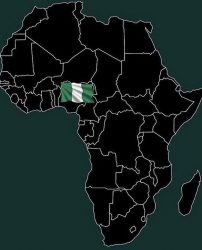
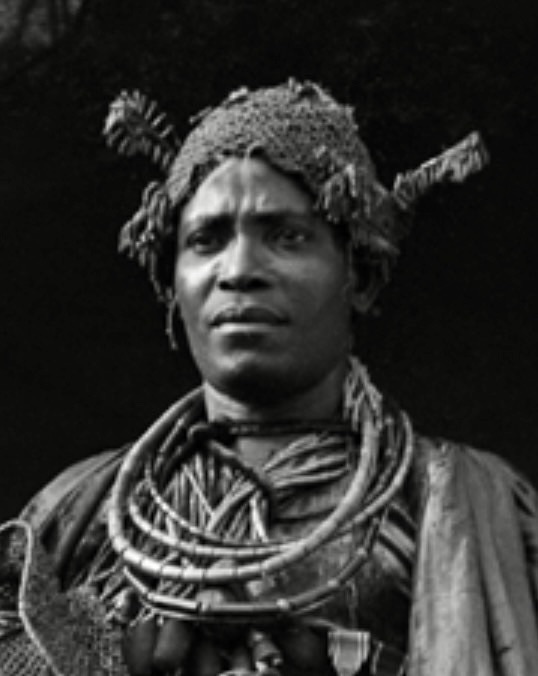

In Edo State, the dead are proving more productive than the living. Long after Oba Akenzua II joined his ancestors in 1978, his signature continues to appear on deeds of authority to transfer land. In 2026 the late monarch is still endorsing documents at a rate that would have exhausted him in life. He has, by some accounts, authorised more transfers from beyond the grave than he ever did while breathing. This is not ancestral reverence. It is administrative improvisation of the highest order.
The Land Use Act of 1978 vested radical title to land in the state governor. Customary authorities were meant to operate within that framework, not around it. Yet when the formal system becomes a source of frustration rather than facilitation, human ingenuity finds other routes. Enter the late Oba. His name carries historical weight. The palace, however, maintains no functional modern archive capable of systematic verification. Oral history is the dominant method, and most of the original participants are no longer available for cross-examination. The result is a paper trail that is difficult to audit and easy to exploit.
This phenomenon does not emerge in a vacuum. Nature, as the saying goes, abhors one. When government processes for land registration grind into silence or bureaucratic paralysis, alternative authorities step into the space. People still need to buy, sell, gift, and inherit land. They still need some form of documentary cover, however imperfect. The continued appearance of a 1978 signature on 2026 transactions is less a mystery than a symptom. It is what happens when the official machinery is perceived as unreliable, slow, or selectively engaged.
Even the Certificates of Occupancy that do eventually emerge are not always models of robust documentation. Incomplete supporting papers, questionable survey plans, and thin verification trails remain common complaints. The very instrument designed to convert dead capital into bankable assets is itself sometimes fragile. Banks and serious investors require clean, defensible proof of title. Anything less keeps land locked in a semi-formal limbo where its economic potential is wasted.
One structural bottleneck deserves particular attention: the requirement that the governor personally sign every Certificate of Occupancy. In principle this preserves ultimate state control. In practice it creates an unnecessary chokepoint. Files pile up. Signatures are delayed by competing demands, political considerations, or simple administrative volume. The economic purpose of land certification is not ceremonial. It is to unlock capital. A plot that cannot be used as security for a loan or offered as collateral to an investor remains economically inert. Every month of delay is a month in which that asset generates nothing for its owner or for the wider economy.
A system that forces living applicants to rely on the signature of a monarch who died nearly half a century ago, while the living governor’s pen becomes a source of delay, is not a system in good health. It is a system that has forced citizens into workarounds because the official path is too obstructed. Reform that stops at digitisation and press releases without addressing the practical friction points will continue to produce exactly these anomalies.
The late Oba Akenzua is not the problem. The problem is a land administration architecture that still makes the dead more useful than the living. Until that changes, the ghost will keep signing.
 Centre for Nigeria Progress