

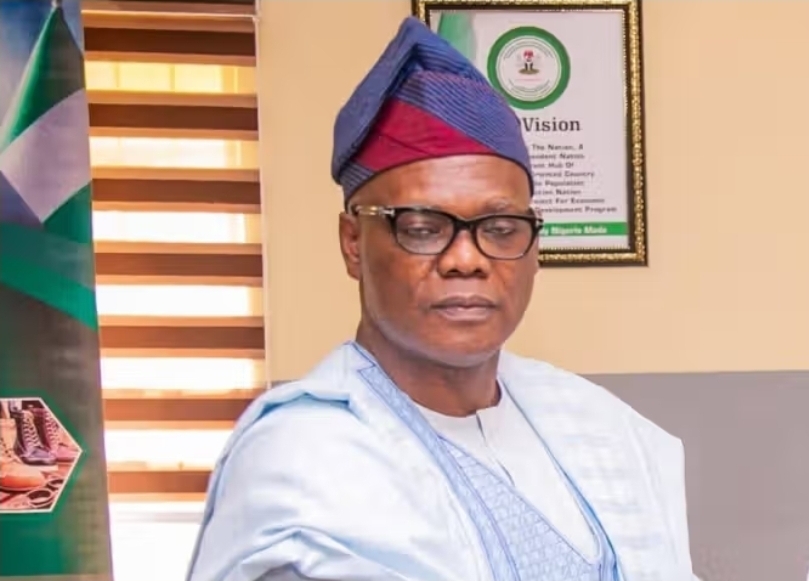
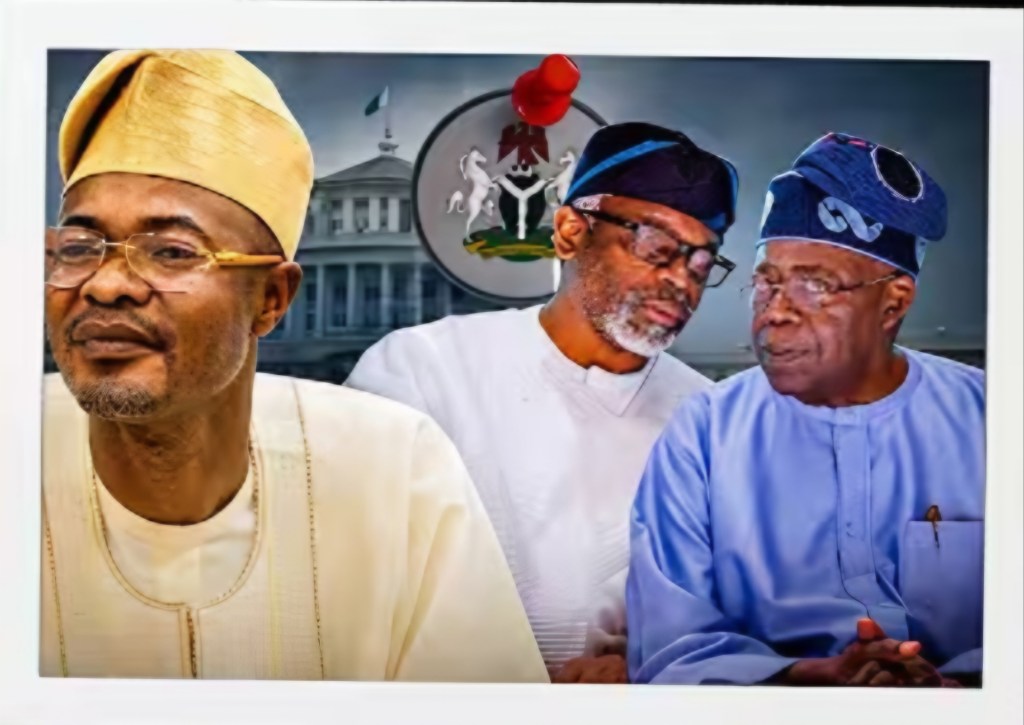
There is something almost uniquely Nigerian about discovering that a government agency is fake after it has been given an office, treated as official, populated with officials, recognised by other parts of government and, in one case, even found its way into the national budget.
The latest episode has produced an extraordinary double act.
On one side is Prince Adeniyi Adeyemi Matthew, associated with the Presidential Foreign Intervention Promotion Council (PFIPC).
On the other is Prince George Buchi Nwabueze, identified by the Independent Corrupt Practices and Other Related Offences Commission (ICPC) as the promoter of the National Brands Development and Made-in-Nigeria Special Project Office.
Both men operated organisations carrying the unmistakable aroma of officialdom.
Both organisations presented themselves as government bodies.
And both have now been described by the authorities as fictitious or unauthorised.
That raises a question considerably more important than the fate of either Prince:
How does a government discover that its own government does not exist?
The PFIPC: A Ghost That Made It Into the Budget
The PFIPC scandal was already extraordinary.
The Presidency said the organisation did not legally exist and that Adeyemi had allegedly forged documents and impersonated a government appointee. The ICPC subsequently recommended his prosecution, saying he had never been appointed by the Federal Government or any authorised government institution.
Yet this supposedly non-existent organisation appeared in the 2026 Appropriation Act under the description:
Presidential Economic Advisory Council/Presidential Foreign Intervention Promotion Council.
The allocation was approximately ₦1.303 billion, comprising personnel, overhead and capital expenditure.
Let us pause there.
A man allegedly invents a government organisation.
The organisation obtains official-looking documentation.
It gets office accommodation.
It secures approval connected to the recruitment of more than 300 personnel.
It engages with senior public officials.
And then Parliament passes a national budget containing money for it.
This is not merely a story about one alleged impersonator.
It is a story about institutional impersonation.
The most uncomfortable question is not:
«How did Adeyemi fool government?»
It is:
«How did government fool itself?»
The Budget Office subsequently explained that it had relied on official documents from government institutions when costing the organisation’s budget. The Office of the Accountant-General and other agencies had apparently generated the administrative trail that made the entity look sufficiently real for the budget process.
And yet, crucially, the Budget Office later told lawmakers that none of the ₦1.3 billion was actually released or spent because the statutory conditions for disbursement had not been satisfied.
So the PFIPC was, in the end, a remarkably expensive ghost.
It was sufficiently real to appear in the national budget but apparently insufficiently real to receive the money.
That distinction may save the Treasury.
It does not save the system.
Then Came Prince George and “Made in Nigeria”
Just when Nigerians thought the PFIPC story could not become stranger, ICPC announced that its investigation had uncovered another alleged fake government office.
This time it was the National Brands Development and Made-in-Nigeria Special Project Office, associated with Prince George Buchi Nwabueze.
According to ICPC Chairman Musa Adamu Aliyu, the office had been allocated space within the premises of the Office of the Secretary to the Government of the Federation (OSGF) despite allegedly lacking the necessary presidential authorisation and legal status.
That is where Nigerian bureaucratic comedy turns into constitutional seriousness.
A fake roadside business operating from a rented shop is one thing.
A supposedly fake federal government office operating inside the federal government’s own premises is something else entirely.
This is not a case of somebody putting up a signboard in an obscure office somewhere in Abuja.
It was allegedly sitting in the house of government.
And the question therefore becomes:
Who opened the door?
But Nwabueze Has a Different Story
There is an important qualification.
Prince George Nwabueze denies that the organisation is fake.
He has produced documents which he says demonstrate that the Made-in-Nigeria project has been associated with the OSGF for years.
Among the documents he published is a purported October 3, 2025 appointment letter from the OSGF appointing him National Coordinator/Executive Director of the Made-in-Nigeria Project Office for a five-year period beginning in July 2025.
He has also produced an older 2010 document which he says demonstrates that the Made-in-Nigeria initiative has roots going back approximately 16 years.
His argument is essentially:
You cannot call something fake in 2026 when it has allegedly been sitting inside the SGF’s office since 2010.
That is not an entirely frivolous defence.
Indeed, it makes the matter considerably more interesting.
Because if the documents are genuine, the question changes from:
“Who created this fake agency?”
to:
“Who allowed an initiative to operate for years without giving it the legal status necessary to operate as a government body?”
Those are two very different scandals.
One concerns alleged fraud.
The other concerns administrative irresponsibility.
Neither is particularly flattering.
The Problem With “Special Projects”
Nigeria has developed an interesting bureaucratic species: the special project.
It is wonderfully elastic.
A ministry has a legal identity.
An agency has an establishing law or other lawful instrument.
A commission normally has a statute.
A government company has incorporation documents.
But the phrase “special project” can sometimes appear to float above the conventional architecture of government.
It can have a coordinator.
It can have offices.
It can have programmes.
It can have state coordinators.
It can have conferences.
It can have websites.
It can have letterheads.
It can have vehicles.
And, apparently, it can even have government officials interacting with it.
The only small problem is determining what legal creature it actually is.
The Made-in-Nigeria organisation’s own published material envisaged capital expenditure, personnel costs, overheads and several potential sources of funding, including federal allocation, development-partner grants, private-sector sponsorship and internally generated revenue.
That sounds remarkably like a government institution.
Which is precisely why the legal status matters.
A project designed to promote Nigerian products is perfectly legitimate as a policy objective.
But a legitimate policy objective does not automatically create a legitimate government agency.
Good intentions are not an establishing statute.
And Then There Is the Money
This is where the two cases intersect.
The PFIPC demonstrably appeared in the 2026 Appropriation Act with about ₦1.3 billion allocated to it.
The subsequent investigation concluded that no money was actually released.
That is important.
We should not casually say that ₦1.3 billion was stolen when the evidence currently available indicates that the allocation was made but the funds were not disbursed.
But we should ask something more fundamental:
How did Parliament appropriate ₦1.3 billion to an organisation the Presidency subsequently said did not exist?
That question belongs not merely to the police or ICPC.
It belongs to the Executive, the Budget Office, the Accountant-General, the National Assembly and the entire public-service verification system.
The budget is supposed to be the government’s financial map.
If a fictional destination appears on the map, somebody ought to ask where the road leads.
“Fake After the Event”
And this brings me to the phrase that may ultimately define this entire affair:
fake after the event.
It is one thing for an organisation to be exposed as fraudulent immediately.
It is quite another for it to become “fake” only after passing through several layers of government.
The PFIPC had apparently been sufficiently convincing to government institutions that it obtained an administrative trail and appeared in the budget.
The Made-in-Nigeria project operated from government premises and its promoter now says he possesses correspondence from the OSGF supporting his appointment.
So perhaps the most interesting question is not whether these organisations were fake.
Perhaps it is:
At what point did they become fake?
Were they fake when they were created?
Were they fake when officials recognised them?
Were they fake when offices were allocated?
Were they fake when documents were issued?
Were they fake when budget officers processed them?
Were they fake when legislators voted money for them?
Or did they become fake only when the scandal became impossible to ignore?
That is the question Nigerians should be asking.
The Princes Are Not the Whole Story
It would be remarkably convenient to reduce this affair to two colourful characters called Prince.
Prince Adeniyi.
Prince George.
Two men with impressive titles.
Two impressive organisations.
Two elaborate bureaucratic structures.
And, suddenly, two alleged fake government bodies.
Case closed.
Except it isn’t.
Because government is not a WhatsApp group where somebody can simply announce:
«“Guys, this agency is fake.”»
Government has rules.
There are establishing instruments.
There are appointment procedures.
There are budget processes.
There are financial regulations.
There are accounting systems.
There are permanent secretaries.
There are directors.
There are lawyers.
There are auditors.
There is the National Assembly.
There are ministers.
There is the Secretary to the Government of the Federation.
There is the Presidency.
There is the ICPC.
There is the entire machinery of the Nigerian state.
If a man can allegedly walk through that machinery carrying a fictitious government agency, the problem is not merely the man.
The machinery has a hole in it.
The Real Scandal Is Institutional
The PFIPC affair exposed an extraordinary weakness in Nigeria’s system of governmental authentication.
The Made-in-Nigeria affair may expose another.
And if both investigations ultimately establish wrongdoing, Nigerians should resist the temptation to stop at arresting the men whose names appeared at the top of the organisations.
The more important investigation should be into the officials who made the organisations look real.
Who authorised the offices?
Who issued or accepted the documents?
Who created the administrative codes?
Who processed the budget?
Who allowed officials to interact with the bodies?
Who allowed them access to government premises?
Who failed to verify their legal existence?
And, most importantly:
Who benefited?
That is where the real story lives.
Nigeria Does Not Need More Princes. It Needs Proof
There is a delicious irony in the fact that one of these organisations was supposedly concerned with foreign intervention and investment promotion, while the other was concerned with Made in Nigeria.
One was supposed to bring foreigners into Nigeria.
The other was supposed to make Nigerians believe in Nigeria.
Instead, both have helped produce the same export:
international embarrassment.
The lesson is not that Nigeria should stop creating initiatives.
Nigeria desperately needs initiatives to promote manufacturing, exports, investment and economic development.
The lesson is that every initiative must have a clearly identifiable legal foundation.
A government body should not become legitimate because it has a signboard.
It should not become legitimate because it occupies a government office.
It should not become legitimate because somebody says the President approved it.
It should not become legitimate because it appears in a budget.
And it certainly should not become legitimate because everybody in government behaves as though it is legitimate.
Legality must come before appearance.
Otherwise Nigeria ends up with the bureaucratic equivalent of a movie set: impressive from the front, but nothing behind the door.
And perhaps that is the deepest lesson from the two Princes.
The scandal is not simply that two allegedly fictitious bodies existed.
The scandal is that the Nigerian state was apparently capable of treating them as real.
That is a much bigger problem than two men.
It is a problem of governance.
And it is a problem that cannot be arrested.

