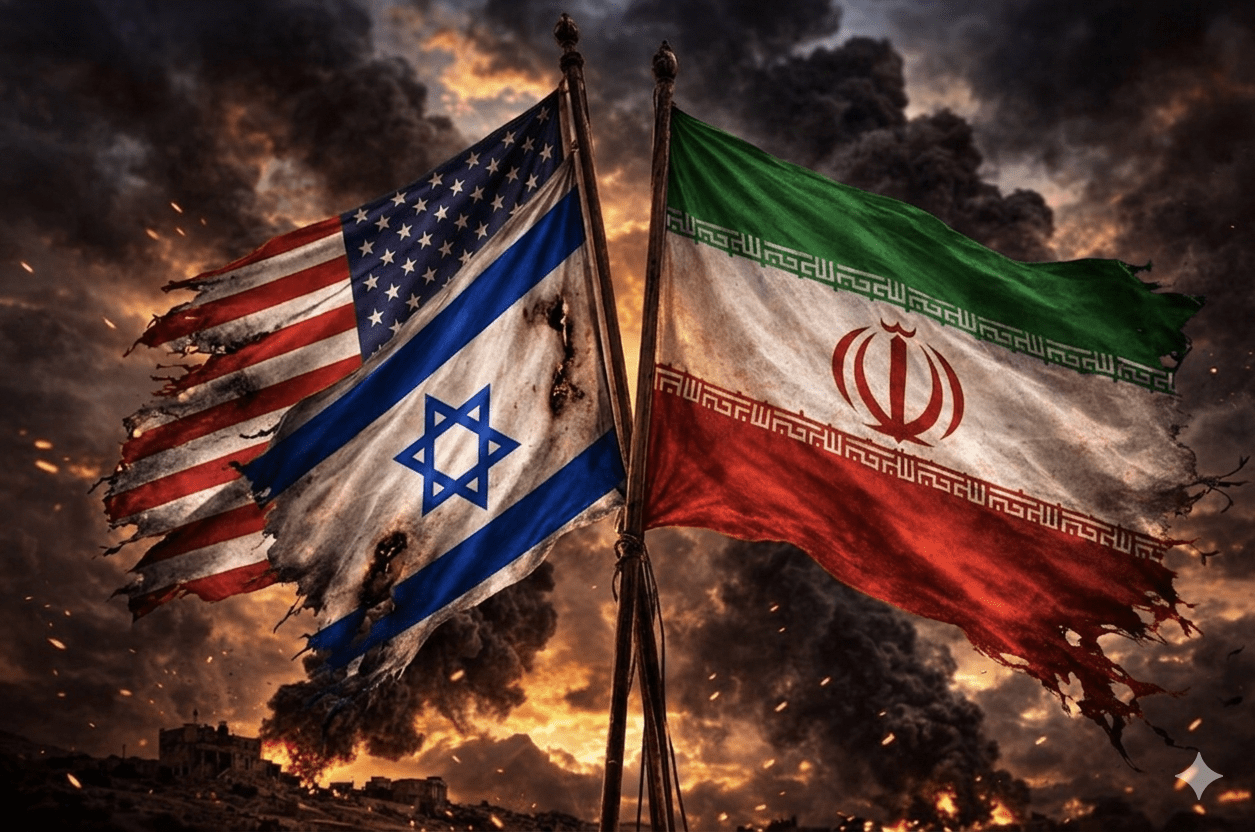
There is something almost Shakespearean about watching a superpower win the battle and lose the plot.
At a recent hearing of the House Armed Services Committee on the FY27 defence budget, Adam Smith delivered what can only be described as a cold, clinical autopsy of the United States’ post-war posture toward Iran. His central thesis was not that America lacks strength far from it but that it appears increasingly unsure what to do with it.
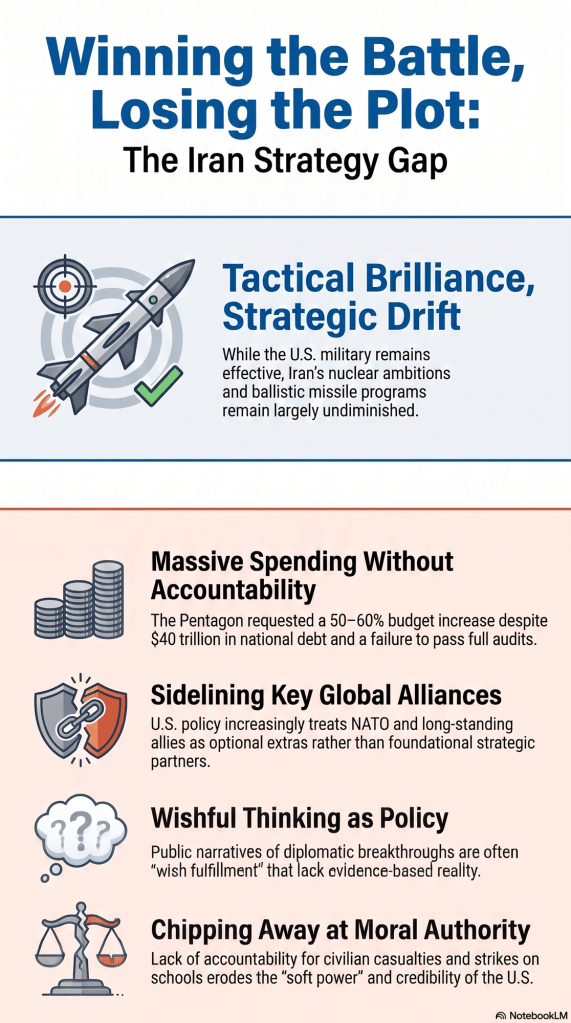
Tactical Excellence, Strategic Drift
Smith was careful to concede what nobody seriously disputes: the U.S. military remains frighteningly effective. Precision, logistics, force projection the Pentagon still does these things with the kind of competence that makes adversaries lose sleep.
But wars are not graded like Olympic gymnastics. There are no medals for technical execution if the end result leaves your opponent intact, emboldened, or worse adapted.
According to Smith, the recent conflict has done little to degrade Iran’s core capabilities: its nuclear ambitions remain resilient, its ballistic missile programme intact, and its ability to disrupt maritime traffic the modern equivalent of a chokehold on global trade largely undiminished. If anything, the region now resembles a geopolitical Jenga tower where every move risks collapse.
The administration, he suggests, has mistaken activity for achievement.
The Curious Case of the Expanding Budget
Then comes the small matter of money roughly the size of a small planet.
Smith raised eyebrows (and perhaps blood pressure) over the Pentagon’s request for a 50–60% budget increase. This, in a country carrying a national debt hovering around $40 trillion, is not so much bold as it is audacious.
The critique here is not merely fiscal conservatism dressed in patriotic clothing. It is something more fundamental: accountability. The United States Department of Defense has, rather notoriously, struggled to pass a full audit. In ordinary life, that is the sort of detail that prevents one from increasing their credit limit. In Washington, it appears to be a minor administrative inconvenience.
Smith’s point lands with uncomfortable clarity: before asking for significantly more money, demonstrate that you can competently account for what you already have.
Allies Optional, Apparently
If strategy is about aligning means with ends, diplomacy is about ensuring you are not doing it alone.
Here, Smith’s criticism sharpens. He accuses the administration of treating long-standing alliances particularly NATO as optional extras rather than foundational pillars. The result? A foreign policy that looks less like coalition-building and more like a solo performance with a very large orchestra that has been told to sit quietly in the corner.
The irony is difficult to miss. The United States spent decades constructing an alliance architecture designed precisely to handle complex threats like Iran. To sideline it now is rather like owning a fire brigade and choosing to fight the blaze with a garden hose.
Wishful Thinking as Foreign Policy
Perhaps the most politically charged aspect of Smith’s remarks concerns what he describes as misleading public communications from President of the United States. Claims of diplomatic breakthroughs with Iran, he argues, bear more resemblance to optimism than evidence.
Calling such narratives “wish fulfillment” is Washington-speak for something far blunter: the strategy is being narrated into existence rather than executed into reality.
This is not merely a communications problem. In foreign policy, credibility is currency. Once spent recklessly, it is notoriously difficult to replenish.
Values: The Quiet Casualty
And then there is the issue that policymakers often prefer to whisper about values.
Smith points to incidents such as the early strike on a school, raising concerns about civilian casualties and the apparent lack of accountability. For a nation that has long positioned itself as a standard-bearer for rules-based order, such episodes do more than generate headlines they chip away at moral authority.
Soft power, unlike hard power, cannot be surged with an emergency budget request.
Chest-Thumping vs. Strategy
The Congressman’s closing argument is deceptively simple: stop posturing and start planning.
“Chest-thumping” may play well in domestic politics, but it is a poor substitute for a coherent long-term strategy. The challenge posed by Iran is not a single-variable equation; it is a multi-layered problem involving regional proxies, economic sanctions, nuclear deterrence, and fragile diplomatic channels.
Addressing it requires patience, coordination, and most unfashionable of all restraint.
The Bigger Picture
What emerges from Smith’s critique is not just a disagreement over Iran policy, but a deeper anxiety about how the United States defines success in modern conflict.
Is it the ability to strike quickly and decisively? Or is it the ability to shape outcomes that endure after the smoke clears?
At present, Washington seems to excel at the former while struggling with the latter.
And in geopolitics, as in life, winning the argument means very little if you lose the consequences.