

The Third Term That Broke a Friendship
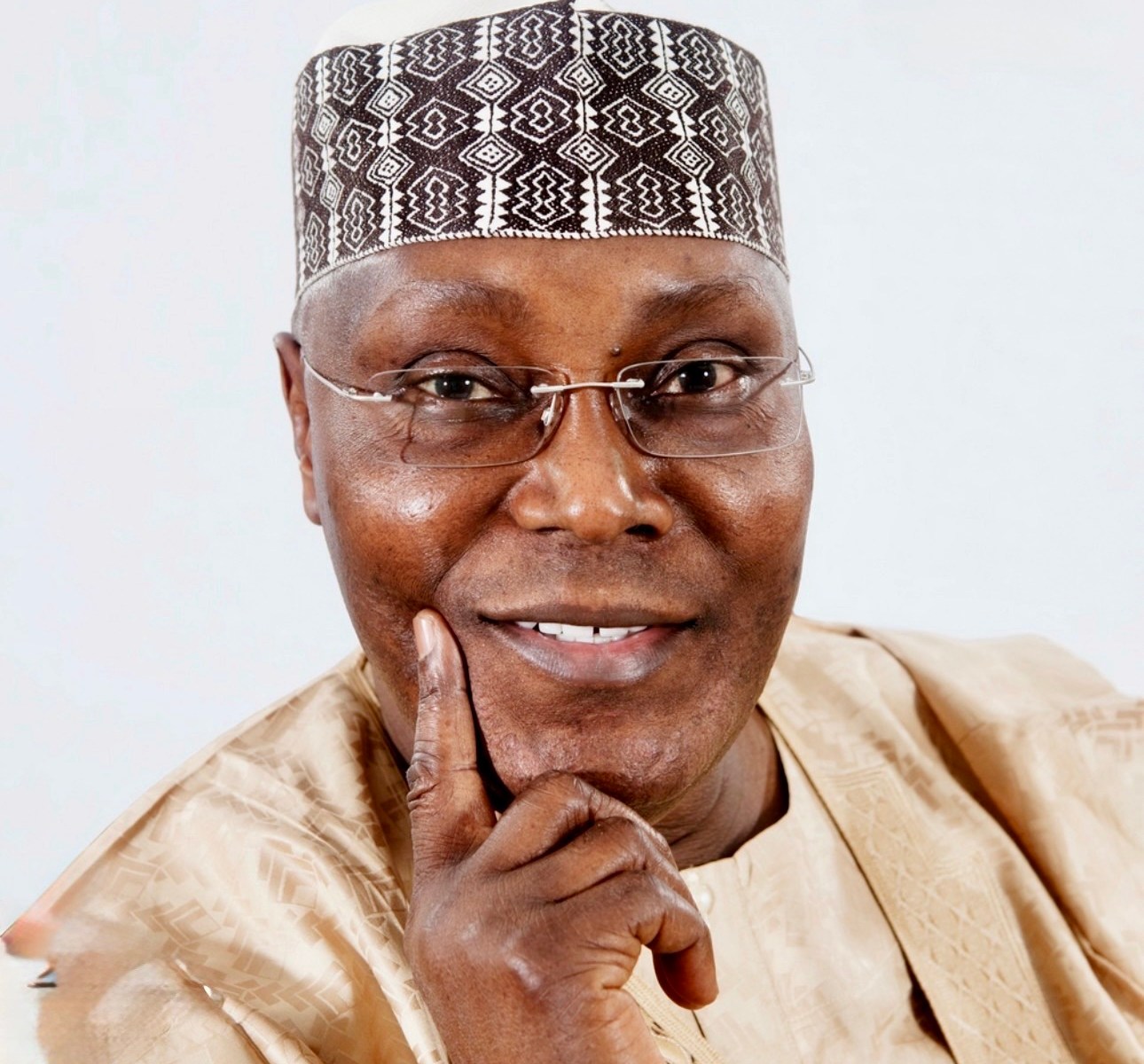
In 1999, Olusegun Obasanjo and Atiku Abubakar rode into Aso Rock together, a presidential double act that Nigerians assumed would age like most political marriages: quietly, then not at all. They survived one term. They won a second in 2003. Then, somewhere in that second term, Obasanjo discovered a constitutional itch that the 1999 Constitution’s two term, eight year ceiling on the presidency simply would not scratch. He wanted a third term. Atiku, nursing a presidential ambition of his own and possessed of the inconvenient habit of reading the Constitution literally, said so publicly. The friendship ended there.
What followed was not statesmanship. Section 143 of the Constitution sets out how a sitting Vice President is removed: impeachment, through the National Assembly, on stated grounds, following due process. It is slow, public and politically expensive. Obasanjo chose the other route. The EFCC, an agency whose independence has always been more aspirational than actual, was pointed at Atiku. It investigated, built a file and prepared an indictment, all while Atiku still held office and was therefore cloaked in the immunity that Section 308 of the Constitution grants a sitting President and Vice President from criminal proceedings. Indicting a man immunity protects is not merely premature, it is constitutionally incoherent, rather like serving someone a subpoena through a locked safe.
Obasanjo also tried the shortcut of simply declaring Atiku’s office vacant by administrative fiat, skipping Section 143 altogether. The Supreme Court slapped that down too, in the companion case of Attorney General of the Federation v Atiku Abubakar (SC 31/2007), holding that the office of Vice President cannot be vacated by presidential decree dressed up as housekeeping. The Constitution provides one door for removing a Vice President, and Obasanjo kept trying the windows.
INEC’s Turn at the Same Trick
By 2007, with the indictment sitting unused and the political winds having shifted, INEC decided the file was still good for something: barring Atiku from the presidential race entirely. The Supreme Court, in Action Congress and Atiku Abubakar v Independent National Electoral Commission (SC 69/2007), delivered two lessons INEC still occasionally needs repeating. First, disqualifying a candidate is not an executive agency’s administrative parlour game, it requires a court order, not a memo. Second, and more fatally for the EFCC’s file, an indictment obtained while a man enjoys constitutional immunity is void, without prejudice to reissuing it properly once immunity lifts. Translation: the EFCC could have started again the moment Atiku left office. It did not. It went to bed, and by most accounts has been sleeping since.
America’s Contribution, Read Correctly
The Nigerian file was not the only one gathering dust. In February 2010, the US Senate’s Permanent Subcommittee on Investigations published “Keeping Foreign Corruption Out of the United States,” detailing how Atiku’s American wife, Jennifer Douglas-Abubakar, moved roughly forty million dollars into US accounts between 2000 and 2008, some of it traced to a Siemens bribe. Separately, former Congressman William Jefferson, famously caught with ninety thousand dollars in his freezer, was convicted and sentenced to thirteen years for a bribery scheme touching Nigerian officials, with his co-conspirator Vernon Jackson also pleading guilty. Douglas-Abubakar herself denied wrongdoing and was never criminally convicted; the Senate report was a policy document, not a verdict. Atiku, notably, never set foot in an American courtroom to answer for any of it, and the Senate’s findings were duly forwarded to the EFCC. The EFCC’s response to receiving a gift-wrapped international paper trail was, once again, nothing.
Enter EJ, Nineteen Years Late
Which brings us to September 2026, and Ehiozuwa J. Agbonayinma, a former House of Representatives member, one-time Code of Conduct Bureau official and, it should be said plainly. Through Sagitarian Law Firm, Agbonayinma wrote to the EFCC on 27 August, received 1 September, giving the Commission fourteen days to reopen and prosecute Atiku using the 2006 EFCC report and the 2010 US Senate findings, or face legal action. Asked, in effect, why none of this troubled him while he held office and sat on precisely the body meant to police conduct like this, he did not so much answer the question as relocate it somewhere quieter.
Agbonayinma is also, by his own biography, a man who lived and worked in the United States. This matters, because his petition keeps reaching for the American Senate report as though it carries some transnational legal force it simply does not possess. It is a policy document from a foreign legislature, admissible in Nigeria as evidence at best, not a warrant with universal jurisdiction. There is a long and unflattering history here: the returned freed slaves who colonised the leadership of Liberia and Sierra Leone on the theory that proximity to white institutions had upgraded their judgment about how to govern Black Africans. Agbonayinma is not founding a country, but the reflex, that American residence confers a superior vantage point on Nigerian accountability, is the same reflex, just with better tailoring.
What the Law Actually Allows, Nineteen Years On
Strip away the theatre and the legal position is unforgiving to Agbonayinma. Nigerian criminal law imposes no general limitation period, so a prosecution is not time barred as a matter of law. But that is a technicality, not an invitation. Witnesses have died, retired or forgotten. Documentary trails from 2006 have gone cold in ways that make any prosecution now an evidentiary obstacle course. More fundamentally, Nigerian courts have long treated the decision to prosecute as falling within the EFCC’s prosecutorial discretion, not a duty a private citizen can compel by judicial review. A court can review an agency’s refusal to act for illegality or bad faith in narrow circumstances, but it cannot sit as a substitute Director of Public Prosecutions and order an indictment into existence. Agbonayinma has no locus standi that a Nigerian citizen, or indeed a private citizen with no personal injury from the alleged offence, does not already have, which is to say very little.
The Real Danger
None of this is really about Atiku’s culpability, which is a separate and serious question the EFCC has spent nineteen years declining to answer honestly. It is about the EFCC as a reusable weapon, unsheathed by Obasanjo in 2006, resheathed conveniently when Atiku’s usefulness as an ally returned, and now unsheathed again, four months before the January 2027 election, against the ADC’s presidential candidate. Atiku’s camp, through his aide Phrank Shaibu, has already framed this as Tinubu settling scores over Atiku’s own attempts to drag US civil forfeiture disclosures into the Nigerian conversation. Both sides may be right about each other, which is precisely the problem.
When politicians outsource their electoral disputes to prosecutorial agencies and foreign court files, they are not fighting elections, they are litigating them by proxy, and inviting a foreign jurisdiction to referee a contest it was never asked to enter. Every time this happens, the judiciary is dragged in to clean up a mess the ballot box was supposed to settle, and the EFCC’s credibility, already thin, gets stretched a little further over a frame it cannot hold. Nigeria does not need its anti-corruption architecture reduced to a seasonal costume, worn only when an election is close enough to need one.
 Centre for Nigeria Progress